
The Secret Base Paradox: Why Gold and USD Slipped Despite Escalating Regional Tensions
پارادوکس پایگاه مخفی: چرا طلا و دلار برخلاف تنشهای منطقهای عقبنشینی کردند؟
As reports emerge of a covert Israeli outpost in Iraq, the Tehran market reacted with a surprising 1.5% dip in gold prices. We explore whether physical assets are losing their 'safe haven' status to digital alternatives like USDT and Bitcoin in 2026.
At time of publishing
USD
180,900
Toman
Gold 18K
20.46M
Toman / gram
Bitcoin
$80,429
US Dollar
Tether
18,072
Toman
The Iraq Secret Base & The Market's Muted Scream
On Tuesday evening, the Iranian market faced a narrative that would typically send prices into a vertical climb. Reports from Al Jazeera and the Wall Street Journal alleged that Israel operated a covert military outpost within Iraq during the height of the war on Iran. In any other era, such news would trigger a panic-buying spree. However, the reality on the ground at 18:30 Tehran time was starkly different. The US Dollar slipped 0.5% to 180,900 Toman, while 18k gold took a sharper 1.5% hit, falling to 20,456,623 Toman per gram.
This divergence suggests a growing exhaustion in the traditional 'war-hedge' trade. Investors are no longer reacting to every headline with a rush to physical gold. Instead, we are seeing a strategic thinning of positions. The Emami coin, often the barometer of local sentiment, shed 1.8% of its value, dropping to 196,500,000 Toman. This suggests that the 'bubble' within domestic gold products is deflating as liquidity seeks more agile exits. When news of a 'secret base' fails to move the needle upward, it often indicates that the market has already priced in the worst-case geopolitical scenarios, or that capital is migrating elsewhere.

The North Korean Shadow & The Digital Dollar
While gold and physical dollars faced downward pressure, the digital landscape offered a more complex risk profile. A new report from CertiK highlighted that North Korea-linked hackers 'industrialized' crypto theft in 2025, laundering over $2 billion. For the Iranian saver, this presents a unique dilemma: the safety of USDT (Tether) versus the physical security of a gold coin. USDT currently sits at 18,072 Toman, showing much higher stability over the last 24 hours than the volatile gold market.
Choosing between USDT and physical dollars is no longer just about the exchange rate; it is about the 'friction of exit.' Physical gold requires a dealer, a scale, and a physical presence, all of which become liabilities during rapid escalations. Digital assets, despite the looming threat of international hacking syndicates mentioned by CertiK, offer a borderless liquidity that physical cash cannot match. However, the risk of 'industrialized' theft means that the burden of security has shifted from the vault-maker to the individual’s digital hygiene. If you cannot secure your keys, the 1.5% drop in gold might actually be the 'safer' loss compared to a total digital wipeout.
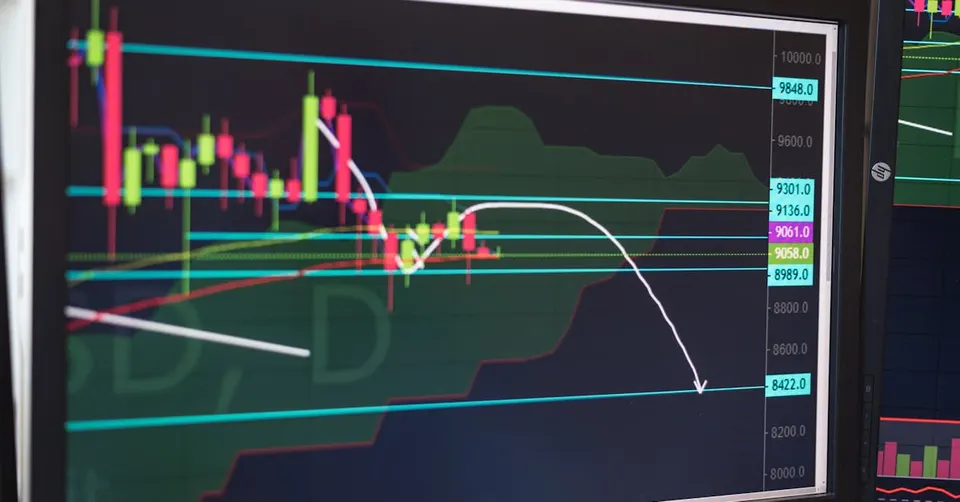
Beyond Metals: The AI Energy Grid & Bitcoin in 2026
Looking toward the 2025-2026 horizon, the definition of a 'store of value' is evolving. While Keir Starmer faces a leadership crisis in Britain and Donald Trump reshuffles his diplomatic deck with nominations like Kari Lake, global capital is flowing into tangible infrastructure rather than just shiny metals. The rise of 'The Nvidias of Power'—companies like GE Vernova and Bloom Energy—highlights a shift toward energy as the ultimate currency. For Iranians, this macro trend is mirrored in the resilience of Bitcoin, which holds steady at $80,429 despite the hot US CPI report and regional jitters.
Bitcoin is increasingly viewed not as a speculative token, but as 'digital energy.' While 18k gold fell by over 300,000 Toman per gram today, Bitcoin’s global valuation remained anchored by the massive energy demands of the AI revolution. For the sophisticated saver in Tehran, the choice is becoming clear: do you hold a metal that relies on local sentiment and physical transport, or do you hold a digital asset that is increasingly tied to the global energy grid? The 2026 landscape suggests that the most effective inflation hedge is one that can move as fast as a headline—and right now, gold is struggling to keep up.

Frequently Asked Questions
Why did gold prices drop in Iran despite the news of an Israeli base in Iraq?
Is USDT safer than physical gold for an Iranian investor right now?
How does the CertiK report on North Korean hacking affect my crypto savings?
What is the relationship between AI energy stocks and Bitcoin's value?
The Complex Dynamics of Safe-Haven Assets During Geopolitical Tension
Traditional financial wisdom often dictates that during times of escalating geopolitical tension and uncertainty, investors flock to "safe-haven" assets. Gold, with its millennia-long history as a store of value, and the US Dollar, as the world's primary reserve currency backed by the strength of the US economy and its treasury markets, are quintessential examples. The expectation is that their value would appreciate as other riskier assets decline, offering a refuge for capital. However, market behavior isn't always linear, and sometimes, these traditional safe havens can defy expectations and even slip in value amidst rising tensions, creating a seeming paradox.
This counterintuitive movement can be attributed to a complex interplay of factors that often override the simple "flight to safety" narrative. One significant driver is the "flight to liquidity". In moments of extreme global stress or financial deleveraging, investors may need immediate cash to cover margin calls, meet obligations, or simply hoard liquid assets. This can lead to a broad sell-off across all asset classes, including gold, as even safe assets are liquidated to raise cash. While the US Dollar might still benefit from its role as the most liquid global currency, gold, being a non-yielding asset, can face downward pressure.
Another critical factor is monetary policy and interest rate differentials. If central banks, particularly the U.S. Federal Reserve, are aggressively raising interest rates to combat inflation, the appeal of non-yielding assets like gold diminishes. Higher interest rates make dollar-denominated assets more attractive, strengthening the USD. A stronger dollar, in turn, makes gold more expensive for holders of other currencies, potentially dampening global demand and putting downward pressure on its price. Thus, the broader economic environment and central bank actions can significantly influence safe-haven asset performance, sometimes overshadowing geopolitical concerns.
Furthermore, the specific nature and perceived impact of the geopolitical tension matter. Not all conflicts are seen as equally threatening to global economic stability. A localized or contained regional tension, while concerning, might not trigger a widespread global panic that would send investors rushing into traditional safe havens. Market participants might assess the situation as having limited systemic risk, or they might be more focused on other pressing economic concerns, such as inflation, recession fears, or credit market stability. Therefore, the "safe-haven" status of an asset is not absolute but rather a dynamic concept influenced by a confluence of global economic forces, central bank policies, and the market's evolving perception of risk.