
The Audit Illusion: Why Your USDT Might Be Riskier Than Physical Gold in October 2026
سراب امنیت دیجیتال: چرا تتر در مهر ۱۴۰۵ میتواند پرریسکتر از طلای فیزیکی باشد؟
With crypto hacks draining $1.18 billion this quarter despite 'clean' audits, the narrative of digital safety is crumbling. We compare the stability of Gold 18k and physical USD against the convenience of USDT during today's market correction.
At time of publishing
USD
262,000
Toman
Gold 18K
25.91M
Toman / gram
Bitcoin
$81,042
US Dollar
Tether
261,845.763
Toman
The False Security of the Digital Vault
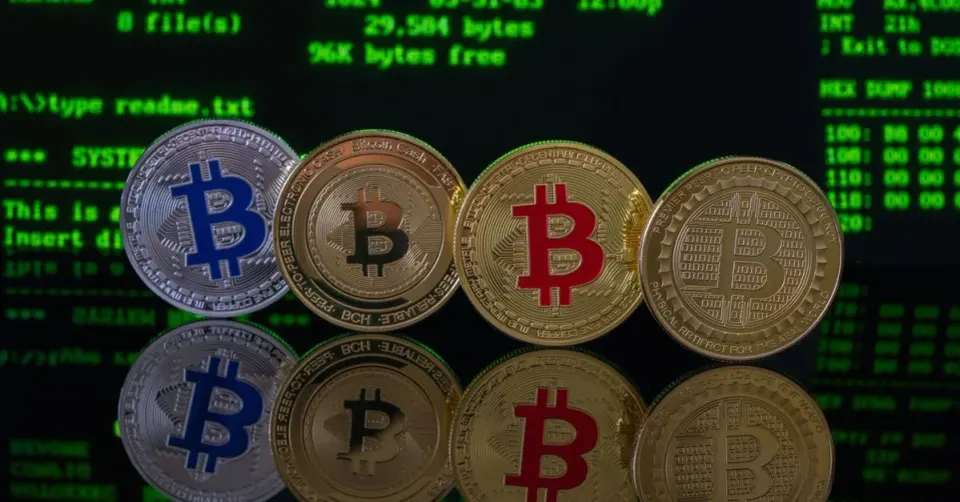
For many Iranian investors, USDT (Tether) has long been the 'digital mattress'—a way to escape Toman volatility without the physical risk of carrying cash or the storage headache of gold. However, a jarring new report from security firm Hacken (index 0) reveals that the industry’s reliance on audits is largely a facade. In the third quarter of 2026 alone, crypto hacks cost investors $1.18 billion, with a staggering 77% of those losses occurring in systems that were supposedly audited or had 'clean' security reviews. This highlights a critical lesson for the local market: a digital dollar is only as safe as the bridge it lives on, and as we’ve seen with recent halts like the Cysic bridge (index 6), that safety can vanish in a single block.
In the Iranian context, where USDT is trading at 261,846 Toman, many users treat it as a 1:1 substitute for the physical greenback. But while a physical hundred-dollar bill cannot be 'hacked' out of your safe by a compromised supplier in Southeast Asia, your USDT remains tethered to a global infrastructure that is increasingly under fire. The Hacken report proves that even 'audited' projects are failing to protect user funds from compromised suppliers and delayed security patches. For those holding large sums, the 'convenience' of digital trading is now being weighed against the very real possibility of a total loss due to systemic vulnerabilities that no local exchange can prevent.
---
The Bank Lever and Global Liquidity
Beyond the risk of theft, the very nature of stablecoin stability is shifting. A recent working paper from the Bank for International Settlements (BIS) (index 5) suggests that traditional banks hold a much larger lever over stablecoin adoption than previously thought. When U.S. banks raise deposit rates, stablecoin growth slows significantly, with Circle’s USDC being the most sensitive. This creates a hidden risk for Iranian holders: the price of USDT in Tehran isn't just a reflection of local demand; it’s a reflection of global dollar liquidity. If global banks tighten their grip, the liquidity 'premium' we pay for USDT could evaporate, leaving holders with an asset that is harder to exit during a crisis.
Compare this to the behavior of Gold 18k and the Emami coin today. While the USD sell rate in Tehran dropped 0.5% to 262,000 Toman, and Gold 18k followed suit with a 0.5% dip to 25,913,015 Toman per gram, the Emami coin showed more resilience, falling only 0.2% to 266,000,000 Toman. Gold in Iran acts as a dual-edged hedge: it tracks both the global ounce price—which is currently at a staggering $4,166.10—and the local currency sentiment. This 'physical floor' provides a psychological safety net that digital assets, which are prone to sudden 11% routs like EOS (index 23), simply cannot match.
---
Political Sentiment and the Long Game
Finally, we must consider the 'political premium.' The global landscape is becoming increasingly fractured, as seen in the Green Party’s internal ideological battles (index 7) and the shifting alliances in the Middle East (index 24). For an Iranian saver, gold is the only asset that carries no 'counterparty risk.' It doesn't require a functioning internet connection like Starshield (index 2), it doesn't require a centralized issuer like Tether, and it isn't subject to the whims of international banking regulators.
As we look toward 2027, the choice between USDT and Gold/Physical USD boils down to a question of time horizon. If you are trading daily, the 261,846 Toman USDT rate offers unparalleled speed. But if you are saving for the next five years, the 'audit illusion' of crypto and the 'bank lever' described by the BIS suggest that the old-fashioned weight of a gold coin or the crisp texture of a physical dollar might still be the ultimate protection against a world that is becoming more volatile, not less. Today's 0.5% dip in gold and USD is a minor correction in a long-term trend of instability, reminding us that in a crisis, you cannot eat—or trade—a hacked digital wallet.

Concept Diagram
Frequently Asked Questions
Why is USDT considered riskier than physical USD despite being pegged to it?
How does the global gold ounce price affect the Iranian market today?
What did the BIS say about stablecoins like Tether and USDC?
The Critical Role of Stablecoin Backing and Transparency
Stablecoins like Tether (USDT) are designed to bridge the volatile world of cryptocurrencies with the stability of traditional fiat currencies. Their fundamental promise is to maintain a fixed value, typically pegged 1:1 to the US dollar. This stability is crucial for traders seeking to park profits without exiting the crypto ecosystem entirely, or for facilitating cross-border transactions without the volatility inherent in unpegged cryptocurrencies. However, the reliability of this peg hinges entirely on the quality and transparency of the assets held in reserve by the issuer to back each stablecoin in circulation.
The "backing" mechanism is where the rubber meets the road. Ideally, for every USDT issued, Tether should hold one US dollar or an equivalent highly liquid asset. Historically, Tether's reserves have included a mix of cash, cash equivalents, commercial paper, corporate bonds, and other investments. While audits and attestations are performed to verify these reserves, the term "audit illusion" arises from concerns about the comprehensiveness, frequency, and independence of these reports. Unlike physical gold, which has inherent scarcity and a tangible presence, a stablecoin's value is a derivative of its issuer's solvency and the integrity of its reported reserves, which can be complex and opaque.
This distinction becomes particularly stark when comparing USDT to physical gold, especially in markets experiencing economic uncertainty. Gold has served as a global store of value and a hedge against inflation and currency depreciation for millennia. Its value is not dependent on a central issuer's balance sheet or the outcome of an audit. In contrast, the security of USDT rests on the issuer's ability to redeem tokens for their pegged value, which in turn depends on the liquidity and quality of its reserve assets. Should these reserves prove insufficient, illiquid, or subject to regulatory seizure, the stablecoin's peg could break, leading to significant losses.
International financial bodies like the Bank for International Settlements (BIS) have consistently highlighted the systemic risks posed by stablecoins lacking robust regulatory oversight and transparent, high-quality reserves. These concerns are amplified in volatile markets where local currency fluctuations (e.g., Toman) or market corrections can drive demand for alternative safe havens. Understanding the true nature of stablecoin backing – beyond mere attestations – is therefore paramount for any investor seeking to assess the real risk associated with these digital assets compared to traditional stores of value.