
Toman Steadies as Peace Talks Survive US Strikes; Gold Drops 1.8% Amid Internet Restoration
ثبات تومان در سایه تداوم مذاکرات صلح؛ افت ۱.۸ درصدی طلا و بازگشت اینترنت به ایران
Despite targeted US military action in the Persian Gulf, the Iranian Toman showed surprising resilience today, with the USD slipping 0.6%. As internet connectivity returns and President Pezeshkian signals a 'dignified framework' for peace, gold prices saw a sharp 1.8% correction.
At time of publishing
USD
172,600
Toman
Gold 18K
18.80M
Toman / gram
Bitcoin
$75,817
US Dollar
Tether
172,004
Toman
The Diplomatic Tightrope and the Toman
The Iranian market closed Tuesday's session with a sense of cautious optimism that defied the headlines of military escalation. Despite the first US strikes on Iranian targets since the April 8 ceasefire—aimed at missile launchers in the Strait of Hormuz—the currency market did not succumb to panic. The US Dollar moved from 173,600 to 172,600 Toman, a decrease of 0.6%. This resilience is largely attributed to the fact that Tehran, while condemning the strikes as a 'violation of faith,' has conspicuously remained at the negotiating table in Doha. President Masoud Pezeshkian’s recent remarks about seeking a 'dignified framework' to end regional tensions provided a much-needed psychological floor for the Toman, suggesting that diplomacy is still the primary path forward.

Adding to the stabilizing sentiment was the official start of lifting the monthslong internet blackout. As connectivity returns, the 'information premium' that often drives black-market rates during crises has begun to dissipate. Traders are no longer operating in a total vacuum, and the ability to verify regional news in real-time has reduced the effectiveness of rumor-driven price spikes. While the US domestic scene is currently preoccupied with internal matters—such as the high-profile trial of priest Anthony Odiong in Texas—the Biden administration’s focus on maintaining the Middle East peace track remains the dominant external driver for the Iranian Rial. For now, the market is betting on a deal rather than a full-scale return to hostilities.
Gold’s Deep Correction and Global Macro Shifts
While the currency market saw a minor dip, Gold 18k experienced a more pronounced correction, falling from 19,141,234 to 18,804,192 Toman per gram, a significant 1.8% decrease. This move reflects a broader cooling of the 'war premium' that had been baked into precious metals over the last week. Emami coins followed suit, dropping 0.8% to close at 183 million Toman. This local downward trend coincided with a complex global backdrop where extreme weather events, such as the record-breaking spring heatwave in the UK, Spain, and France, are starting to impact energy demand expectations and global inflation forecasts. When international risks shift toward climate and energy logistics, the immediate geopolitical pressure on gold in the Middle East often finds room to breathe.

Furthermore, the appetite for traditional safe havens is being challenged by the sheer scale of the 'Sovereign AI Boom' and tech advancements. As analysts predict the rise of the next trillion-dollar tech giant fueled by AI, and companies like Starlink expand their dominance by signing massive deals with American Airlines, global capital is increasingly looking toward growth rather than just preservation. For Iranian investors, this means the opportunity cost of holding non-yielding gold is rising, especially if the internal inflation rate shows any signs of stabilizing through a potential peace deal. The 1.8% drop in gold today serves as a reminder that the metal is sensitive not just to local bombs, but to global shifts in technology and climate-driven economic policy.
Crypto Volatility and the Liquidation Hunt
In the digital asset space, Bitcoin continues to be a battlefield of liquidity. Despite a brief spike toward $78,000, BTC failed to sustain its gains, settling around $75,817. Analysts are calling this a 'liquidation hunt,' where large players trigger stop-losses in both directions amid uncertainty over the Iran-US peace deal. For Iranian crypto traders, the USDT/IRT rate remains a critical metric, currently sitting at 172,004 Toman. The slight decoupling of USDT from the physical dollar rate suggests that digital liquidity is still in high demand, even as the physical market cools. This digital-physical gap is a hallmark of the Iranian market, where crypto often acts as the first responder to geopolitical news.
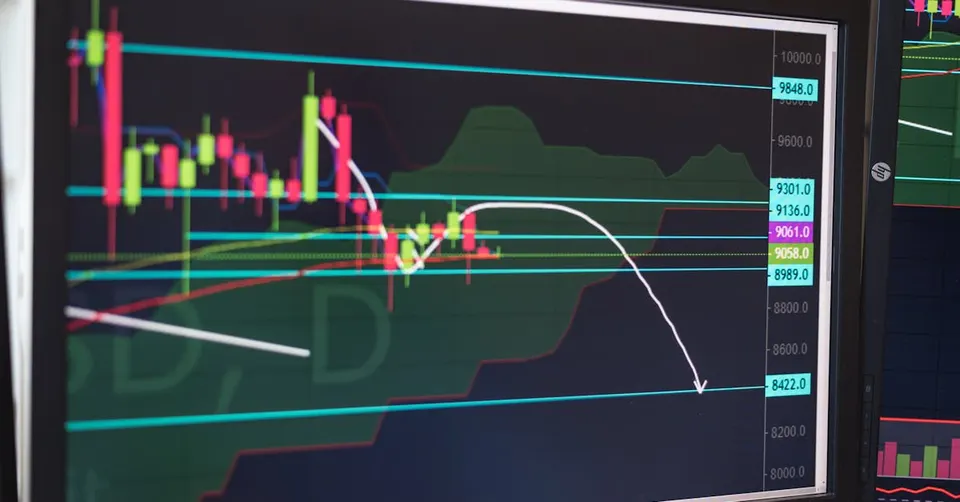
Looking ahead, the integration of blockchain with AI—exemplified by Base’s new gateway to interfaces like ChatGPT—suggests a future where financial interactions in Iran could bypass traditional hurdles through natural language prompts. However, the immediate focus remains on the 'peace deal doubts' mentioned by global analysts. If the Doha talks hit a significant roadblock tomorrow, the $77k support level for Bitcoin could turn into a ceiling. Investors should watch the 172,000 Toman level for USD closely; a break below this could signal a shift into a new, lower trading range, while any further military friction in the Strait of Hormuz would likely send gold back toward its previous highs.