Toman Tumbles as Hormuz Cease-Fire Collapses: USD, Gold Surge Amid Renewed US-Iran Tensions
سقوط تومان با فروپاشی آتشبس هرمز: دلار و طلا با تشدید تنشهای ایران و آمریکا اوج گرفتند
Iranian markets closed today with significant upward movements in both the US Dollar and gold, reflecting heightened geopolitical risks. The collapse of the US-Iran cease-fire in the Strait of Hormuz has reignited fears of supply disruptions and regional instability, directly impacting the Toman's value. Investors are once again seeking safe-haven assets as the cycle of conflict appears to repeat.
At time of publishing
USD
188,100
Toman
Gold 18K
18.51M
Toman / gram
Bitcoin
$64,622
US Dollar
Tether
188,450
Toman
What Actually Happened
Today's market session closed with a clear display of risk aversion, as both the US Dollar and gold saw substantial gains against the Iranian Toman. The Dollar moved from 183,200 Toman to 188,100 Toman, marking a significant 2.7% increase in just 24 hours. This sharp appreciation signals growing concerns among ordinary Iranians about the Toman's stability amidst escalating regional tensions. Concurrently, gold prices mirrored this flight to safety, with 18k gold per gram rising from 17,856,318 Toman to 18,514,243 Toman, a notable 3.7% jump, while the Emami coin gained 2.2% to reach 185,000,000 Toman.
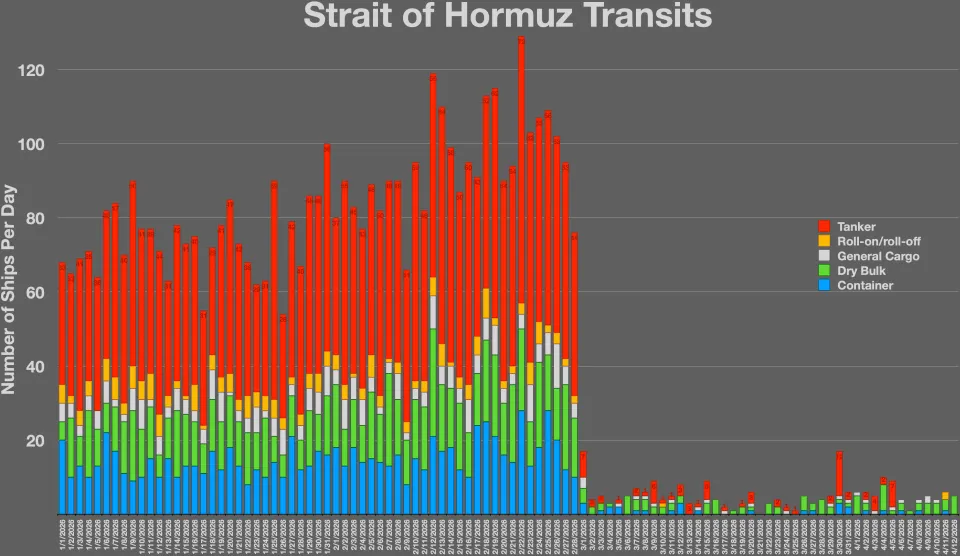
This immediate market reaction can be directly attributed to the reported collapse of the US-Iran cease-fire that was meant to secure the Strait of Hormuz. According to OilPrice, American forces have reimposed a naval blockade on Iranian ports and struck targets along Iran's coast, with Tehran retaliating against tankers in the strait. This breakdown has sent Brent crude oil prices soaring back above $85 a barrel, a level not seen since the truce was signed. The global gold ounce price, already elevated, stands at $4,058.80, reflecting broader international uncertainty that feeds into local gold demand and pricing.
Why This Matters
For everyday Iranians, the escalating tensions in the Strait of Hormuz translate directly into higher costs of living and erosion of purchasing power. The Toman's depreciation against the dollar makes imported goods more expensive, fueling inflation across various sectors. Furthermore, the disruption in a critical global shipping lane like Hormuz, through which a significant portion of the world's oil supply passes, has immediate implications for Iran's oil exports and its ability to generate crucial foreign currency revenues. The cycle of conflict and negotiation, as highlighted by France 24, where both sides seem to believe continuous conflict gains them greater leverage, traps the region in a precarious economic state.
The renewed hostilities are not just a regional concern; they have global economic ramifications that circle back to Iran. MarketWatch reports that American oil refiners are poised to see a massive boom in profits, potentially tripling them, as they capitalize on supply disruptions caused by the Iran conflict. While this might benefit some international players, it underscores the severe economic pressure placed on nations directly involved or heavily reliant on the stability of energy markets. The increased global oil prices, driven by the Hormuz crisis, mean higher fuel costs and broader inflationary pressures worldwide, which inevitably trickle down to the Iranian consumer.
The Broader Context
Beyond the immediate geopolitical flashpoints, a wider spectrum of global events contributes to the prevailing sense of uncertainty, subtly influencing market sentiment. For instance, a massive data breach exposed approximately 19,000 highly sensitive files related to India’s largest nuclear power plant, the Kudankulam Nuclear Power Plant (KKNPP), according to OilPrice. While not directly tied to the Strait of Hormuz, such incidents of critical infrastructure vulnerability underscore the pervasive nature of global cybersecurity threats. This type of news, though seemingly distant, can contribute to a general atmosphere of risk aversion, subtly bolstering the appeal of safe-haven assets globally, including gold.
Meanwhile, a tragic incident unfolded on the other side of the world, as rescuers continued the search for three people missing after a pontoon boat capsized in San Francisco Bay near Alcatraz Island. The Guardian reported that one person died and 16 were rescued after the boat sank in “rough seas.” While this human tragedy is significant, it is important to note that such localized, non-geopolitical events, however regrettable, do not typically exert a direct influence on the currency or gold markets in Iran. Our markets remain primarily driven by regional geopolitical dynamics and internal economic factors.
Practical Takeaway
Given the volatile backdrop of renewed tensions in the Strait of Hormuz and the Toman's immediate depreciation, it is crucial for Iranians to remain vigilant and consider strategies to protect their savings. Diversifying assets, where possible, beyond the Toman into more stable stores of value like gold or foreign currency, remains a common approach in times of uncertainty. However, such decisions should always be made with careful consideration of personal financial circumstances and expert advice. Staying informed about geopolitical developments and their potential economic fallout is paramount, as market conditions can shift rapidly. The current environment calls for caution and strategic planning to navigate the ongoing economic pressures.

Watch
Search continues after boat capsizes, killing at least one in San Francisco Bay
NBC News
Frequently Asked Questions
Why did the US Dollar and gold prices increase so sharply today in Iran?
How does the Strait of Hormuz situation directly affect the Iranian economy?
What is the significance of the 'cycle of war, talks, repeat' in the US-Iran relationship for markets?
Are global events like the India nuclear plant data breach or the Alcatraz disaster influencing Iranian markets?
What practical steps can ordinary Iranians take to protect their savings in this volatile environment?
Why Gold and the US Dollar Are Called Safe‑Haven Assets
When geopolitical tensions flare—such as the collapse of a cease‑fire in the Strait of Hormuz—investors often rush to assets that are perceived to retain value regardless of regional turmoil. These are known as safe‑haven assets. The term describes investments that historically either hold their price or even appreciate when markets are stressed, providing a hedge against uncertainty and potential losses elsewhere.
Two of the most prominent safe‑havens are gold and the US dollar. Gold has been valued for millennia because it is scarce, durable, and not tied to any single country's fiscal policy. During crises, demand for physical gold spikes, pushing its price up, as seen in Iran where the local gold market surged alongside the Toman’s depreciation. The US dollar, meanwhile, benefits from its status as the world’s primary reserve currency, backed by the size and stability of the US economy and its deep financial markets. When confidence in other currencies wanes, investors convert holdings into dollars, driving up its value.
The mechanism behind safe‑haven flows is partly psychological—investors seek assets they believe will preserve purchasing power—and partly structural. Central banks hold large dollar reserves to facilitate international trade, and gold can be stored and transported with relative ease. In the case of Iran, sanctions and regional conflict amplify inflationary pressures, eroding the Toman’s real value and prompting both individuals and institutions to turn to dollars and gold as stores of wealth.
Understanding safe‑haven assets helps explain why currency exchange rates, commodity prices, and geopolitical news are tightly interlinked. It also highlights the broader concept of geopolitical risk premium, where the perceived risk of a region adds a cost to holding its assets, shifting capital toward more universally trusted stores of value.