
Toman Slips 2.4% as US Blockade Tightens; Gold Ounce Hits $4,019 Amid Global AI Anxiety
جهش ۲.۴ درصدی دلار در سایه محاصره دریایی؛ سکه امامی به مرز ۱۹۰ میلیون تومان رسید
The Iranian Toman faced a sharp sell-off today as the US naval blockade of Iranian ports began to choke trade routes. With USD jumping to 195,500 and gold prices hitting historic highs, investors are fleeing to safe havens while global markets grapple with a $1 trillion AI investment dilemma.
At time of publishing
USD
195,500
Toman
Gold 18K
19.05M
Toman / gram
Bitcoin
$64,246
US Dollar
Tether
195,350.834
Toman
The Blockade Squeeze and the Toman's Retreat
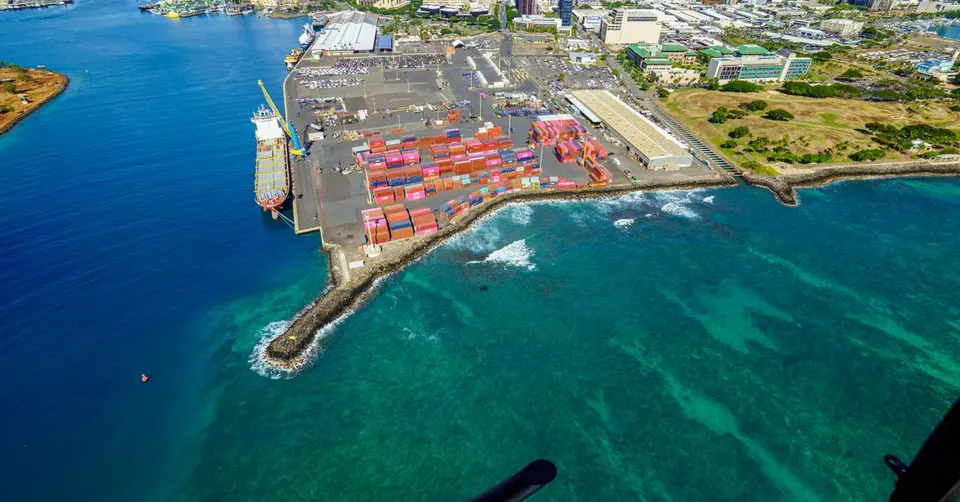
The Iranian currency market experienced a volatile Saturday session as the physical reality of the US naval blockade on Iran’s major ports began to manifest in the exchange rates. The US Dollar (USD) moved from 190,900 to 195,500 Toman, marking a significant 2.4% depreciation of the local currency in just 24 hours. This move isn't merely speculative; it reflects the market's fear that the renewed blockade will severely limit the inflow of hard currency and essential goods, creating a supply-side shock that the Central Bank may struggle to contain. While Iranian state media, through Foreign Ministry spokesperson Esmaeil Baqaei, claimed that the 'contradictory messaging' from the Trump administration exposes deep divisions in Washington, the currency market showed no interest in political rhetoric. For the average Iranian, this jump translates to immediate inflationary pressure on imported electronics, medicine, and basic commodities.
As the blockade enters its second week, the regional escalation has reached a boiling point. Reports of Iranian-linked attacks on infrastructure in Kuwait—specifically targeting power and water desalination plants—have heightened the risk premium for the entire Persian Gulf. Kuwait, which relies on these plants for nearly 90% of its drinking water, represents a new level of civilian infrastructure targeting that has left regional markets on edge. This geopolitical friction is the primary engine behind the Toman's fall, as traders anticipate further sanctions or direct military confrontations that could further isolate the Iranian economy from the global financial system.
Gold’s Historic Ascent and the AI Premium
While the Toman falters, gold has become the undisputed king of the portfolio. Gold 18k per gram rose from 18,491,158 to 19,045,200 Toman, a staggering 3.0% increase in a single day. The Emami coin followed suit, jumping 2.7% to reach the 190,000,000 Toman mark. This surge is fueled by a double-engine: the local devaluation of the Toman and a global rally that has pushed the gold ounce to an eye-watering $4,019.30. Globally, investors are rotating out of speculative tech and into physical assets as the 'Magnificent Seven' problem haunts Wall Street. Investors are increasingly skeptical of the trillion-dollar AI bill, questioning when the massive capital expenditures by tech giants will finally translate into bottom-line profits. This skepticism was highlighted by the performance of Analog Devices (ADI), which sits at $375; analysts are now debating whether investors are paying an unjustifiable 'AI premium' for what is essentially industrial tech.
This global shift toward safety is also reflected in the crypto markets. Bitcoin (BTC) remains stagnant at $64,246, failing to capture the same 'safe haven' narrative that is currently propelling gold. In Iran, the Tether (USDT) price has tracked the local dollar closely, sitting at 195,351 Toman. The disconnect between physical gold and digital assets suggests that in times of actual naval blockades and physical infrastructure strikes, the market still prizes the tangible security of bullion over the perceived volatility of the blockchain. Even the Milton Hershey School Trust selling $5.2 million in Hershey shares signals a broader trend of institutional 'de-risking' that favors liquidity and gold.

The Geopolitical Long Game: Rare Earths and Human Costs
Beyond the immediate price action, a significant shift in the global energy and manufacturing landscape is underway. US scientists have reportedly made a breakthrough in tapping seawater to extract rare earth minerals, a move specifically designed to break China's 85-95% monopoly on the critical minerals used in high-tech manufacturing and clean energy. This technological pivot is not just a scientific curiosity; it is a strategic maneuver that could redefine global trade alliances over the next decade. If the US can decouple its tech industry from Chinese supply chains, its ability to leverage sanctions and blockades against nations like Iran becomes even more potent, as the collateral damage to its own tech sector is minimized.
However, the cost of these grand geopolitical games is always borne by individuals. While we track the movement of billions in the chip index or the price of the Emami coin, the human tragedy of global instability remains a sobering backdrop. Whether it is the tragic loss of life in India due to regional violence or the families in Tehran watching their life savings evaporate, the 'market' is ultimately a reflection of human survival instincts. For the Iranian investor, the practical takeaway is clear: the volatility is no longer a temporary spike but a structural reality. Diversification into gold remains the most effective shield against the twin threats of a domestic currency collapse and a global tech bubble correction.
Frequently Asked Questions
Why did the USD/IRR jump 2.4% today?
Is the gold rally in Iran solely due to the dollar?
What is the 'AI Premium' mentioned regarding Analog Devices (ADI)?
How does the US breakthrough in rare earth extraction affect Iran?
Understanding Economic Sanctions and Their Impact
Economic sanctions are punitive measures imposed by one country or a group of countries on another. They are typically used as a foreign policy tool to compel a change in behavior, punish actions deemed unacceptable (such as human rights abuses or support for terrorism), or to limit a nation's capabilities, like developing weapons of mass destruction. These measures can take various forms, including trade restrictions, asset freezes, travel bans, and financial embargos, often targeting specific sectors, entities, or individuals within the sanctioned country.
The primary goal of sanctions is to inflict economic pain severe enough to force the targeted government to alter its policies without resorting to military intervention. By restricting a country's access to international markets, finance, and critical goods, sanctions aim to disrupt its economy. For instance, prohibiting the sale of oil or limiting access to the SWIFT international banking system can severely cripple a nation's ability to earn foreign currency and conduct global trade.
One of the most immediate and significant impacts of comprehensive economic sanctions on a targeted economy is currency devaluation and rampant inflation. With reduced foreign exchange earnings from exports, difficulty in importing essential goods, and a sharp decline in investor confidence, the local currency often weakens dramatically against major international currencies. This depreciation makes imports more expensive, leading to higher prices for consumers and businesses, fueling inflation.
Furthermore, in an environment of economic uncertainty and a rapidly devaluing currency, citizens often seek to protect their wealth by converting local currency into more stable assets. Gold, historically a store of value, becomes a prime safe-haven asset during such times. Its price tends to surge as demand increases, reflecting a lack of trust in the local currency and banking system, and serving as a hedge against inflation and economic instability. Thus, a "tightening blockade" often correlates directly with a slipping currency and a rising price for gold.
Topics
Related Articles