Tehran Markets Retreat as Domestic Tensions Flare: USD Dips to 189,600 Amid State TV Censorship Row
عقبنشینی بازارها در سایه تنشهای داخلی؛ دلار به ۱۸۹ هزار تومان رسید و جنجال سانسور در صداوسیما بالا گرفت
Tehran’s financial markets saw a notable correction this Saturday as the USD fell 1.4% and gold prices dropped nearly 3%. While the currency breathed, a public spat between the government and state media (IRIB) over censorship suggests internal friction remains a potent risk factor for investors.
At time of publishing
USD
189,600
Toman
Gold 18K
18.14M
Toman / gram
Bitcoin
$64,204
US Dollar
Tether
190,000
Toman
The Saturday Correction: Markets Catch Their Breath
After a week of relentless pressure, the Iranian Toman saw a rare moment of reprieve during Saturday’s session. The US Dollar, which had been testing higher resistance levels, moved from 192,200 to 189,600, marking a 1.4% decline. This cooling off wasn't limited to the greenback; the gold market felt an even sharper correction. 18k gold fell from 18,687,381 to 18,137,956 Toman per gram, a significant 2.9% drop that caught some retail buyers off guard. Emami coins followed suit, sliding from 188,500,000 to 184,500,000 Toman (-2.1%).
For the everyday Iranian, this dip is less a sign of long-term stability and more a tactical pause. Market participants suggest that the recent rally had become overextended, and today’s move represents a 'selling the news' event. However, with the Tether (USDT) price still hovering at 190,000 Toman, the digital precursor to the physical dollar suggests that the floor for the currency remains much higher than it was just a month ago. The volatility remains the only constant in a market where geopolitical whispers move prices faster than economic fundamentals.

Domestic Friction: The IRIB Censorship Scandal
While the numbers on the screen turned red, the political landscape in Tehran was heating up. The Iranian government has entered a public and bitter dispute with the Islamic Republic of Iran Broadcasting (IRIB), the state-run media monopoly. Government officials have explicitly accused the IRIB of 'censorship' after key segments of the President's latest speech were omitted from broadcasts. This isn't just a media spat; it’s a reflection of the deep-seated power struggles within the regime's hierarchy. The IRIB, which often operates as a state within a state, rejected these 'improper attributions,' but the damage to public confidence is visible.
For investors, this internal discord is a red flag. History shows that whenever the administrative government and the hardline-controlled state media are at odds, the resulting policy paralysis or uncertainty often translates into currency devaluation. The fact that the government is forced to publicly spar with its own media apparatus highlights a lack of unified control, which rarely bodes well for the Toman. When the 'official' narrative is fractured, the 'free market' usually reacts by hedging into hard assets like gold and stablecoins, even if today’s technical correction suggests a temporary lull.
The Global Backdrop: Bailouts and Wildfires
Beyond Iran’s borders, the global macro environment is sending mixed signals. In Washington, a controversial $11 billion farm bailout is being proposed on top of an existing $55 billion payday for agricultural sectors. This massive injection of liquidity fuels concerns about a 'debt crisis' and persistent inflation in the United States. For Iranians, a weaker or more inflationary US Dollar might seem like good news, but it often leads to higher global commodity prices, including the gold ounce which is currently trading at a staggering $4,053.70. As long as the US continues to pump liquidity into its economy, the global floor for gold will likely remain elevated, keeping the cost of 'safe haven' assets high for Iranian families.
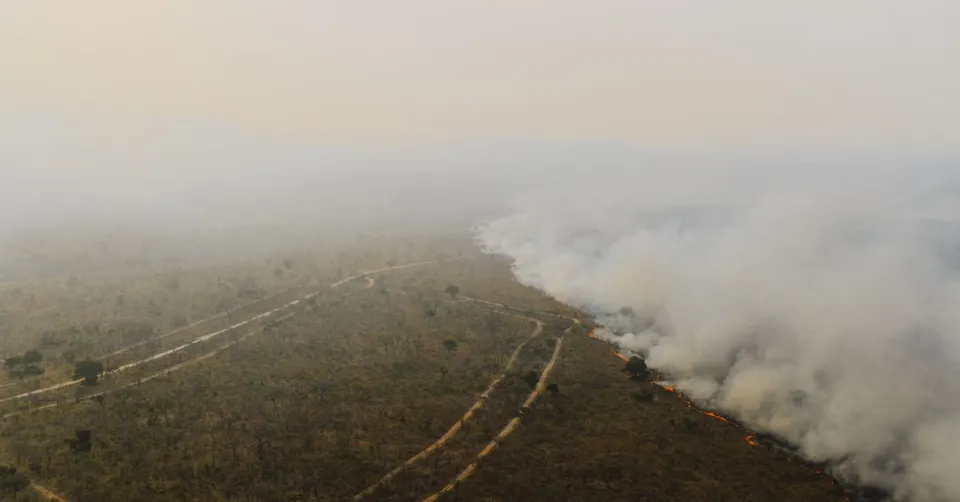
Meanwhile, the physical world is literally on fire. From the Cairngorms in Scotland, where John Swinney has requested military aid to fight a 10-day blaze, to the scorching heatwaves in France and Spain, the climate crisis is becoming an economic one. These 'summers of extremes' disrupt supply chains and increase the cost of insurance and energy. While a wildfire in the Highlands might seem distant from a currency exchange in Ferdowsi Square, these events contribute to a global 'risk-off' sentiment. In such an environment, institutional investors worldwide are flocking to assets like SpaceX IPO allocations or weather-derivatives, leaving emerging and sanctioned markets like Iran even more isolated and volatile.
Practical Takeaway: Don't Mistake a Dip for a Trend
Today’s 1.4% drop in the USD and the 2.9% slide in gold are welcome reliefs for those looking to enter the market, but they should be treated with extreme caution. The fundamental drivers of the Toman's weakness—namely high inflation, regional tensions, and domestic political infighting—have not changed. The IRIB censorship row is a reminder that the regime is far from a cohesive unit. If you are holding Toman, use these dips to diversify into more stable instruments. Whether it’s USDT or physical gold, the long-term trend still favors hard assets over a currency caught between internal censorship and external sanctions.
Frequently Asked Questions
Why did the USD and Gold prices drop in Tehran today despite political tensions?
How does the dispute between the government and IRIB affect the exchange rate?
What is the significance of the $55 billion US farm bailout for Iranian investors?
Is the current dip in gold prices a good buying opportunity?
Political Risk and Currency Valuation
Political risk, often distinct from purely economic risk, refers to the potential for political decisions, events, or instability to negatively impact a country's economic and financial environment. While economic risks stem from factors like inflation or unemployment, political risks can arise from government policy changes, social unrest, geopolitical tensions, or even domestic controversies like a censorship scandal. Such events, even if not directly economic in nature, introduce significant uncertainty into the market, making investors and ordinary citizens wary about future stability.
When political tensions flare, confidence in the existing economic framework and the stability of the local currency can erode rapidly. This loss of confidence often triggers a shift in investment behavior. Both domestic and international investors may seek to divest from local assets or convert their holdings into more stable alternatives. This flight to safety typically manifests as increased demand for foreign currencies, particularly strong global currencies like the US Dollar, or traditional safe-haven assets such as gold.
The immediate consequence of this increased demand for foreign currency is the depreciation of the local currency. As more people try to exchange local currency for foreign currency, its value relative to the foreign currency falls. This is precisely what happens when the USD/Toman exchange rate shifts significantly. Simultaneously, the demand for local gold coins (like Emami coin) or stablecoins pegged to foreign currencies (like Tether, which tracks the USD) also rises, reflecting a broader market correction and a collective effort to preserve wealth against potential economic fallout and inflation.