Tankers Under Fire and Insurance Surges: Why the Toman is Defying Regional Volatility
حمله به نفتکشها و جهش بیمه دریایی؛ چرا تومان برخلاف تنشهای منطقه عقبنشینی کرد؟
Despite a drone attack on a tanker in the Strait of Hormuz and shipping insurance costs skyrocketing to $2.5 million in the Black Sea, the Iranian Toman staged a surprising 1.2% recovery. We explore the disconnect between rising global energy risks and Tehran's evening market correction.
At time of publishing
USD
260,900
Toman
Gold 18K
25.89M
Toman / gram
Bitcoin
$82,405
US Dollar
Tether
260,515
Toman
The High Cost of Risk: From Black Sea to Hormuz
The global energy landscape is currently weathering a dual-front storm that has sent shockwaves through the maritime industry. In the Black Sea, insurance costs for vessels transporting crude have seen a staggering nearly 1,200% increase, jumping from a baseline of $200,000 to approximately $2.5 million per vessel. This surge, reported by Lukoil operations in Bulgaria, reflects the mounting reality of a 'kinetic' economic war where commercial shipping is no longer a neutral bystander. For everyday consumers, this isn't just a corporate headache; it is a direct precursor to higher fuel prices and logistical inflation that ripples through every global supply chain, including those reaching Iranian borders.
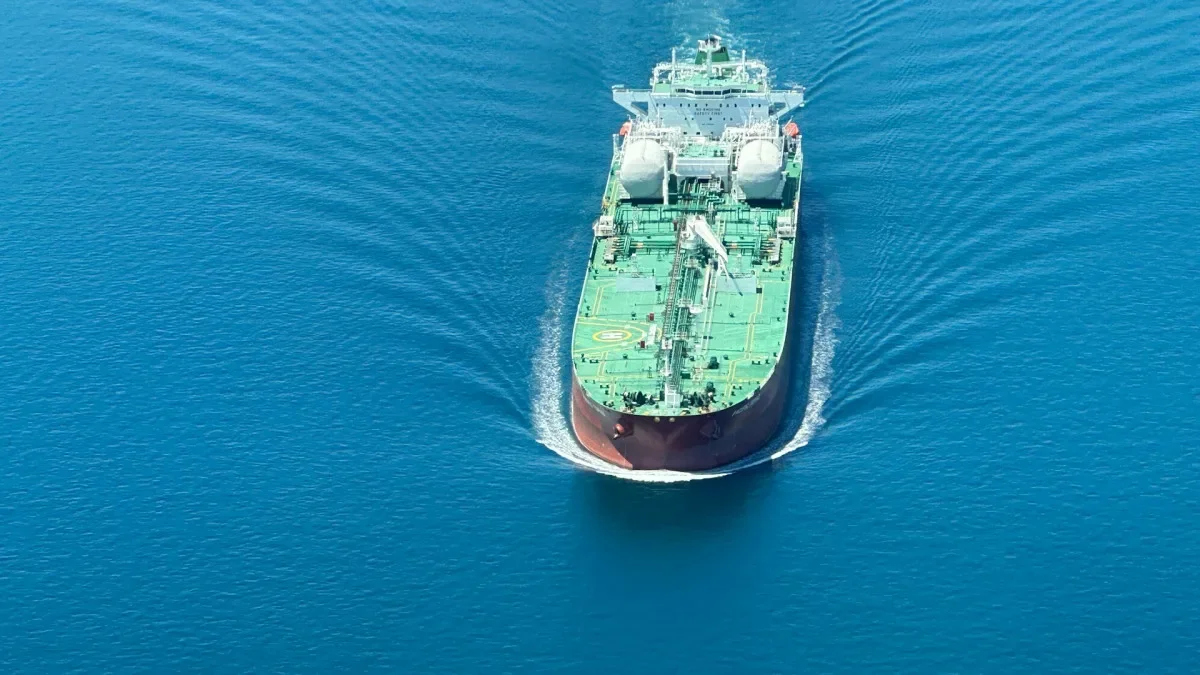
Simultaneously, the Strait of Hormuz—the world’s most critical oil chokepoint—witnessed fresh drama as the Petro Dolphin tanker was reportedly targeted by a drone attack off the coast of Oman. Black smoke rising from the vessel served as a visual catalyst for oil markets, pushing Brent crude up by 2% to over $106 per barrel. While President Trump has attempted to stabilize markets with talk of Russian diesel supplies and energy ceasefires, the reality on the water suggests that the 'war premium' is far from being liquidated. These incidents highlight a fragile equilibrium where any minor disruption can lead to massive spikes in the cost of moving energy from the Middle East to the rest of the world.
The Toman's Surprising Counter-Move
In a fascinating display of market psychology, the Iranian Toman did not follow the upward trajectory of regional tension. During today’s session, USD moved from 264,000 to 260,900, marking a 1.2% decrease in the sell rate. This correction suggests that the local market had perhaps over-extended itself in anticipation of conflict, and the actual occurrence of the tanker incident triggered a 'sell the news' reaction among local traders. It is a reminder that in the hyper-volatile Tehran market, the anticipation of a crisis is often more expensive than the crisis itself. When the dust settled on Monday evening, the Toman found a temporary footing despite the surrounding geopolitical fire.
Gold and coin markets mirrored this cooling trend. Gold 18k per gram moved from 26,273,142 to 25,892,238, a 1.4% drop that provided a slight breathing room for local buyers. The Emami coin also saw a reduction, sliding from 268,500,000 to 264,500,000 (-1.5%). This synchronized retreat across currency and gold suggests a broader liquidation of speculative positions. Traders are likely keeping a close eye on the 'energy ceasefire' rhetoric coming from Washington, weighing the possibility of a diplomatic de-escalation against the reality of drones in the Persian Gulf.

Energy Cracks and Crypto Constraints
Beyond the immediate borders of Iran, Europe is bracing for a harsh winter as natural gas prices head toward multi-year highs. Dutch TTF futures are trading near 83 euros per megawatt-hour, driven by the absence of Qatari LNG and storage levels that are languishing at 15-year lows. This energy crunch in the West indirectly supports the Toman’s relative stability by keeping oil prices high, which remains the lifeblood of the Iranian economy—even under the shadow of sanctions. If Europe’s energy crisis deepens, the global demand for any available crude will only intensify, potentially providing a floor for Iran’s fiscal maneuvers in the coming months.
In the digital asset space, Bitcoin continues to trade at a lofty $82,405, but the underlying infrastructure is showing signs of strain. Bitcoin miners are currently facing a $50 billion funding gap as they attempt to pivot toward AI infrastructure. Lenders are becoming increasingly scrutinizing of these deals, leading to a dip in the Crypto Fear and Greed Index to levels not seen since the August lows. For Iranian crypto investors, this indicates a period of consolidation. While the price remains high, the 'easy money' phase of the rally may be giving way to a more disciplined, cost-heavy environment where only the most efficient miners—and most patient investors—will thrive.

Frequently Asked Questions
Why did the Toman strengthen when regional tensions increased?
How does the $2.5 million insurance cost in the Black Sea affect Iran?
Is the current dip in gold prices a buying opportunity?
What is the 'AI funding gap' mentioned for Bitcoin miners?
War‑Risk Insurance and Its Impact on Global Shipping Costs
War‑risk insurance is a specialized branch of marine insurance that covers vessels, cargo, and crew against damage or loss caused by acts of war, terrorism, piracy, and other politically‑motivated threats. Unlike standard hull and cargo policies, which assume normal commercial perils, war‑risk policies add a layer of protection for events that are typically excluded. Insurers calculate premiums based on the probability of conflict in a region, the value of the vessel, and the type of cargo – oil tankers, for instance, attract higher rates because a single incident can involve millions of barrels of crude.
The strategic chokepoint of the Strait of Hormuz illustrates how geopolitical tension can drive insurance costs sky‑high. When Iranian‑aligned drones or missiles threaten passing tankers, insurers raise war‑risk premiums to compensate for the heightened probability of loss. This price shock ripples through the supply chain: higher insurance costs are passed on to charterers, which in turn lift freight rates. The same dynamics have unfolded in the Black Sea, where the Russian‑Ukrainian conflict has forced insurers to reassess risk, leading to a noticeable surge in premiums for vessels navigating those waters.
For countries that rely heavily on oil imports, such as Iran, the insurance premium spike can have macro‑economic consequences. Elevated shipping costs contribute to higher domestic fuel prices, putting pressure on the local currency – the Iranian toman – and influencing the USD/IRR exchange rate. When insurance costs rise sharply, governments may intervene by subsidising freight or adjusting monetary policy to cushion the impact on inflation and the broader economy.
Understanding war‑risk insurance also sheds light on the financing of emerging sectors like cryptocurrency mining. Miners that operate in conflict‑prone regions must factor in the added insurance expense when budgeting for hardware and electricity, which can widen funding gaps and affect the profitability of AI‑driven mining operations.
In short, war‑risk insurance acts as a financial barometer of geopolitical stability. By monitoring premium movements, analysts can gauge the level of regional tension and anticipate downstream effects on trade flows, currency stability, and even the viability of high‑tech industries that depend on secure, cost‑effective logistics.