
Hormuz Standoff: Emami Coin Defies Market Gravity as Tehran Hardens Demands
بنبست هرمز و لجبازی سکه امامی؛ عقبنشینی دلار در سایه شروط ششگانه تهران
While the US Dollar and global gold prices showed signs of cooling today, the Emami gold coin in Tehran surged 0.8% to 186.5 million Toman. This decoupling comes as Iranian officials issue sweeping demands for the reopening of the Strait of Hormuz, injecting a fresh 'risk premium' into local assets.
At time of publishing
USD
185,900
Toman
Gold 18K
18.76M
Toman / gram
Bitcoin
$65,063
US Dollar
Tether
186,091
Toman
The Hormuz Paradox: Why the Coin is Decoupling
Saturday’s trading session in Tehran presented a fascinating, albeit stressful, divergence for local investors. On one hand, the US Dollar saw a slight retreat, moving from 186,700 to 185,900 Toman, a decrease of 0.4%. Simultaneously, 18k gold followed the global trend, dropping 1.0% from 18,957,477 to 18,758,945 Toman per gram. In a rational market, the Emami coin should have followed suit. Instead, it rose from 185,000,000 to 186,500,000 Toman (+0.8%). This suggests that the local market is no longer pricing in just the value of the metal or the currency, but rather the rising cost of geopolitical uncertainty.
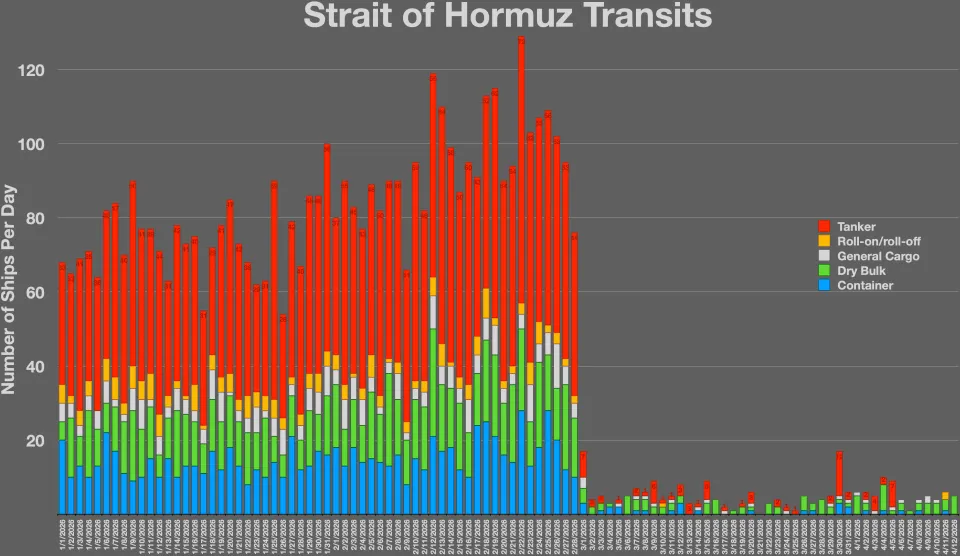
The driver behind this 'fear premium' is the hardening rhetoric regarding the Strait of Hormuz. Mohammad Baqer Zolghadr, secretary of the Supreme National Security Council, effectively extinguished hopes for a quick resolution by issuing six sweeping demands to the United States. These include a total withdrawal of U.S. naval forces and a permanent end to military actions in the region. While Foreign Minister Abbas Araghchi claimed that a 'temporary shipping route' deal with Oman is close, the market clearly prioritized the hardline stance of the security apparatus over the diplomatic overtures of the Foreign Ministry. For the everyday Iranian, this means the 'bubble' in gold coins is expanding as a hedge against a potential regional escalation.
Global Context: From Argentina to Fusion Breakthroughs
While Tehran remains fixated on the Strait, global markets are processing a mix of industrial earnings and scientific shifts. In South America, the Q2 earnings call for Loma Negra, Argentina’s industrial giant, highlighted the persistent struggles of high-inflation economies trying to maintain infrastructure growth. This serves as a mirror for Iran; when industrial productivity stalls due to macro instability, capital inevitably flees into 'dead' assets like gold coins rather than productive investments. This global trend of 'flight to safety' is currently keeping the gold ounce at a staggering $4,343.30, even as some cooling occurs.
Technologically, a major breakthrough at Berkeley Lab regarding nuclear fusion materials suggests that the long-term dominance of oil—and by extension, the strategic leverage of the Persian Gulf—may eventually face a sunset. Scientists have moved toward 'materials-driven fusion,' which could lower the temperature requirements for reliable energy. While this won't impact next week's Toman rate, it underscores the fragility of a national economy built almost entirely on the threat of closing a waterway. As the world seeks to diversify its energy sources, Iran’s reliance on geopolitical 'choke points' may offer diminishing returns in the decades to come.
Digital Resilience and the Practical Takeaway
In the crypto space, Bitcoin remains a pillar of relative stability, holding at $65,063. Despite reports from 'Red Teams' using AI to find exploits in Bitcoin’s core repositories, the network's resilience remains a key selling point for Iranians looking to bypass the local banking system's volatility. The US Senate’s movement on the CLARITY Act, set for a September vote, indicates that crypto is moving toward a more structured, institutionalized future globally. For Iranians, USDT (Tether) at 186,091 Toman remains the most liquid bridge between the local economy and the global digital market.
The Practical Takeaway: Today’s data shows a clear 'decoupling'—gold coins are getting more expensive even as the dollar and raw gold get cheaper. This is the definition of a psychological bubble driven by war fears. If you are looking to preserve value, realize that you are currently paying a high premium for the physical coin. If the Hormuz situation de-escalates even slightly, that 0.8% gain could evaporate instantly. Consider the stability of USDT or the lower-premium 18k gold for long-term savings, rather than chasing the volatile 'bubble' of the Emami coin during a news cycle dominated by hardline rhetoric.
Frequently Asked Questions
Why did the Emami coin rise while the US Dollar fell?
What are the six demands for reopening the Strait of Hormuz?
Is it a good time to buy gold coins in Iran?
How is Bitcoin performing amidst this regional tension?
How International Sanctions Shape Iran’s Dual Exchange Rate System
International sanctions have been a persistent force shaping Iran’s economy since the 1979 revolution. By restricting Iran’s access to the global financial system, sanctions limit the flow of foreign currency, especially U.S. dollars, into the country. As a result, the official exchange rate set by the Central Bank often diverges sharply from the market‑determined rate that traders use for everyday transactions. This split creates a dual exchange rate system: an official rate for essential imports and government contracts, and a parallel market rate for most private trade, gold, and even cryptocurrencies like the Emami coin.
The dual system emerged as a pragmatic response to sanctions‑induced shortages. When the official channel cannot supply enough dollars, importers turn to the black market, driving up the parallel rate. The gap can reach several hundred percent, influencing everything from the price of 18‑karat gold in Tehran to the valuation of Bitcoin and locally issued tokens. Investors and businesses therefore monitor both rates closely; a sudden tightening of sanctions can cause the market rate to spike, eroding purchasing power and prompting capital flight into assets perceived as safe havens, such as gold or crypto.
Sanctions also affect the exchange rate mechanism itself. Iran has periodically introduced multiple official rates for different categories of goods, a practice known as “multiple‑rate policy.” While intended to prioritize essential imports, it often fuels corruption and arbitrage, as savvy actors exploit the spread between rates. The government’s attempts to curb this by tightening foreign exchange controls have had mixed results, sometimes prompting public protests when the official rate is perceived as unrealistic compared to street prices.
Understanding this duality is crucial for anyone analyzing Iran’s market dynamics, whether you are tracking the price of the Emami coin, the USD‑to‑Toman rate, or the impact of a potential Strait of Hormuz closure on oil revenues. The exchange rate gap serves as a barometer of sanction pressure and domestic economic resilience, and it directly feeds into inflation, investment decisions, and the broader geopolitical calculus.
For policymakers and investors alike, the lesson is clear: in sanction‑hit economies, the official exchange rate tells only part of the story. The parallel market, shaped by supply constraints, risk perception, and alternative assets, often provides the more accurate snapshot of economic reality.