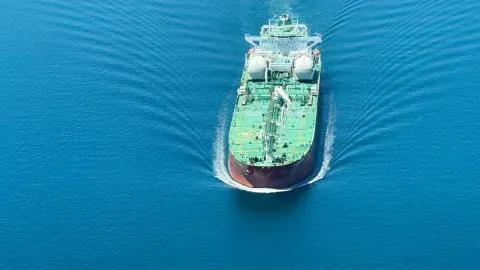
Diesel 'Cracks' Signal Global Energy Squeeze as Toman Inches Higher Amid UK Infrastructure Woes
هشدار بحران در بازار جهانی سوخت و رشد اندک دلار؛ سایه سنگین اختلالات زیرساختی بر بازارهای مالی
Global energy markets are flashing warning signs as diesel price spreads widen, suggesting a supply crunch that could ripple through inflation data. While the Toman saw a marginal 0.1% uptick today, the focus shifts to crumbling global infrastructure and the resilient yet strained UK economy.
At time of publishing
USD
187,600
Toman
Gold 18K
19.08M
Toman / gram
Bitcoin
$63,130
US Dollar
Tether
186,594
Toman
The Hidden Pulse of the Energy Market
While most retail investors fixate on the headline price of Brent crude, seasoned analysts are looking at 'diesel cracks'—the difference between the price of crude oil and the refined products made from it. According to recent reports from Jefferies, these cracks are revealing a profound squeeze in the real oil market. Despite Brent futures hovering around $87 to $90, the tightening supply of refined fuels like diesel is a harbinger of potential inflation. For the Iranian reader, this is more than just a global statistic. A global diesel shortage drives up the cost of international shipping and logistics, which eventually manifests as higher prices for imported goods on the shelves of Tehran and Mashhad, regardless of the exchange rate's daily fluctuations.
This energy tension is exacerbated by the ongoing stalemate in US-Iran negotiations. The Trump administration’s continued blockade of Iranian ports, coupled with Tehran’s demands for war-related compensation, has created a geopolitical floor for energy prices. As long as the Strait of Hormuz remains a point of contention and Iranian exports are restricted, the global supply cushion remains dangerously thin. Today's market data reflects this cautious atmosphere, with the USD sell rate moving from 187,400 to 187,600 Toman, a modest 0.1% increase that suggests traders are waiting for a more definitive signal from the diplomatic front.
Infrastructure Failures and Economic Resilience
Beyond the oil fields, the fragility of global infrastructure was on full display today. In the United Kingdom, aerial footage captured a significant train derailment near Lewes in East Sussex. While the immediate impact is local, such events underscore the mounting pressure on Western infrastructure during a period of high interest rates and economic strain. Interestingly, the UK economy has shown unexpected resilience, growing by 0.4% in the second quarter of 2026. This growth comes despite the shadow of regional conflicts and elevated energy costs, suggesting that major economies are finding ways to adapt to a 'permanent crisis' footing.
For investors looking beyond the immediate chaos, there is a growing shift in the AI narrative. While the market has been obsessed with semiconductor chips, some analysts are now pointing toward 'old school' industrial themes as the true winners of the AI industrialization era. Companies like Applied Industrial Technologies are seeing their earnings calls scrutinized for signs of how AI is being integrated into physical manufacturing and logistics. This pivot suggests that the next phase of the bull market may not be in digital code, but in the hardware and infrastructure that powers the modern world. For Iranians holding assets, this reinforces the value of 'hard' assets over purely speculative digital plays in a high-inflation environment.
---
The Domestic Snapshot: Gold's Slight Retreat
In the domestic market, gold provided a slight reprieve for those looking to enter the market. Gold 18k per gram moved from 19,167,551 to 19,075,211 Toman, a decrease of 0.5%. This downward movement in gold, despite a steady Toman, is largely a reflection of the global gold ounce price, which currently sits at $4,363.40. The Emami coin remained perfectly flat at 189,500,000 Toman, showing that the 'big money' in the coin market is currently in a wait-and-see mode. This divergence between gold and the dollar is a classic sign of a market that is balancing local currency devaluation against global commodity trends.

Meanwhile, the situation in Eastern Europe continues to inject volatility into the energy sector. Ukraine’s recent strike on Gazprom’s Neftekhim Salavat refinery in the Urals—a facility processing 200,000 barrels per day—highlights the vulnerability of Russian energy exports. As Kyiv intensifies its drone campaign against Russian industrial hubs, the global energy map is being redrawn. For Iran, which often finds its economic fate tied to the energy policies of both Moscow and Washington, these strikes mean that the 'energy premium' in the Toman's price is unlikely to disappear anytime soon. The practical takeaway for the day is clear: while the currency remains stable for now, the underlying global pressures are building, making liquidity and diversification more important than ever.
Practical Takeaway for Tomorrow
With the USD showing minimal movement and gold softening slightly, tomorrow’s session will likely be dictated by any news regarding the Strait of Hormuz or further escalations in the Ukraine-Russia energy war. If you are holding Toman, the current stability at the 187,600 level is a fragile peace. Diversifying into stablecoins like USDT (currently at 186,594 Toman) or maintaining a position in gold during these minor dips remains the most prudent path for preserving purchasing power against the backdrop of a tightening global energy market.
Frequently Asked Questions
Why is diesel price spread (cracks) important for Iranian inflation?
Why did gold prices drop in Iran today despite the dollar rising?
What does the UK train derailment have to do with the Iranian market?
Is the current stability of the Toman at 187,600 likely to last?
Understanding the Diesel Crack Spread – A Barometer of Global Energy Tightness
The crack spread is a financial metric that measures the difference between the price of a refined petroleum product—such as diesel—and the price of the crude oil from which it is produced. In practice, traders calculate the spread by subtracting the cost of a barrel of crude (usually a benchmark like Brent or WTI) from the combined price of the refined outputs, expressed per barrel. When the spread widens, it signals that refined products are in tighter supply relative to crude, often because of refinery outages, geopolitical disruptions, or seasonal demand spikes. Conversely, a narrowing spread suggests ample refining capacity or weaker demand for the product.
During 2026, several factors have converged to push diesel crack spreads higher. A series of refinery strikes in Europe and the aftermath of the Gazprom refinery shutdown in Ukraine have reduced the global diesel output. At the same time, geopolitical tension around the Strait of Hormuz—one of the world’s main oil chokepoints—has heightened concerns over crude supply disruptions, further inflating crude prices. The combination of higher crude costs and constrained diesel supply creates a classic “energy squeeze,” which is reflected in a rising crack spread and, ultimately, higher diesel prices for consumers and businesses alike.
Investors and policymakers watch the crack spread closely because it offers a real‑time snapshot of the refining sector’s health and the broader energy market’s balance. A sustained high spread can pressure inflation, especially in economies heavily dependent on diesel for transportation and industry, such as Iran, where the local currency (IRR) and gold prices are already sensitive to global commodity swings. Moreover, the spread can influence exchange‑rate dynamics; a weaker domestic currency can amplify the cost of imported crude, feeding back into the spread.
Understanding the crack spread also helps explain why some economies appear more resilient. The United Kingdom, for example, has diversified its energy mix and invested in strategic petroleum reserves, which can dampen the immediate impact of a volatile spread on domestic fuel prices. Meanwhile, emerging markets that lack such buffers may experience sharper inflationary pressures when the spread spikes.
In short, the diesel crack spread is more than a trading number—it is a leading indicator of global energy tightness, with ripple effects on inflation, exchange rates, and economic stability. Monitoring it provides valuable insight into how geopolitical events, refinery operations, and market expectations intertwine to shape the cost of the fuel that powers modern economies.