
Trump’s 'Economic D-Day' Looms as Toman Hits 203k: The 60-Day Peace Window Has Shattered
سایه «دی-دی اقتصادی» ترامپ بر بازار تهران؛ صعود دلار به ۲۰۳ هزار تومان با پایان ضربالاجل مذاکرات
The 60-day window for U.S.-Iran negotiations has officially closed, triggering a sharp 1.9% surge in the USD/IRR exchange rate to 203,000 Toman. As the Trump administration prepares a 'global economic war' strategy, Iranians are flocking to gold and crypto as the ultimate lifeboats.
At time of publishing
USD
203,000
Toman
Gold 18K
22.10M
Toman / gram
Bitcoin
$78,679
US Dollar
Tether
202,664.122
Toman
The Shattered Window and the 203k Reality
The silence in the diplomatic corridors has been replaced by the frantic clicking of keyboards in Tehran’s currency markets. Today, August 24, 2026, marks the official expiration of the 60-day negotiation window between Washington and Tehran—a period many hoped would bring a de-escalation of tensions. Instead, the market has delivered a harsh verdict. The USD moved from 199,200 to 203,000 (+1.9%) in a single session, a move that signals deep-seated fear among local traders. This isn't just a number on a screen; it represents a psychological barrier being smashed as the 'Economic D-Day' strategy from the Trump administration begins to take shape.
While Iranian state media (IRNA) has been busy claiming that the U.S. is distorting the remarks of Parliament Speaker Mohammad Bagher Ghalibaf to conceal military failures, the street is looking at the numbers. Ghalibaf claimed that Iran will not yield to pressure, but the 1.9% spike in the price of 18k gold (rising from 21,688,443 to 22,103,975 Toman) suggests that the public is not waiting for a political resolution. The reality of the 60-day window closing means that the path toward renewed sanctions and isolation is now wider than ever, and the Toman is the first casualty of this geopolitical cooling.
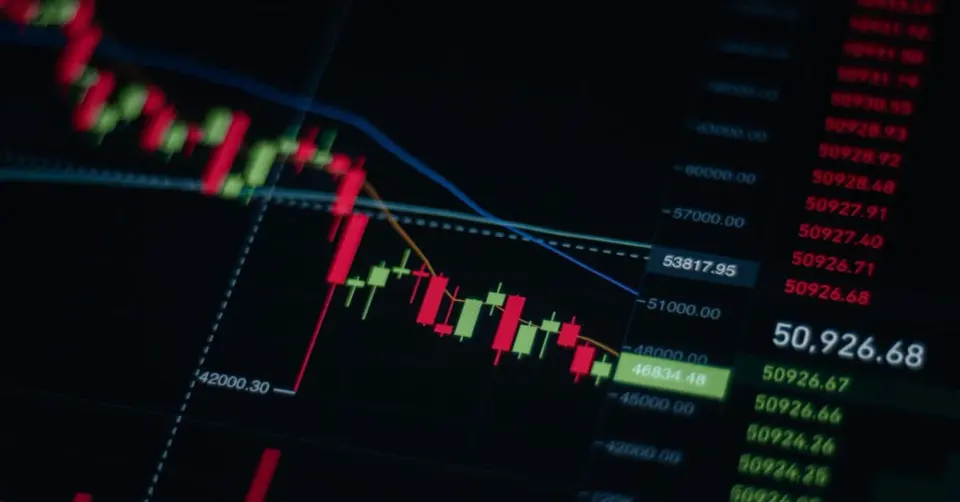
Global Markets: AI Booms While Oil Braces
Beyond the borders of Iran, the global financial landscape presents a stark contrast. In the United States, the tech sector continues its meteoric rise. Dell’s stock is up 235% this year, with analysts expecting even higher earnings as the AI revolution stays in high gear. This divergence is painful for the average Iranian; while the world invests in the future of computing and productivity, the Iranian economy is forced to brace for a 'global economic war' as announced by the Trump administration. Even as Scott Bessent, the U.S. Treasury Secretary, maneuvers the rainy-day fund for buybacks, his focus on Iran remains laser-sharp, promising to detail the specifics of new economic measures soon.
Oil prices have already begun to slip in anticipation of these new U.S. sanctions. Traders are pricing in a scenario where Iranian crude is further squeezed out of the global market, despite Tehran’s claims that it will weather the storm through links with China. However, as regional security pacts continue to be signed without Iran’s participation, the isolation feels more tangible. The UK’s Prime Minister Andy Burnham is currently in Kyiv, reinforcing a Western coalition that is increasingly hostile to any actor seen as aiding the Russian war chest—a category Tehran frequently finds itself in according to Western intelligence reports. This geopolitical encirclement is a primary driver for the Toman's current weakness.

The Crypto Lifeboat: Bitcoin at $78k
In this environment of high-stakes sanctions and currency devaluation, the crypto market is no longer just a speculative playground for Iranians—it is a necessity. Bitcoin (BTC) is currently trading at $78,679, while Tether (USDT) in the local market is priced at 202,664 Toman. Institutional moves globally, such as Strive’s massive purchase of 1,110 Bitcoin for $81.5 million and Bitmine Immersion’s holdings reaching $14.9 billion, underscore the growing legitimacy of digital assets as a store of value. For an Iranian investor, the 1.8% rise in the Emami coin (moving from 218,000,000 to 222,000,000 Toman) mirrors the desire for hard assets that cannot be printed by a central bank or easily seized by international sanctions.
As we look toward tomorrow’s session, the primary focus will be on whether the 203,000 level for the Dollar acts as a new floor or a temporary peak. With the 'Economic D-Day' rhetoric intensifying, volatility is the only certainty. The takeaway for the average person is clear: diversification is no longer optional. Whether it is 18k gold or digital assets, holding Toman is becoming an increasingly expensive gamble. The closure of the 60-day window was the signal; the market's reaction today is the consequence.
Frequently Asked Questions
What is the 'Economic D-Day' mentioned in recent news?
Why did the 60-day window matter for the Toman?
Is the current gold price a good entry point for Iranians?
How is Bitcoin reacting to the Iran-US tensions?
Understanding Economic Sanctions and Their Impact on National Currencies
Economic sanctions are punitive economic measures imposed by one or more countries, or international bodies, against a targeted country, entity, or individual. Their primary goal is to coerce a change in behavior, policies, or actions without resorting to direct military intervention. These measures can range from comprehensive trade embargoes that restrict nearly all commercial activity to more targeted sanctions focusing on specific sectors, individuals, or financial transactions. They are a significant tool in international relations, often used to address issues like human rights violations, nuclear proliferation, or state-sponsored terrorism.
The mechanisms of economic sanctions are diverse. They can include restrictions on imports and exports, freezing of assets belonging to the targeted government or its officials, travel bans, and limitations on access to international financial systems and markets. Crucially, sanctions often aim to cut off a country's access to foreign currency, particularly the U.S. dollar, which is dominant in global trade. This is achieved by restricting oil sales, blocking financial transactions, and discouraging foreign investment. Secondary sanctions can also be imposed on third-party entities that continue to do business with the sanctioned country, extending the reach and pressure.
The economic impact of sanctions on a targeted nation can be profound, particularly on its currency. When a country's ability to export goods and services is curtailed, its foreign exchange earnings diminish. This reduction in the supply of foreign currency in the domestic market, coupled with continued demand for imports, leads to a depreciation of the national currency against major international currencies like the USD. A weaker currency makes imports more expensive, fueling inflation and eroding purchasing power for citizens. Additionally, sanctions can trigger capital flight as investors lose confidence, further exacerbating currency instability and economic hardship. Countries under sanctions often seek alternative trading partners, develop parallel financial systems, or resort to illicit trade to circumvent these restrictions.
While proponents argue that sanctions are a necessary non-military tool to enforce international norms, critics often point to their potential for humanitarian consequences, disproportionately affecting ordinary citizens and potentially leading to unintended political outcomes. The effectiveness of sanctions is a subject of ongoing debate, with outcomes varying widely depending on the specific circumstances, the design of the sanctions, and the resilience of the targeted state.