Toman Gains Ground as Emami Coin Drops 2.6%; London Protests and Political Rhetoric Cool Market Heat
عقبنشینی قیمتها در بازار ۱۶ آبان؛ سقوط ۲.۶ درصدی سکه امامی همزمان با سیگنالهای سیاسی از لندن
The Iranian market saw a notable cooling period on Saturday, 16 Aban 1405, with Emami coins leading the retreat by dropping 2.6%. As anti-war protests erupted in London and Tehran officials traded barbs with Washington, the currency and gold markets found a temporary breathing room from recent highs.
At time of publishing
USD
266,000
Toman
Gold 18K
25.53M
Toman / gram
Bitcoin
$75,739
US Dollar
Tether
267,430
Toman
The Iranian financial markets opened the week on Saturday, November 7, 2026 (16 Aban 1405), with a visible shift in momentum. After weeks of heightened volatility driven by regional tensions, today marked a strategic retreat for major assets. The most significant movement occurred in the gold coin market, where the Emami coin fell from 267,000,000 to 260,000,000 Toman, representing a sharp 2.6% decline in just 24 hours. This correction suggests that the 'war risk premium' might be temporarily exhausted, as traders lock in profits following the recent escalations near Qeshm and the Strait of Hormuz.
In the currency corridor, the US Dollar followed a similar downward trajectory, moving from 267,500 to 266,000 Toman, a 0.6% decrease. While this move is modest, it reflects a stabilization of sentiment. State media outlets, including IRNA, have been active in promoting a narrative of resilience. Prosecutor General Mohammad Movahedi-Azad claimed today that 'enemies have failed to achieve their goals' despite years of plots, a statement likely intended to bolster domestic confidence. However, for the average Iranian, these fluctuations remain a double-edged sword; while a cheaper dollar eases import pressure, the underlying volatility continues to make long-term planning nearly impossible.
Geopolitical Sentiment and the 'London Signal'
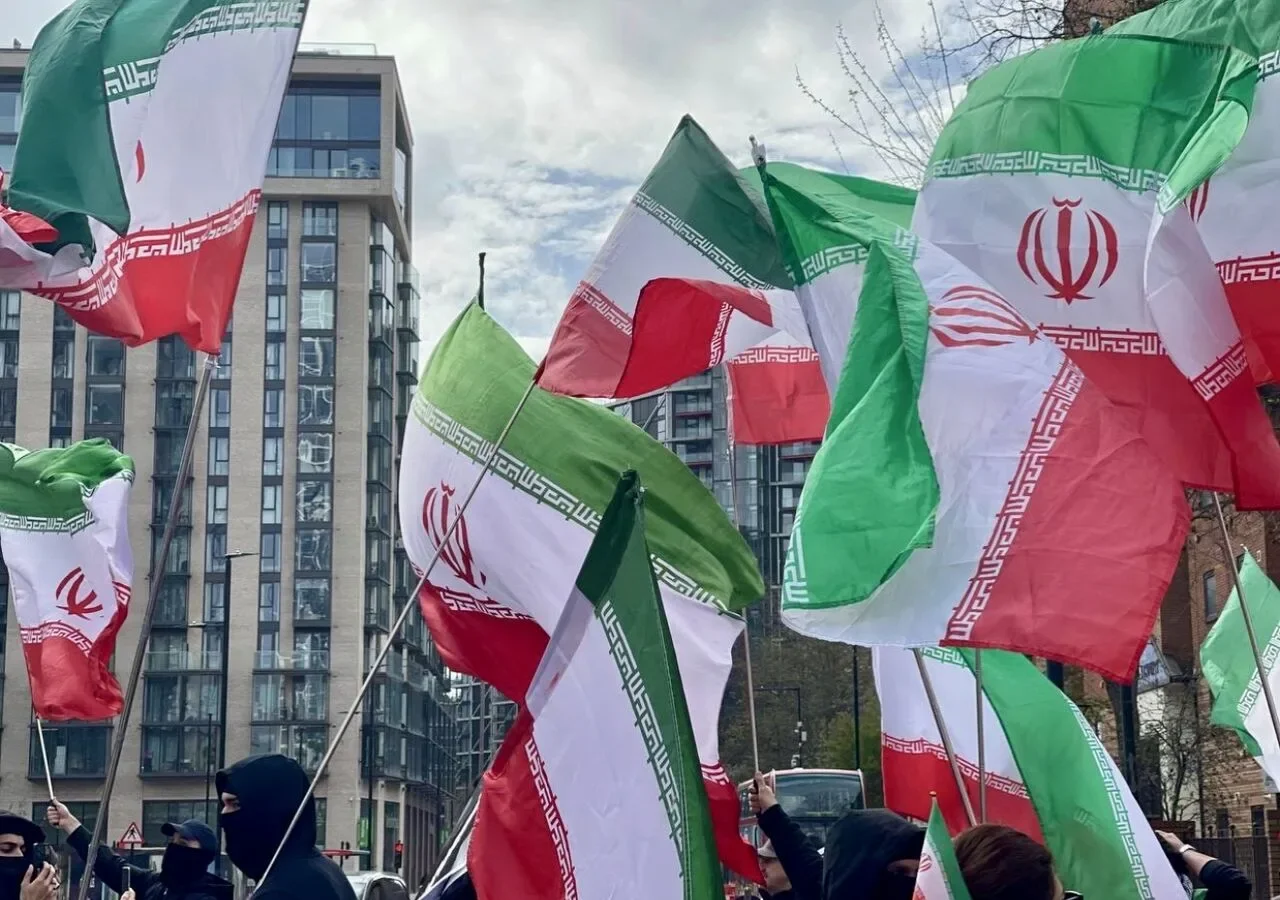
External factors played a crucial role in today’s market cooling. Anti-war activists and members of the Iranian diaspora gathered outside the US Embassy in London, chanting 'No to War' in protest against Washington’s military posture toward Iran. While such protests are often symbolic, they serve as a psychological counterweight to the threat of imminent conflict, which usually drives the Toman lower. Simultaneously, Major General Mohsen Rezaei, Secretary of the SNSC, used state media to ridicule Donald Trump, claiming he 'lost the war and the election.' This high-level rhetoric, while standard for Tehran, signals a regime that is currently more focused on verbal sparring than immediate military escalation, providing the markets with a much-needed pause.

Beyond the headlines of war, the domestic gold market saw 18k gold drop by 1.4%, falling to 25,534,419 Toman per gram. This move was mirrored by a slight dip in global gold prices, which currently sit at $4,072 per ounce. For local investors, the drop in coin prices—specifically the 2.6% slide in Emami—is a reminder that the local 'bubble' or premium often deflates rapidly when the immediate fear of a regional strike subsides. Investors are now watching the 260 million Toman support level for the Emami coin closely; a break below this could signal a deeper correction.
Global Markets and the AI Risk
Turning to global contexts, Iranian investors holding international assets or using stablecoins like USDT (currently at 267,430 Toman) should take note of shifting winds in the US. Analysis from MarketWatch suggests that the S&P 500 is dangerously exposed to the AI sector, with the index lacking the diversification many assume it has. If the AI bubble in the US begins to leak, the ripple effects on the US Dollar Index (DXY) and subsequently the USDT/IRR rate could be significant. This global uncertainty, combined with reports of massive outflows from Bitcoin ETFs—totaling $1.28 billion this week—indicates a broader 'risk-off' sentiment among global institutional players.
Finally, a human-interest story from the global markets offers a stark lesson in capital management. A report today detailed a family dispute where a husband refused to spend a $500,000 inheritance on home repairs, choosing instead to keep the capital 'frozen.' For Iranians facing high inflation, this is a relatable dilemma: whether to keep capital liquid and 'separate' or to invest it in tangible assets like housing or gold. With the current market cooling, the practical takeaway for tonight is to avoid panic-buying at the top. The 2.6% drop in coins proves that even in times of tension, prices do not move in a straight line. Watching the 264,000 Toman level for USD buy-ins will be the key metric for the start of tomorrow's session.
Frequently Asked Questions
Why did the Emami coin drop 2.6% while the dollar only dropped 0.6%?
How do protests in London affect the price of the Toman in Tehran?
Is the current drop in gold a good buying opportunity?
What does the S&P 500 AI exposure have to do with Iranian investors?
Political Sentiment, Currency Value, and Safe-Haven Assets
The recent movements in Iran's market, where the Toman gained ground while the Emami coin dropped, highlight a crucial dynamic: the profound impact of political sentiment and perceived stability on currency values and the demand for safe-haven assets. In many emerging markets, particularly those facing geopolitical uncertainties or international sanctions, purely economic indicators often play second fiddle to political developments in driving short-term market trends. A shift in political rhetoric or the perception of reduced risk can significantly alter investor and public behavior.
In economies like Iran, where the national currency (the Rial, often referred to in Toman units) can be prone to volatility due to external pressures and internal policies, citizens frequently turn to tangible assets like gold (such as the Emami coin) as a hedge against inflation and currency depreciation. These gold coins serve as a store of value, offering a sense of security when confidence in the local currency or banking system wavers. Their price movements often mirror the underlying sentiment about the economy's stability and future prospects.
When political sentiment improves, or there's a perceived "cooling" of market heat due to political rhetoric, confidence in the local currency can strengthen. This increased confidence may lead to an appreciation of the Toman against foreign currencies like the USD. Simultaneously, the urgency to hold safe-haven assets like gold might diminish. As the local currency becomes more stable and reliable, the demand for gold as a hedge decreases, leading to a fall in its price, as observed with the Emami coin.
This interplay underscores that market analysis in such contexts must extend beyond traditional economic metrics to encompass geopolitical factors, domestic political stability, and public sentiment. Understanding how political developments translate into shifts in currency values and asset preferences is key to comprehending the unique dynamics of these markets.