The Invisible Frontline: Why 'Financial War' is Moving the Toman and Gold Today
خط مقدم نامرئی؛ چرا «جنگ مالی» قیمت دلار و طلا را جابهجا میکند؟
As diplomats converge in Islamabad, the real battle for Iran's economy is being fought in the banking ledgers and oil terminals of China. We break down what 'financial warfare' actually means for your savings and why gold remains the ultimate hedge in 2026.
At time of publishing
USD
154,050
Toman
Gold 18K
17.68M
Toman / gram
The New Frontline: Beyond Missiles and Drones
While the world watches the diplomatic dance in Islamabad between Abbas Araghchi and the arriving US envoys, a much quieter and more consequential battle is unfolding in the financial corridors of Beijing and Washington. Today’s news that the US Treasury has sanctioned China’s Hengli refinery—a so-called 'teapot' refinery—is not just another headline; it is a direct strike on the 'oxygen' of the Iranian economy. These independent refineries have been the primary buyers of Iranian crude, providing the hard currency that keeps the Toman from a total freefall. When these 'teapots' are targeted, the flow of USD into Tehran’s Nima system tightens, putting immediate pressure on the open market rates we see today.
Parliament Speaker Mohammad Bagher Ghalibaf recently noted that the main battleground against the US is now 'financial warfare.' This isn't just political rhetoric. In 2026, the strength of a nation is measured by its central bank reserves and its ability to bypass digital blockades. For the average Iranian investor, this means that the price of the Dollar (currently sitting at 154,050 Toman) is no longer just a reflection of local supply and demand, but a barometer of how effectively these 'financial bypasses' are holding up against Western pressure. When a major Chinese refinery is cut off, the market feels the shiver long before the oil stops flowing.
Gold: The Global Shield and the Local Dip
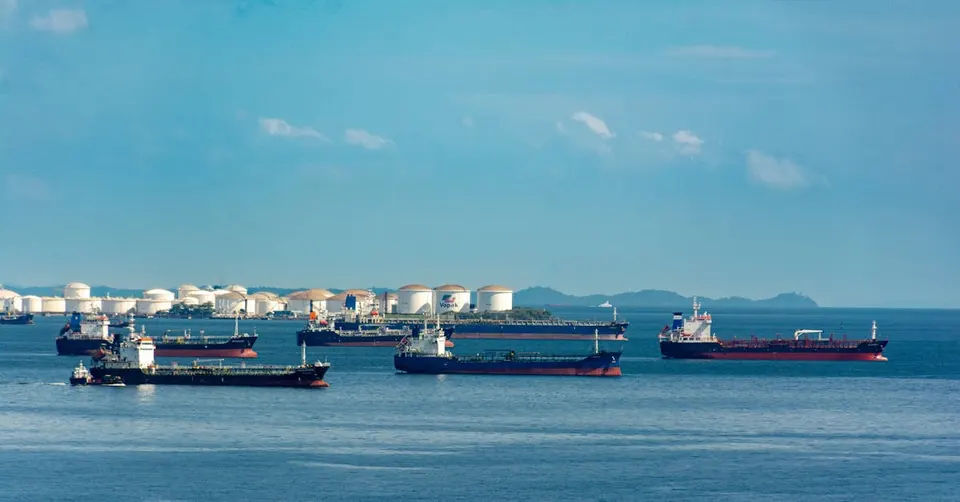
Interestingly, while global tensions are at a boiling point, we saw a slight 0.3% dip in local 18k gold prices today, bringing the gram to 17,677,408 Toman. To understand this, we have to look at the massive global context: Gold is trading at a staggering $4,710.80 per ounce. In a world where the war in Ukraine is stretching into a multi-year stalemate and Middle Eastern borders are being redrawn, gold has become the only 'trustless' asset. It doesn't require a bank to verify it, and it cannot be sanctioned out of existence. The local dip in Iran is likely a result of temporary profit-taking or a brief stabilization in the Toman, but the underlying trend remains clear: gold is the bunker for your capital.
Why does the price of an Emami coin (176,000,000 Toman) stay flat while the gram of gold drops? This often comes down to 'bubble' dynamics and the psychological premium Iranians place on minted coins. Coins are more liquid and easier to trade in times of crisis than raw gold or jewelry. However, as the global gold price stays near historic highs, the floor for Iranian gold prices is effectively rising. Even if the Toman stays stable at 154,050, the sheer momentum of global gold at nearly $5,000 an ounce will eventually pull local prices upward, regardless of local diplomatic outcomes in Pakistan.
The 'Cooking Oil' Indicator: Micro vs. Macro
The recent reports of Iranians crossing the border into Turkey just to buy basic cooking oil are a stark reminder of how 'financial war' trickles down to the kitchen table. When the US targets oil refineries, it reduces the government's ability to subsidize essential goods. This creates a two-tier economy: the macro level, where billionaires and state actors move gold and crypto, and the micro level, where everyday citizens struggle with the 'cost of living' inflation. This is why understanding the 'inflation hedge' is no longer optional—it is a survival skill.
For the smart investor at Arzbin, the lesson is diversification. If the 'financial war' is the new reality, then your portfolio must reflect that. Relying solely on the Toman is a gamble on the success of high-stakes diplomacy in Islamabad—a gamble that has historically been risky. Whether it is through stablecoins like USDT to capture the USD rate or physical gold to capture the global flight to safety, the goal is to ensure that your purchasing power doesn't vanish at the border. As we move through April 2026, the bridge between global geopolitics and your personal wallet has never been shorter.
Watch
How The U.S. Quietly Seized IRAN’s Oil — And Cornered CHINA
Policy Insight Hub
Frequently Asked Questions
What is a 'teapot' refinery and why does it matter to me?
Why did local gold drop 0.3% while global gold is near $5,000?
Is the current USD rate of 154,050 a peak or a plateau?
How does global gold at $4,710 impact my savings in Iran?
Understanding Economic Sanctions as a Tool of Financial Warfare
Economic sanctions are a powerful, non-military instrument of foreign policy, often wielded as a key weapon in what is increasingly termed "financial warfare." These measures are designed to pressure a target country, entity, or individual by disrupting their economic activity. Rather than direct military confrontation, financial warfare seeks to achieve political objectives by isolating a nation from global markets, limiting its access to essential goods and services, and restricting its ability to conduct international financial transactions. This "invisible frontline" can have profound effects on a nation's currency, trade, and overall economic stability.
The mechanisms of economic sanctions are varied and can include trade embargoes (like restrictions on oil exports), asset freezes, travel bans, and limitations on access to international banking systems. For a country heavily reliant on a specific export, such as Iran with its oil, sanctions directly target its primary source of foreign currency earnings. When a nation cannot sell its main commodity on global markets or struggles to receive payments through conventional channels, its reserves of foreign currency (like the US dollar) dwindle. This scarcity directly undermines the value of its domestic currency, leading to depreciation against major international currencies.
The impact of such financial pressure is evident in the movements of the Iranian Toman and the increased demand for gold within Iran. As the Toman's value erodes due to reduced foreign exchange inflows and the inability to easily participate in global trade, citizens often turn to stable assets like gold as an inflation hedge and a store of value. Gold becomes a de facto safe haven, providing a sense of security against the volatility of the national currency and the broader economic uncertainty caused by sanctions. Even with workarounds like "teapot refineries" in countries like China, the underlying pressure on Iran's economy and currency remains, driving shifts in domestic financial behavior.
In essence, economic sanctions represent a strategic effort to exert influence through economic pain. By constricting a nation's financial arteries, these measures aim to compel behavioral change or weaken its capacity to act. The ongoing interplay between sanctions, currency fluctuations, and the flight to safe assets like gold illustrates the complex and far-reaching consequences of financial warfare on both national economies and the daily lives of their citizens.