The Election Risk Playbook: How Global Ballots Are Driving Oil, Gold, and Your Toman Today
بازی ریسک در صندوقهای رأی؛ چرا انتخابات آمریکا و اسرائیل قیمت طلا و دلار را در تهران جابهجا میکند؟
As the U.S. midterms and Israel's deadlocked elections create a 'geopolitical fog,' markets are pricing in a massive risk premium. Learn why oil traders are bracing for escalation and how this uncertainty flows directly into the 270,000 Toman dollar.
At time of publishing
USD
270,400
Toman
Gold 18K
26.38M
Toman / gram
Bitcoin
$81,393
US Dollar
Tether
270,088.77
Toman
The Concept of the 'Risk Premium'
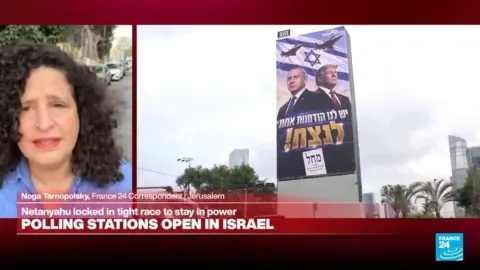
In the world of finance, uncertainty is the most expensive commodity. Today, Wednesday, October 28, 2026, we are witnessing a classic display of the 'Risk Premium' in action. This term refers to the extra return or price increase that investors demand to compensate for the risk of holding an asset during turbulent times. With the U.S. midterm elections scheduled for November 3 and Israel currently facing a political deadlock where neither Benjamin Netanyahu nor Gadi Eisenkot has secured a clear majority, global markets are on edge.
When political outcomes are unclear, traders move their money into 'safe havens.' This is why we see the price of Gold 18k in Iran rising by 0.8% today, reaching over 26.3 million Toman per gram. Investors aren't just buying gold because they like it; they are buying it because they fear that a political shift in Washington or Jerusalem could lead to a resumption of hostilities in the Middle East. As long as the 'who is in charge' question remains unanswered, the premium stays high, keeping local prices inflated regardless of domestic economic policy.
Oil Markets and the 'Iran Escalation' Hedge
Energy markets are particularly sensitive to these political cycles. According to recent analysis by ING commodity strategists, oil traders are currently 'bracing' for a potential escalation involving Iran following the U.S. elections. The logic is simple: if the election results embolden a more aggressive foreign policy, the risk of supply disruptions in the Persian Gulf increases. This anticipation acts as a floor for prices; even if there is no actual conflict today, the possibility of one tomorrow keeps Brent crude expensive.
However, this is a double-edged sword. Experts suggest that if the post-election period passes without a resumption of hostilities, oil prices could see a sharp correction downward. For the Iranian reader, this means the current strength of the dollar—sitting at a sell rate of 270,400 Toman—is partially built on a 'fear cushion.' If the geopolitical temperature cools, that cushion evaporates, which can lead to sudden, sharp volatility in the USD/IRR pair. Understanding this helps you realize that the price you see at the exchange shop is often a reflection of a trader's fear in London or New York.
Bitcoin and the New Geopolitical Hedge
Interestingly, the traditional 'Gold vs. Dollar' dynamic has been joined by a third player: Bitcoin. Today, BTC is trading above $81,300, supported by significant ETF inflows totaling $176 million. In previous years, crypto was seen as a purely speculative asset, but in 2026, it is increasingly behaving like 'digital gold.' When the Israel election results show a tie, as reported by The Guardian, and the path to a stable government remains blocked, some capital flows into decentralized assets that aren't tied to any single nation's central bank.
This shift is crucial for Iranian investors to understand. When global risk rises, Bitcoin often rebounds alongside gold. The fact that the Crypto Fear & Greed Index remains neutral despite the price surge suggests that this isn't a 'hype' rally, but rather a calculated move by institutional investors to diversify away from political instability. For those holding USDT in Iran, currently priced at 270,089 Toman, you are essentially holding a dual-layered hedge: you are protected by the value of the dollar and the global demand for crypto stability.
Technology, AI, and Market Reactivity
Finally, we must consider how technology is accelerating these price moves. A recent study by Anthropic revealed that professional analysts now defer to AI suggestions 86% of the time when making complex decisions. In a market where AI models are scanning news headlines—like the reports of online hate speech impacting Australian politics or UK energy policy shifts—the reaction time of the market has shrunk from hours to milliseconds.

This high-speed environment means that 'news' becomes 'price' almost instantly. When the UK Chancellor announces the removal of standing charges on gas bills for 23 million homes, AI algorithms calculate the impact on inflation and adjust currency bets before a human can even finish reading the headline. For the everyday user in Tehran, this means that by the time you hear a news report on the radio, the price of the Emami coin (currently at 268 million Toman) has likely already adjusted. To stay ahead, one must focus on the long-term structural trends rather than trying to outrun the algorithms.
Concept Diagram