Diplomacy in the Shadow of Blockades: Islamabad Talks and the $15 Billion Bet on War
دیپلماسی در سایه محاصره: مذاکرات اسلامآباد و شرطبندی ۱۵ میلیارد دلاری روی جنگ
As JD Vance prepares for high-stakes talks with Iranian officials in Pakistan, the digital world is financializing the conflict, with Polymarket seeking a $15 billion valuation. Meanwhile, the Toman faces fresh pressure as US naval blockades and energy warnings keep markets on edge.
At time of publishing
USD
152,550
Toman
Gold 18K
17.86M
Toman / gram
The Islamabad Gambit: Diplomacy Amidst Naval Escalation
In a striking display of dual-track strategy, Tehran and Washington are moving toward direct engagement even as the physical theater of conflict expands. Reports from Islamabad confirm that an Iranian delegation is scheduled to meet with U.S. Vice President JD Vance on Tuesday, marking a pivotal moment in the current regional crisis. This diplomatic overture comes at a time of extreme tension, following the U.S. Central Command’s release of footage showing Marines rappelling onto the Iranian-flagged M/V Touska. The contrast between the violent imagery of ship seizures and the quiet halls of Pakistani diplomacy suggests a high-stakes game where both sides are seeking leverage before a formal ceasefire can be hammered out.
For the Iranian economy, these talks represent a potential lifeline or a deepening of the current isolation. The mediation by Pakistan is not merely a logistical choice; it reflects the growing role of middle powers in navigating the unpredictability of U.S. foreign policy under the current administration. While French President Emmanuel Macron has urged all parties to "calm down," the reality on the ground remains volatile. Displaced residents in southern Lebanon are beginning to return home under a fragile 10-day truce, but the broader naval blockade initiated by the U.S. raises significant legal and practical questions about the future of global maritime trade and Iran’s ability to export its primary commodities.
Financializing Conflict: The $15 Billion Rise of Polymarket
The business of predicting war has never been more lucrative. Polymarket, the decentralized prediction platform, is currently in talks to raise $400 million at a staggering valuation of $15 billion. This surge in value is directly tied to the massive betting volumes surrounding the Middle East conflict, including specific wagers on the timing of U.S.-Israel strikes and the likelihood of a permanent ceasefire. What was once a niche tool for political junkies has transformed into a massive financial engine that some analysts worry could be prone to insider trading, as bettors with proximity to military or diplomatic circles potentially profit from their knowledge of impending events.
This phenomenon represents a new frontier in the "attention economy," where geopolitical instability is converted into tradable assets. While the platform provides a unique form of collective intelligence—often predicting outcomes more accurately than traditional pundits—it also raises ethical concerns about the gamification of human suffering. As the U.S. spends an estimated $2 billion weekly on its military operations related to Iran, the digital world is finding ways to monetize that same volatility. The high valuation of Polymarket suggests that investors expect geopolitical instability to remain a permanent fixture of the global landscape, driving demand for platforms that allow users to hedge against, or profit from, global chaos.
The AI Tsunami and the Tech Rift
In the technology sector, the divide between human creativity and algorithmic output has reached a tipping point. The music streaming service Deezer reported this hour that nearly 44% of its daily uploads—roughly 75,000 tracks—are now AI-generated. While these tracks currently account for only a small percentage of actual streams, the sheer volume of content is overwhelming the platform's ability to police fraud and maintain quality. This "dead internet" scenario, where bots create content for other bots to consume, is no longer a theoretical threat but a daily operational reality for the world’s largest tech companies. It signals a future where human artists may find it increasingly difficult to be discovered amidst a sea of synthetic noise.
Simultaneously, the rift between Silicon Valley and European regulators is widening into a chasm. Elon Musk has reportedly snubbed a legal summons from French prosecutors investigating his social media platform, X, and the AI chatbot Grok. By refusing to attend the voluntary interview, Musk is asserting a form of digital sovereignty that challenges the authority of nation-states to regulate global platforms. This defiance, combined with Epic Games’ new tools for creating AI-powered characters in Fortnite, illustrates a tech landscape that is moving faster than the law can follow. Whether it is Musk ignoring subpoenas or AI characters becoming indistinguishable from humans, the traditional boundaries of corporate and legal responsibility are being redrawn in real-time.
Market Realities: The Toman and the Energy Trap
Domestically, the Iranian market remains in a state of cautious defensive positioning. The USD/IRR rate moved from 151,650 to 152,550, a 0.6% increase over the last 24 hours, reflecting the continued pressure of the U.S. naval blockade and the uncertainty surrounding the Islamabad talks. While gold prices showed a marginal increase of 0.1%, with 18k gold reaching 17,860,012 Toman per gram, the Emami coin remained stagnant at 188,000,000 Toman. These figures suggest that while there is no immediate panic, the market is pricing in a prolonged period of high tension and restricted liquidity.
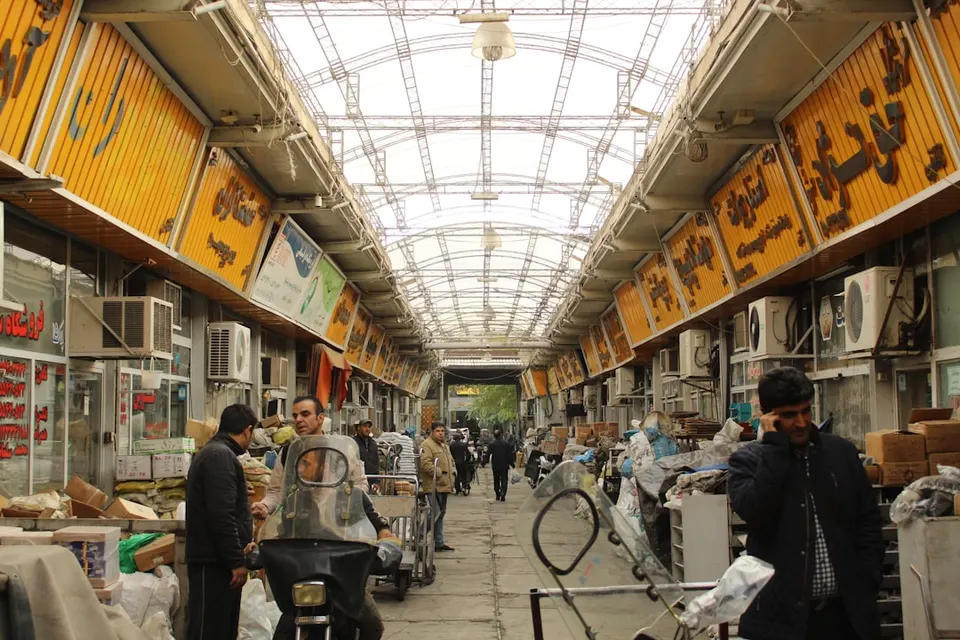
Adding to the economic complexity is the recent statement from U.S. Energy Secretary Chris Wright, who warned that gas prices may remain above $3 until 2027. This contradicts earlier optimistic claims of a short-term spike and suggests that the global energy transition, coupled with regional blockades, will keep inflationary pressures high for the foreseeable future. For Iran, this is a double-edged sword: while high energy prices theoretically increase the value of its reserves, the physical inability to move oil through blockaded lanes prevents the country from capitalizing on these market conditions. Investors are now looking toward the Pakistan summit as the primary catalyst for either a significant market correction or a further slide into economic isolation.
Frequently Asked Questions
How is the Islamabad meeting affecting the Iranian Toman?
Why is Polymarket's valuation reaching $15 billion?
What does the 44% AI music upload statistic mean for creators?
What is the legal basis for the U.S. naval blockade of Iranian ships?
Understanding Naval Blockades: A Tool of Economic Warfare
A naval blockade is the use of a country's maritime forces to prevent goods, military supplies, or people from entering or leaving a rival nation's ports. Historically, blockades have been employed to weaken an opponent’s war‑fighting capacity without a full‑scale invasion, turning the sea into a barrier that chokes off trade, finance, and essential resources.
Under international law, a blockade must be declared and notified to all belligerents, be effective (i.e., actually prevent entry), and must not cause excessive harm to civilians. The 1907 Hague Convention and the United Nations Charter set out these rules, aiming to balance military objectives with humanitarian concerns. Violations can be deemed acts of war or illegal aggression, prompting diplomatic fallout and potential UN sanctions.
Famous examples include the British blockade of Germany during World War I, which contributed to severe shortages and civilian hardship, and the U.S. naval quarantine of Cuba during the 1962 Missile Crisis, a limited blockade intended to pressure the Soviet Union without escalating to full conflict. In each case, the blockade's economic impact amplified its political leverage.
In the modern Middle East, discussions about a potential U.S. naval blockade of Iran have resurfaced amid heightened tensions over Tehran’s nuclear program and regional proxy wars. A blockade would not only restrict oil exports—critical for Iran’s economy and global energy markets—but could also trigger spikes in global oil prices, reverberating through the 2027 energy price forecasts. Understanding the mechanics of a blockade helps explain why policymakers weigh such drastic measures against the risk of broader economic disruption.
For students of geopolitics, grasping the concept of a naval blockade illuminates how maritime power can be wielded as a non‑kinetic weapon, shaping diplomatic negotiations, influencing global commodity markets, and altering the strategic calculus of both regional actors and great powers.