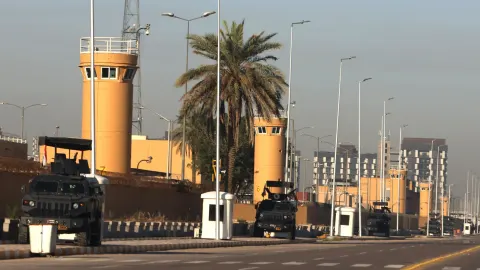
Diplomacy in the Shadow of Seizures: Vance Heads to Islamabad as Tensions Simmer
دیپلماسی در سایه توقیف؛ سفر جیدی ونس به اسلامآباد همزمان با تداوم تنشهای دریایی
As the U.S. Navy seizes an Iranian-flagged vessel in the Strait of Hormuz, a high-level American delegation led by JD Vance prepares for critical talks in Pakistan. Meanwhile, a humanoid robot sets a world record in Beijing, and prediction markets see a massive valuation surge.
At time of publishing
USD
152,550
Toman
Gold 18K
17.86M
Toman / gram
The Islamabad Paradox: Diplomacy Amid High-Seas Seizures
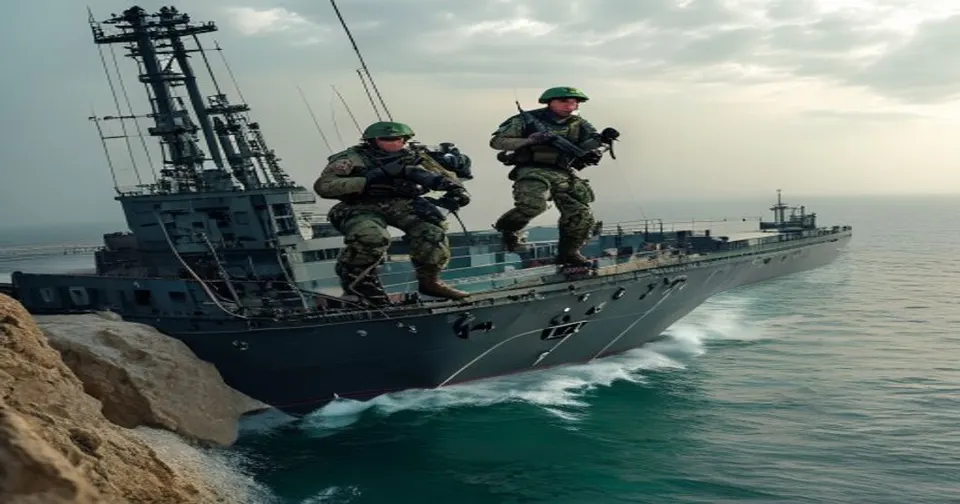
The geopolitical landscape remains a study in contradictions as the deadline for the current ceasefire approaches. On one hand, the United States has just disabled and seized the Touska, an Iranian-flagged container ship, in the Strait of Hormuz. U.S. Central Command released footage of Marines rappelling from helicopters onto the vessel, which was sanctioned for alleged links to weapons programs. This move, while legally grounded in Treasury sanctions, adds a layer of tactical pressure just as the diplomatic machinery begins to turn in Pakistan. The seizure marks the 27th ship turned back or detained since the blockade began, signaling a tightening noose around maritime logistics in the region.
Despite the aggressive posture at sea, the diplomatic track is surprisingly active. Vice President JD Vance, accompanied by Jared Kushner and Steve Witkoff, is slated to arrive in Islamabad on Tuesday. Tehran has sent mixed signals, initially denying plans for a new round of talks but later indicating a "positive review" of the invitation. This "carrot and stick" approach—seizing assets while offering a high-level seat at the table—suggests a strategy of maximum leverage. For the Iranian economy, the immediate impact is visible in the currency markets, where the USD rose from 151,650 to 152,550 (+0.6%) over the last 24 hours, reflecting the market's anxiety over whether Islamabad will produce a breakthrough or a breakdown.
The Humanoid Milestone: Beijing’s Android Outruns Humanity
In a moment that feels ripped from science fiction, a humanoid robot in Beijing has rewritten the rules of endurance. Over the weekend, an android participant in a half-marathon not only finished the race but did so faster than any human in history. This isn't just a gimmick; it represents a massive leap in actuator efficiency, balance algorithms, and battery density. While previous robots struggled with the uneven terrain and the mechanical stress of sustained running, this new generation of Chinese-made humanoids demonstrates a level of physical fluidity that was unthinkable just two years ago. The victory has sparked a global conversation about the future of human-machine competition and the rapid pace of Chinese technological advancement.
The implications of this record extend far beyond the athletics track. If a robot can outrun a human in a sustained physical challenge, the transition of these machines into logistics, search and rescue, and even frontline military roles is no longer a distant possibility—it is an imminent reality. China’s rapid progress in this sector highlights a widening gap in the "robotics arms race," where the focus has shifted from simple manual tasks to complex, high-performance physical maneuvers. As these machines become more capable and cost-effective, the global labor market faces a fundamental reckoning regarding the value of human physical labor in an era of superior mechanical endurance.

The Ethics of the Edge: Polymarket and the $15 Billion Bet on War
The rise of prediction markets has reached a fever pitch, with Polymarket now reportedly in talks for a fundraising round that would value the platform at a staggering $15 billion. The driver behind this astronomical valuation is, controversially, the ongoing Middle East conflict. Traders are wagering hundreds of millions of dollars on everything from the timing of airstrikes to the success of the Islamabad talks. While proponents argue that these markets provide a more accurate forecast than traditional intelligence or polling, critics are sounding the alarm over the ethical implications of profiting from kinetic warfare and the potential for insider trading by those close to the conflict.
This surge in volume highlights a shift in how information is valued in the digital age. When real money is on the line, the "wisdom of the crowd" often cuts through the noise of propaganda. However, the $15 billion valuation also signals that volatility has become a primary asset class. For the average observer, these markets offer a grim but fascinating barometer of global stability. As the U.S. and Iran dance around the negotiating table in Pakistan, the "odds" on Polymarket may ironically be a more watched indicator than the official press releases from the State Department, illustrating how decentralized finance is reshaping our understanding of geopolitical risk.

Energy Realities: The $3 Gas Floor and the Trump Economic Promise
Domestically, the U.S. economic narrative is hitting a wall of physical reality. Energy Secretary Chris Wright recently admitted in a televised interview that gasoline prices are likely to remain above the $3 mark until at least 2027. This acknowledgment stands in stark contrast to President Trump’s earlier campaign promises of a swift return to low-cost energy. The "short-term" price spikes that were once blamed on temporary geopolitical friction now appear to be structural, driven by deeper issues in refinery capacity and the long-term costs of ultra-deep drilling projects in the Gulf of Mexico.
This admission has significant political ramifications. As the administration pushes for more aggressive drilling—evidenced by the recent approval of BP’s ultra-deep project which sparked lawsuits from environmental groups—the promised relief at the pump remains elusive. For the global economy, sustained high energy costs act as a persistent inflationary pressure. It complicates the Federal Reserve's path and forces a re-evaluation of the "energy independence" narrative. If the world’s largest oil producer cannot bring domestic prices down significantly, it suggests that the global energy market is far more interconnected and resistant to national policy than previously admitted.
Frequently Asked Questions
Why did the US seize the Iranian ship Touska?
What is the goal of JD Vance's trip to Islamabad?
How fast did the humanoid robot run in Beijing?
Why is Polymarket's valuation so high?
The Strategic Significance of the Strait of Hormuz
The Strait of Hormuz, a narrow waterway between Oman and Iran, is one of the world’s most critical chokepoints for energy trade. Roughly 20% of global petroleum consumption—about 21 million barrels per day—passes through this 21‑mile‑wide channel, making any disruption instantly felt on oil markets, gasoline prices, and even broader economic activity. Because the strait lies at the mouth of the Persian Gulf, it provides the only maritime outlet for the massive oil‑producing nations of Saudi Arabia, Iraq, Kuwait, and the United Arab Emirates.
A blockade or even a temporary closure can trigger a cascade of effects. Historical precedents, such as the 2012 Iranian seizure of the British‑flagged Rim‑B and the 2019 attacks on oil tankers, caused oil futures to spike, prompting the International Energy Agency to warn of a “significant supply shock.” In practice, a shutdown forces tankers to take the longer route around the Cape of Good Hope, adding up to two weeks to transit time and increasing freight costs by hundreds of dollars per barrel. These extra costs are quickly passed on to consumers, contributing to higher gasoline prices—an issue that analysts project could push global gas prices toward $120 per barrel by 2027 if the strait remains vulnerable.
The strategic importance of the strait also makes it a focal point of diplomatic negotiations, especially between the United States and Iran. Recent talks in Islamabad involving JD Vance highlight how regional allies can serve as mediators to de‑escalate tensions that might otherwise lead to a blockade. The presence of high‑profile incidents—like the seizure of the Touska cargo vessel—underscores how maritime security, geopolitical rivalries, and economic interests intersect in this narrow passage.
Understanding the Strait of Hormuz is essential for grasping broader Middle‑East geopolitics. Its security influences everything from the valuation of prediction‑market platforms like Polymarket (which price in geopolitical risk) to the development of advanced technologies, such as humanoid robots, that aim to reduce human exposure in hazardous maritime environments. In short, the strait is a linchpin that connects energy economics, international diplomacy, and emerging tech trends.