Brink of Escalation: US Seizes Iranian Vessel as Japan Ends Pacifism and Markets Hedge on Peace Talks
در آستانه تنش؛ توقیف کشتی ایرانی توسط آمریکا، پایان صلحطلبی ژاپن و چشمانتظار بازارها به مذاکرات
Tensions spike as the US seizes an Iranian commercial ship and the Pasteur Institute is attacked, while Japan makes a historic pivot toward global arms exports. Meanwhile, Bitcoin reclaims $75,000 as investors weigh the 'biggest energy crisis in history' against potential diplomatic breakthroughs in Pakistan.
At time of publishing
USD
152,550
Toman
Gold 18K
17.77M
Toman / gram
Maritime Piracy and Scientific Sabotage: The New Frontline
The shadow war between Washington and Tehran has taken a sharp turn toward direct maritime and scientific confrontation. The Iranian Foreign Ministry has officially condemned the seizure of the 'Touska,' an Iranian-flagged container ship, in the Sea of Oman, labeling the act as 'maritime piracy.' While the U.S. Treasury maintains the vessel was sanctioned for its links to Iranian weapons programs, Tehran views the move as a grave violation of international law that threatens the safety of global trade routes. This escalation comes alongside a devastating strike on the Pasteur Institute of Iran, which Health Minister Mohammad-Reza Zafarghandi described as an 'international catastrophe.'
These events represent a shift in strategy, moving from proxy conflicts to targeting Iran’s core scientific and logistical infrastructure. The attack on the Pasteur Institute, a pillar of regional medical research, is being framed by Iranian officials as a deliberate attempt to cripple the nation's scientific progress under the guise of military necessity. As the U.S. and Israel continue their 53-day conflict with Iran, the rhetoric from Tehran has hardened. Parliament Speaker Mohammad Bagher Ghalibaf recently stated that Iran will not negotiate under the weight of such threats, suggesting that Donald Trump’s administration is attempting to transform diplomacy into a demand for total capitulation.

Global Energy Crisis and the Bitcoin Hedge
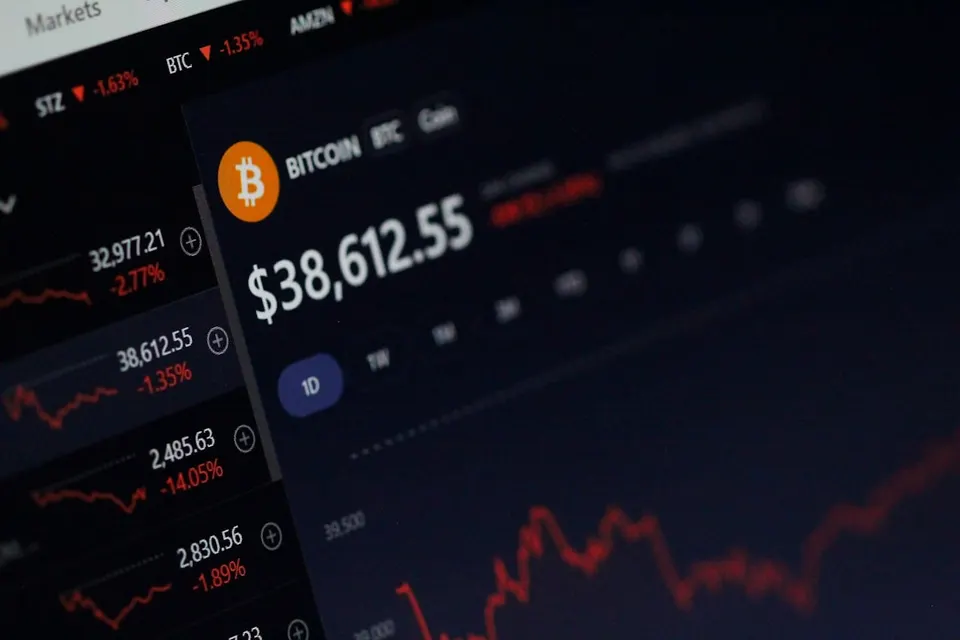
The International Energy Agency (IEA) has sounded the alarm, with Executive Director Fatih Birol declaring the current situation the 'biggest energy crisis in history.' The conflict’s footprint on global oil markets is profound, as the threat of a wider regional war looms over the Persian Gulf. Despite this backdrop of extreme volatility, Bitcoin has shown remarkable resilience, reclaiming the $75,000 level. In the last 24 hours, Bitcoin rose to $75,733, marking a 1.5% increase. Investors appear to be hedging against currency instability and energy-driven inflation, even as equities show signs of a cautious rally fueled by rumors of an upcoming ceasefire.
In the domestic Iranian market, the currency remains under significant pressure but showed stability in the latest session. The USD/IRR exchange rate held steady at 152,550 Toman (+0.0%), while gold 18k per gram saw a slight retreat from 17,860,012 to 17,772,981 Toman (-0.5%). This divergence between rising global crypto assets and a cooling domestic gold price suggests a temporary pause in local panic buying, as traders wait for the outcome of Vice President JD Vance’s scheduled mission to Pakistan. The market is currently stuck in a 'wait-and-see' mode, where any sign of a diplomatic breakthrough could trigger a sharp correction in safe-haven assets.
Japan’s Post-War Era Ends as Tensions Shift East
In a move that will redefine the security architecture of the Indo-Pacific, Japan has officially ended its decades-long policy of pacifism. Prime Minister Sanae Takaichi announced the lifting of bans on lethal weapons exports, a decision driven by the rising military assertiveness of China and the perceived unpredictability of U.S. foreign policy under the Trump administration. Japan is now positioned to sell advanced military hardware, including fighter jets and missile systems, to international partners. This shift marks the final departure from the constraints of Japan’s post-WWII constitution, signaling a world where regional powers are increasingly taking their defense into their own hands.
This rearmament of Japan is not happening in a vacuum. It coincides with a global trend of 'technofascism' and the integration of AI into warfare, as highlighted by recent criticisms of Palantir’s latest pro-West manifesto. Critics argue that the convergence of private tech giants and state military apparatuses is creating a 'predatory world order' that operates with impunity. As Japan prepares to enter the global arms market, the ethical and geopolitical implications are vast, potentially fueling a new arms race in Asia while the Middle East remains engulfed in the most significant conflict of the 21st century.
Corporate Scandals and the Economic Fallout
Away from the battlefield, the corporate world is facing its own tremors. In South Korea, the music industry was rocked by news that Bang Si-Hyuk, the founder of HYBE and the mastermind behind the K-pop phenomenon BTS, is facing an arrest warrant. Authorities allege that Bang illegally gained over $100 million through an elaborate investor fraud scheme. This scandal threatens to devalue one of South Korea’s most successful cultural exports and has sent shockwaves through global entertainment markets, proving that even the most polished corporate empires are not immune to the pressures of the current economic climate.

Meanwhile, in the retail sector, the impact of the Iran war is forcing major structural changes. Associated British Foods (ABF) has announced it will demerge the fashion giant Primark from its food business to maximize shareholder value. The company explicitly warned that the ongoing conflict in the Middle East is likely to dampen consumer spending across Europe. This move highlights how the geopolitical instability in the Gulf is no longer just a regional concern but a direct threat to the profitability of global consumer brands and the stability of international supply chains.
Frequently Asked Questions
Why did the US seize the Iranian ship 'Touska'?
Why is Bitcoin rising despite the global energy crisis?
What does Japan's end of pacifism mean for global security?
How is the Iran conflict affecting global retail brands like Primark?
Understanding Economic Sanctions
Economic sanctions are a powerful, non-military foreign policy tool used by countries or international bodies to influence the behavior of other states, individuals, or entities. They typically involve restrictions on trade, finance, travel, or other economic activities, aiming to impose costs on the target until it complies with specific demands or international norms. Unlike military intervention, sanctions are designed to exert pressure through economic hardship, making them a common choice in situations of geopolitical tension where direct conflict is to be avoided but inaction is not an option.
The mechanisms of economic sanctions vary widely. They can range from comprehensive embargoes that prohibit all trade with a targeted country, to more targeted measures like asset freezes against specific individuals or organizations, restrictions on financial transactions, or bans on particular exports (e.g., dual-use technologies, oil). The goal is often to disrupt the target's ability to fund undesirable activities, such as nuclear proliferation or terrorism, or to pressure its leadership to change domestic or foreign policies, such as human rights abuses or territorial aggression.
The impact of sanctions is multifaceted. For the targeted country, they can lead to severe economic hardship, including currency devaluation (as seen with the Iranian Toman), inflation, unemployment, and shortages of essential goods. This can, in turn, trigger social unrest or political instability. However, sanctions also carry risks for the imposing entities and the global economy. They can disrupt global supply chains, raise commodity prices (like oil, contributing to a "global energy crisis"), and create humanitarian concerns if not carefully designed. They can also push targeted nations to seek alternative trade partners, potentially strengthening rival blocs.
The seizure of an Iranian vessel, as mentioned in the headline, is a tangible example of how economic sanctions are enforced. Such actions are often taken to prevent the circumvention of existing sanctions, disrupt illicit trade, or to increase pressure on a regime. This highlights that sanctions are not merely abstract policies but involve real-world enforcement mechanisms with direct and often significant consequences for international commerce and geopolitical stability.