Hormuz Deadlock: Pentagon Warns of 6-Month Clearing Delay as Apple’s Tim Cook Steps Down
بنبست هرمز: هشدار ۶ ماهه پنتاگون برای بازگشایی و پایان دوران تیم کوک در اپل
The Pentagon warns that clearing the Strait of Hormuz of mines could take half a year, while Apple announces Tim Cook will step down as CEO this September. Meanwhile, the US military reveals it is running a Bitcoin node for national security purposes.
At time of publishing
USD
154,050
Toman
Gold 18K
17.78M
Toman / gram
The Six-Month Shadow Over the Strait of Hormuz
The geopolitical crisis in the Middle East has entered a grueling new phase as leaked Pentagon assessments suggest that reopening the Strait of Hormuz could take up to six months. This revelation comes on the heels of the sudden resignation of US Navy Secretary John Phelan, leaving a critical leadership vacuum at the height of the maritime standoff. As oil prices hover stubbornly above $100 per barrel, the market is beginning to price in a long-term disruption rather than a temporary spike.
President Trump’s recent comments, suggesting that Iranian ship seizures do not constitute a violation of the current fragile ceasefire, have added to the diplomatic confusion. While the White House appears to be downplaying the immediate threat of escalation, the reality on the water is one of a total blockade. For global energy markets, a six-month delay in clearing the waterway means a fundamental restructuring of supply chains and a sustained inflationary pressure on the global economy that few central banks are prepared to handle.
Apple’s End of an Era: Tim Cook Steps Down
In a move that has sent ripples through Silicon Valley and global stock markets, Apple has confirmed that CEO Tim Cook will step down this September. Cook, who took the helm from Steve Jobs in 2011, has overseen the company’s growth into a multi-trillion-dollar titan. He will be succeeded by John Ternus, the current head of hardware engineering. This transition marks more than just a change in leadership; it signifies Apple's pivot toward a future dominated by spatial computing and integrated artificial intelligence, moving away from the pure hardware focus of the iPhone era.
Investors are reacting with a mixture of caution and curiosity. Under Cook’s leadership, Apple became a master of supply chain efficiency and services revenue, but critics argue the company has been slow to react to the generative AI revolution led by Microsoft and Google. Ternus will inherit a company at a crossroads, tasked with proving that Apple can still innovate at the pace of its younger, more agile competitors while maintaining the premium ecosystem that defines its brand.

Geopolitical Crypto: The US Military and Bitcoin
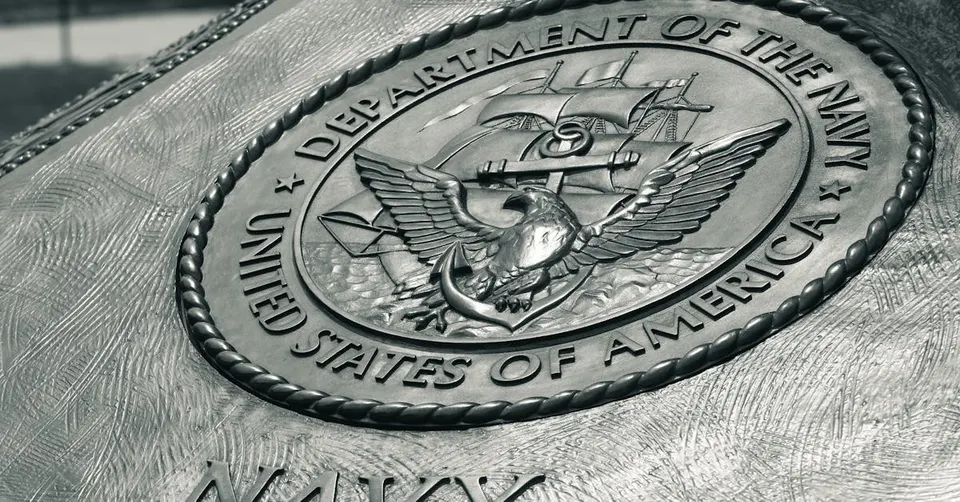
In a startling disclosure to Congress, Admiral Samuel Paparo of the US Indo-Pacific Command revealed that the US military is now running a live Bitcoin node. This is not a financial investment but a strategic move aimed at cybersecurity testing and "power projection" in the digital realm. The Pentagon views the decentralized nature of the Bitcoin protocol as a potential tool for maintaining communication and financial resilience in the event of a total kinetic or cyber conflict with major powers like China.
This shift in perspective—treating Bitcoin as national security infrastructure rather than a speculative asset—marks a turning point for the cryptocurrency industry. It suggests that the US government is moving toward incorporating decentralized technologies into its defense doctrine. As the military explores these protocols, the narrative around Bitcoin is evolving from a hedge against inflation to a strategic asset in the new Cold War, potentially leading to more robust regulatory frameworks and institutional adoption.
Market Update: Toman and Gold Stability Amid Global Turmoil
Despite the massive shifts in global leadership and security, the Iranian domestic market showed remarkable stability over the last 24 hours. The USD/IRR rate remained unchanged, with the sell rate holding steady at 154,050 Toman. Gold 18k also saw minimal movement, shifting from 17,779,445 to 17,780,599 Toman, a negligible 0.0% change that reflects a market currently in a 'wait-and-see' mode regarding the Hormuz developments.
However, the coin market saw some downward pressure. The Emami coin dropped from 177,000,000 to 175,500,000 Toman, a decrease of -0.8%. This slight correction suggests that while the currency market is frozen by central bank intervention or lack of liquidity, gold investors are slightly hedging their bets or taking profits as global gold prices reach historic highs near $4,740 per ounce. The divergence between the static dollar and falling coin prices indicates a complex internal market dynamic where local demand is struggling to keep pace with international valuation spikes.
Frequently Asked Questions
Why is the Pentagon saying it will take 6 months to clear the Strait of Hormuz?
Who is John Ternus, the new Apple CEO candidate?
What does the US military running a Bitcoin node mean for the price of BTC?
Why did the Emami coin price drop despite gold being at record highs?
Understanding Maritime Chokepoints: The Strategic Importance of the Strait of Hormuz
Maritime chokepoints are narrow channels or passages along widely used global sea routes, vital for international trade and energy supply. These geographical bottlenecks, such as the Suez Canal, Panama Canal, and particularly the Strait of Hormuz, are incredibly significant because a substantial portion of the world's commercial traffic, including oil, natural gas, and other goods, must pass through them. Any disruption, blockage, or threat to these passages can have immediate and far-reaching consequences for global economies and geopolitical stability.
The Strait of Hormuz, situated between Iran and Oman, stands out as arguably the world's most critical oil transit chokepoint. It connects the Persian Gulf with the Arabian Sea and beyond, making it the sole sea passage for vast quantities of crude oil and liquefied natural gas (LNG) from major producers like Saudi Arabia, Iran, UAE, Kuwait, and Iraq. Roughly one-fifth of the world's total petroleum consumption, and a significant portion of global LNG, transits through this narrow strait daily. This immense volume underscores its unparalleled importance to global energy security.
A blockade or significant disruption in the Strait of Hormuz would send shockwaves through the global economy. Oil and gas prices would likely skyrocket, leading to higher transportation costs, increased inflation, and potential recessions in energy-dependent nations. Supply chains for countless industries would be severely impacted, as alternative routes are either non-existent, prohibitively expensive, or significantly longer, leading to delays and shortages. The economic fallout would not be limited to energy markets but would ripple through manufacturing, retail, and consumer spending worldwide.
Beyond economics, the Strait of Hormuz is a focal point of geopolitical tension. Its strategic location makes it a highly militarized zone, with various naval forces maintaining a presence to protect maritime trade and assert regional influence. Threats to shipping in the strait, whether from state actors, non-state groups, or accidents, can quickly escalate into international crises. Understanding the vulnerability and critical nature of such chokepoints is therefore essential for comprehending global energy markets, international relations, and the intricate balance of power that underpins global stability.