Trump Claims King Charles Backs Iran Nuclear Ban; Toman Hits 181,000 as Market Volatility Surges
ادعای ترامپ درباره توافق با چارلز سوم علیه برنامه هستهای ایران؛ جهش نرخ دلار به ۱۸۱ هزار تومان
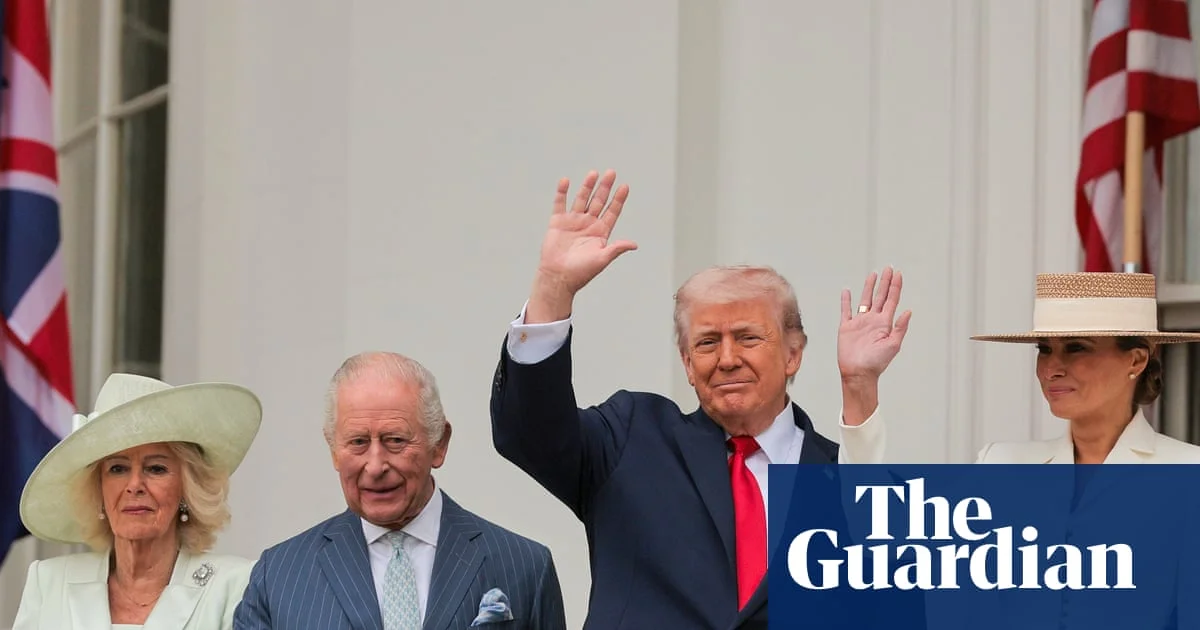
Donald Trump claims King Charles III supports a total ban on Iranian nuclear weapons during a White House visit, while the Iranian Toman plunges 5.6% in 24 hours amid growing geopolitical warnings from the EU.
At time of publishing
USD
181,050
Toman
Gold 18K
20.12M
Toman / gram
Bitcoin
$77,005
US Dollar
Tether
17,620.3
Toman
Trump Claims Monarchy Alignment on Iran Nuclear Policy
During a high-profile state dinner at the White House on Tuesday, President Donald Trump claimed that King Charles III expressed agreement with his hardline stance on Iran’s nuclear program. According to Trump, the British monarch, who is currently visiting Washington with Queen Camilla, privately signaled that Iran must never be allowed to possess nuclear weapons. This statement is particularly controversial given the strict constitutional neutrality of the British monarchy regarding political and diplomatic policy. While the UK government has historically supported the non-proliferation of nuclear weapons, the public framing of the King’s personal opinion by a US president creates a significant diplomatic ripple, potentially complicating London's nuanced diplomatic channels with Tehran.
For Iranian observers, this development signals a tightening of the Anglo-American alliance against the Islamic Republic's nuclear ambitions. If the British crown is being leveraged as a symbol of Western unity on this front, it suggests that the space for European mediation—often led by the UK, France, and Germany—is rapidly shrinking. This rhetorical shift comes at a time when the JCPOA is effectively a relic of the past, and the focus has moved toward a more confrontational containment strategy. The direct mention of the King's support serves to moralize the sanctions regime, making it harder for future UK administrations to pivot toward a more conciliatory approach without appearing to contradict the throne.
Toman in Freefall: Currency and Gold Markets React to Escalation
The Iranian financial markets are currently experiencing a period of intense volatility, with the national currency suffering a sharp decline. In the last 24 hours, the USD/IRR exchange rate moved from 171,450 to 181,050, marking a significant 5.6% depreciation. This surge in the dollar's value is mirrored in the precious metals sector, where the price of 18k gold rose from 19,078,212 to 20,119,349 Toman per gram (+5.5%). The most dramatic shift, however, was seen in the Emami gold coin, which jumped from 195,000,000 to 208,000,000 Toman, a staggering 6.7% increase in a single day.
This market panic is driven by a combination of factors, primarily the fear of imminent military or economic escalation following warnings from European leaders. When the currency loses more than 5% of its value in a single day, it triggers a feedback loop of retail panic, where citizens rush to convert their savings into hard assets like gold or stablecoins. For the average Iranian, this translates to an immediate spike in the cost of imported goods and a further erosion of purchasing power. The central bank's tools for intervention appear increasingly limited as the gap between the official and free-market rates continues to widen, reflecting a deep-seated lack of confidence in the short-term geopolitical outlook.
EU Warns of 'Years of Echoes' as Regional Conflict Looms
European Commission President Ursula von der Leyen has issued a stark warning regarding the potential for expanded conflict in the Middle East, stating that the consequences of a full-scale war involving Iran could "echo for months or years to come." Speaking as she prepared to meet with regional leaders, the EU chief emphasized that the global economy is ill-prepared for a sustained disruption in the region. This rhetoric marks a shift from the EU’s traditional role as a de-escalator, suggesting that Brussels is now bracing for a worst-case scenario. The warning specifically points toward the long-term destabilization of energy markets and the potential for a renewed refugee crisis that could impact European internal politics.
Simultaneously, global energy dynamics are shifting as China’s imports of Liquefied Natural Gas (LNG) have collapsed to a six-year low this month, hitting just 3.5 million tons. This 30% drop from last year is largely due to soaring global prices driven by Middle Eastern tensions. As China—Iran's largest oil customer—re-evaluates its energy security, the pressure on Tehran to maintain its export volumes grows. The combination of high energy prices and reduced demand from major buyers creates a precarious economic environment for Iran, which relies heavily on energy revenues to fund its national budget and stabilize its currency. The 'echoes' mentioned by von der Leyen are already being felt in the form of supply chain shifts and a global pivot toward more expensive, but safer, energy sources.

Domestic Allegiance: Nationwide Rallies Called Amid Pressure
In response to the mounting international pressure and the deteriorating economic situation, the Islamic Propagation Coordination Council has called for a nationwide rally. Titled the “Jaan Fadaa Campaign,” the event is intended to be a public show of allegiance to the Leader of the Islamic Revolution, Ayatollah Seyyed Mojtaba Hosseini Khamenei. These gatherings are a traditional tool used by the state to demonstrate internal cohesion during times of external crisis. By framing the current struggle as a religious and national duty, the government aims to consolidate its base and project an image of strength to both domestic critics and foreign adversaries.
However, the timing of these rallies—occurring alongside a currency crisis—highlights the growing disconnect between official narratives and the economic reality on the street. While the state focuses on ideological mobilization, the public is increasingly preoccupied with the skyrocketing cost of living and the threat of regional instability. These rallies serve as a barometer for social sentiment; the turnout and the fervor of the participants will be closely watched by international analysts to gauge the level of domestic support for the current administration's defiant foreign policy. For the Iranian public, these events represent a moment of high tension, as the nation balances its strategic ambitions against the mounting costs of isolation.
Watch
Trump claims King Charles 'agrees' Iran shouldn't have nuclear weapon in banquet speech | BBC News
BBC News
Frequently Asked Questions
Why did the Toman drop 5.6% in a single day?
Did King Charles actually support Trump's Iran policy?
What does the drop in China's LNG imports mean for Iran?
How International Sanctions Shape Iran’s Currency and Markets
International economic sanctions are tools used by governments or multilateral bodies to pressure a target country into changing policies deemed unacceptable. In the case of Iran, sanctions have been imposed repeatedly over its nuclear program, human‑rights record, and alleged support for terrorism. These measures typically restrict Iran’s access to the global financial system, limit its ability to export oil, and freeze foreign assets, creating a cascade of macro‑economic effects.
One of the most visible outcomes is the rapid depreciation of the Iranian rial (IRR) and its unofficial counterpart, the toman. When foreign investors cannot legally hold or trade Iranian assets, demand for the local currency plummets, while domestic demand for hard currencies like the US dollar surges. The result is a widening gap between the official exchange rate set by the Central Bank and the market rate that businesses and citizens actually use. In April 2026, the market rate for USD/IRR hovered around 500,000 IRR per dollar, far above the official peg, reflecting deep loss of confidence.
Currency weakness also fuels price spikes in alternative stores of value, most notably gold. As the rial loses purchasing power, Iranians turn to gold coins and bullion, driving up domestic gold prices dramatically. This phenomenon was evident when Iran’s gold‑coin price surged by more than 30 % within weeks of a new round of US‑EU sanctions in early 2026.
Sanctions ripple beyond currency markets. Restrictions on oil exports have forced Iran to seek alternative buyers, often at discounted prices, which reduces national revenue and limits fiscal capacity. The decline in export earnings weakens the government’s ability to subsidize essential goods, exacerbating inflation and further eroding the real value of the rial. Moreover, secondary effects—such as reduced Chinese liquefied natural gas (LNG) imports from Iran—underscore how sanctions can reshape trade flows and regional energy dynamics.
Understanding the mechanics of sanctions helps explain why political statements—like claims that foreign monarchs support a nuclear ban—can move markets even if they lack substance. Investors react to perceived risk, and any hint of heightened diplomatic pressure can trigger capital flight, widening the currency gap and amplifying volatility across Iran’s financial system.