US Strikes Loom: CENTCOM Sets Iran Deadline as Trump Threatens European Troop Withdrawal Amid Oil Market Chaos
ضربالاجل جنگی سنتکام و تهدید ترامپ به خروج از اروپا؛ تلاطم بازار نفت و ثبات شکننده دلار در مرز ۱۷۷ هزار تومان
Washington enters a critical window as CENTCOM prepares 'short and powerful' strike options against Iran, while President Trump threatens to pull US troops from Germany and Italy. Global oil prices briefly touched $126 per barrel as markets brace for a potential escalation in the Middle East.
At time of publishing
USD
177,000
Toman
Gold 18K
19.69M
Toman / gram
Bitcoin
$77,408
US Dollar
Tether
17,569.2
Toman
The CENTCOM Strike Plan: A Deadline for Diplomacy
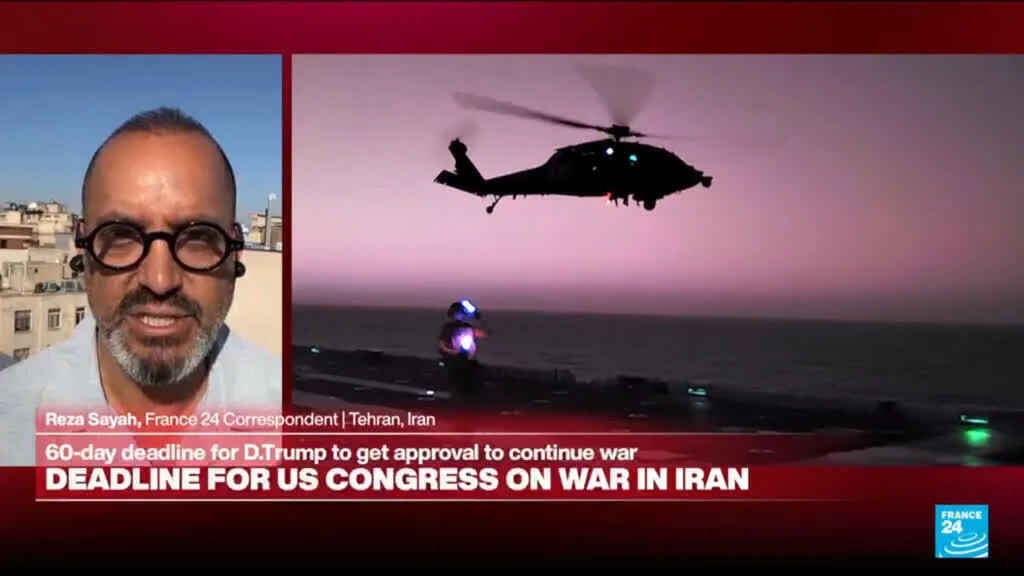
The geopolitical landscape has shifted dramatically this hour following reports from Axios that the US Central Command (CENTCOM) has finalized a series of military strike options aimed at Iran. This development comes as the US Congress faces a critical deadline regarding war powers and the authorization of force. According to high-level sources, the proposed military action is characterized as "short and powerful," specifically designed to break the current diplomatic stalemate and force a return to the negotiating table. This shift in posture suggests that the White House is losing patience with traditional diplomatic channels, opting instead for a doctrine of kinetic pressure to achieve its regional objectives.
The immediate fallout was felt most acutely in the energy markets. Brent crude prices experienced a violent spike, surging nearly 7% to surpass $126 per barrel before settling back toward $112.10. This volatility reflects a deep-seated fear among global traders that any direct military engagement could lead to a prolonged disruption of supply through the Strait of Hormuz. While prices have eased slightly from their intraday highs, the underlying risk premium remains elevated, signaling that the market is far from convinced that a peaceful resolution is imminent. For the average consumer and business, this translates to sustained inflationary pressure on fuel and logistics costs globally.

Trump’s NATO Ultimatum: Troops for Support
Compounding the tension in the Middle East is a widening rift between the United States and its European allies. President Donald Trump has escalated his rhetoric against NATO members, specifically threatening to withdraw American troops from Germany, Italy, and Spain. This move is reportedly a response to public criticism from European leaders regarding the US-Israeli strategy toward Iran. German Chancellor Friedrich Merz has attempted to maintain a facade of transatlantic unity, but the friction is becoming impossible to ignore. Trump’s dissatisfaction stems from what he perceives as a lack of material support for US maritime security operations in the Persian Gulf and the broader regional conflict.
Italian Defense Minister Guido Crosetto has already pushed back against these threats, rejecting accusations that Rome has failed to assist in maritime security. The potential withdrawal of US forces from these strategic hubs would represent a fundamental realignment of the global security architecture. For decades, the presence of American boots on European soil has been the bedrock of NATO’s deterrence strategy. If the US follows through on these threats, Europe may be forced to accelerate its own independent defense capabilities, a process that would take years and billions of dollars to complete, leaving a temporary power vacuum that rivals like Russia or China could look to exploit.
Tehran’s Defiance and the Domestic Market Response
Inside Iran, the response to these escalating threats has been one of calculated defiance. Parliament Speaker Mohammad Bagher Ghalibaf recently dismissed the feasibility of a US-led naval blockade, using a striking geographical comparison to argue that Iran’s borders are too extensive and its regional influence too deep to be contained by a naval cordon. This rhetoric is aimed at projecting strength to both a domestic audience and foreign adversaries. Despite the high-stakes military talk, the domestic currency market in Tehran has shown a surprising degree of resilience. The USD sell rate moved from 177,150 to 177,000 Toman, representing a minor decrease of -0.1% over the last 24 hours.

Gold prices, however, saw a more pronounced correction. Gold 18k per gram dropped from 19,870,492 to 19,687,427 Toman, a decline of -0.9%. This suggests that while the threat of war is ever-present, the local market may have already priced in a significant amount of geopolitical risk, or that central bank interventions are successfully dampening volatility. The Emami coin remained perfectly flat at 203,000,000 Toman (+0.0%), indicating a wait-and-see approach from major retail investors. For Iranians, the primary concern remains the translation of these global tensions into daily purchasing power, as any further spike in oil or regional instability could eventually trigger a more aggressive devaluation of the Toman.
Bitcoin and Global Markets: A Futures-Driven Rally
In the broader financial world, Bitcoin has managed to rebound above the $77,000 mark, currently trading at $77,408. However, analysts from CryptoQuant have issued a warning that this recent rally was largely driven by the futures market rather than spot demand. Historically, such futures-led price increases are prone to sharp reversals if long positions are liquidated. The crypto market remains highly sensitive to the broader geopolitical climate; while some see Bitcoin as a 'digital gold' hedge against conflict, the current data suggests it is still behaving more like a high-beta risk asset that could retreat if the Iran situation escalates into a full-scale kinetic conflict.
As we move into the afternoon hours in Tehran, the focus remains on Washington’s next move. If the proposed CENTCOM strikes move from the planning stage to execution, we can expect immediate and severe reactions across all asset classes. Conversely, if this is part of a broader 'maximum pressure' negotiation tactic, the markets may continue to trade in a volatile sideways pattern. For now, the global economy sits on a knife-edge, balanced between the hope for a diplomatic breakthrough and the reality of a rapidly mobilizing military machine.
Watch
Deadline for US Congress on war in Iran • FRANCE 24 English
FRANCE 24 English
Frequently Asked Questions
What does the 'short and powerful' strike plan by CENTCOM involve?
Why is President Trump threatening to withdraw troops from Germany and Italy?
How did the global oil market react to the military news?
Is the current Bitcoin rally sustainable according to analysts?
The Strategic Importance of the Strait of Hormuz
The Strait of Hormuz is a narrow, strategically vital waterway connecting the Persian Gulf to the Gulf of Oman and the Arabian Sea. At its narrowest point, it is only about 21 nautical miles (39 kilometers) wide, with shipping lanes just two miles (3.2 km) wide in each direction. This seemingly small stretch of water is, however, one of the world's most critical maritime chokepoints, acting as the sole sea passage from the rich oil-producing regions of the Middle East to the global market.
Its profound importance stems from the immense volume of oil and liquefied natural gas (LNG) that transits through it daily. Approximately one-fifth of the world's total petroleum consumption, and a significant portion of its LNG, passes through the Strait. Major oil exporters like Saudi Arabia, Iran, Iraq, Kuwait, Qatar, and the UAE rely heavily on this passage to ship their energy products to Asia, Europe, and North America. Any disruption here, even a temporary one, sends immediate ripples through global energy markets.
Given its critical role, the Strait of Hormuz is a focal point of geopolitical tension. Historically, Iran has threatened to close the Strait in response to international sanctions or military threats, highlighting its leverage over global energy supplies. Such threats, or even the perception of potential conflict in the region (as indicated by "Iran war deadline" or "CENTCOM strike plans"), can trigger substantial "oil price spikes" and create "oil market chaos" due to fears of supply disruption. International navies, including the U.S. Fifth Fleet, maintain a presence in the region to ensure freedom of navigation and the continuous flow of energy.
Understanding the Strait of Hormuz is crucial for comprehending the dynamics of global energy security and the economic impact of Middle Eastern geopolitics. Its vulnerability makes it a constant variable in international relations and a barometer for global economic stability, directly influencing everything from fuel prices at the pump to the strategic calculations of major world powers.