Iran War's Shadow Over Spirit Airlines Collapse; OPEC+ Boosts Oil Amid Hormuz Closure & Toman Slips
سقوط اسپریت ایرلاینز در سایه جنگ ایران؛ افزایش نمادین تولید نفت اوپکپلاس همزمان با بسته شدن هرمز و کاهش ارزش تومان
The Iran war is cited as the 'final blow' to Spirit Airlines, highlighting global economic ripple effects. Meanwhile, OPEC+ announces a symbolic oil output rise amid the continued closure of the Strait of Hormuz, while the Iranian Toman, gold, and coin prices continue to climb as domestic anxieties mount.
At time of publishing
USD
187,200
Toman
Gold 18K
20.90M
Toman / gram
Bitcoin
$78,650
US Dollar
Tether
18,747.6
Toman
Iran War's Final Blow to Spirit Airlines Sparks Global Economic Concerns
The budget carrier Spirit Airlines, a household name for affordable travel for 34 years, has announced its complete shutdown, leaving approximately 17,000 employees without jobs. This dramatic collapse sends shockwaves through the global aviation industry, raising profound questions about the resilience of budget models in an increasingly volatile world. Al Jazeera's reporting specifically points to the ongoing 'Iran war' as the 'final blow,' suggesting that the protracted conflict and its ripple effects proved insurmountable for the airline's operational and financial stability amidst an already challenging economic environment.
The indirect impacts of geopolitical crises on global commerce are starkly illustrated by Spirit's demise. The conflict in the Middle East likely led to significant disruptions in global supply chains, increased fuel prices due to oil market volatility, and potentially altered flight paths to avoid conflict zones, all of which would have drastically inflated operational costs for an already lean budget airline. Furthermore, a broader downturn in consumer confidence for international travel, or specific market segments heavily reliant on stability in affected regions, could have severely impacted passenger numbers and revenue streams, pushing the airline past its breaking point.
For Iran and the wider region, Spirit Airlines' collapse is a potent reminder of how deeply interconnected the global economy truly is. Even a seemingly distant budget airline can fall victim to the economic fallout of regional instability. This situation underscores how ongoing conflicts can ripple through various sectors, affecting trade, tourism, and logistics worldwide, ultimately exacerbating existing economic pressures within Iran, particularly under the weight of sanctions and domestic challenges. It also signals a potential shift in the global aviation landscape, where carriers might face increased scrutiny over their exposure to geopolitical risks.
OPEC+ Announces Symbolic Oil Output Rise Amid Hormuz Closure and UAE Departure
In a move aimed at projecting stability amidst escalating regional tensions, OPEC+ has announced a 'symbolic' increase in oil output, adding 188,000 barrels per day (bpd) to its total production quota for June. This decision, involving seven major producers, comes at a critical juncture, directly referencing the continued closure of the Strait of Hormuz – a vital chokepoint for global oil transit. The announcement also follows the unexpected departure of the United Arab Emirates from the bloc, further complicating the dynamics within the influential oil cartel and raising questions about its future cohesion.
The 'symbolic' nature of this output increase suggests a delicate balancing act by OPEC+. While the additional barrels are unlikely to significantly impact global supply or drastically alter prices, the gesture itself is crucial. It signals an attempt by the remaining members to reassure markets and global consumers that they are actively addressing supply concerns, even as the Strait of Hormuz remains disrupted. The UAE's recent exit, however, casts a shadow over OPEC+'s long-term cohesion and its ability to collectively manage global oil markets, potentially leading to more fragmented decision-making and increased market volatility in the future.
For Iran, the ongoing closure of the Strait of Hormuz, whether by design or consequence of conflict, serves as a powerful, albeit risky, geopolitical lever. While it disrupts global trade and draws international condemnation, it also highlights Iran's strategic importance and its capacity to influence global energy markets. The OPEC+ response, even if modest, reflects the international community's deep concern over oil supply stability in the face of Iranian actions or broader regional conflict. This dynamic directly impacts global oil prices, which in turn profoundly affects Iran's oil revenue – a cornerstone of its economy, particularly under the severe constraints of international sanctions.
Iranian Markets React to Regional Tensions: Toman, Gold, and Coin See Uptick
The Iranian market today reflected a palpable sense of unease, with key financial indicators showing significant upward movements. The USD/IRR exchange rate experienced a notable appreciation, climbing from 184,000 to 187,200 Toman, marking a substantial 1.7% increase within 24 hours. Concurrently, the price of Gold 18k/gram rose from 20,669,698 to 20,903,319 Toman (+1.1%), and the Emami coin also saw a considerable gain, moving from 203,000,000 to 206,000,000 Toman (+1.5%). These broad increases across foreign currency and precious metals underscore a defensive shift in investment behavior.
These widespread increases in foreign currency and precious metal assets are a clear manifestation of heightened domestic anxiety and a prevailing flight to safety among Iranian investors. The confluence of ongoing geopolitical tensions – particularly the prolonged closure of the Strait of Hormuz, the economic fallout exemplified by the Spirit Airlines collapse, and broader regional instability – is undoubtedly fueling concerns about the stability of the national currency and the overall economic outlook. In such uncertain times, investors typically seek refuge in hard assets and more stable foreign currencies, perceiving them as better stores of value against potential inflation and economic volatility.
For the average Iranian citizen, this market behavior translates directly into a further erosion of purchasing power and an increased cost of living, as imported goods become more expensive. The continuous depreciation of the Toman against the dollar, coupled with steadily rising gold and coin prices, signals a deeply rooted lack of confidence in the government's capacity to manage economic stability amidst formidable external pressures and internal challenges. This persistent trend not only exacerbates inflationary pressures but also renders long-term financial planning increasingly precarious for households and businesses across the country, creating a cycle of economic uncertainty.
UK's Global Profile: Tech Lobbying and a Lost Artistic Vision Revived
Varun Chandra, a highly influential business aide with close ties to UK Labour Party leaders Keir Starmer and Rachel Reeves, has been revealed to have held no fewer than 16 undisclosed meetings with senior executives from major US tech companies, including Google, Meta, and Apple. These confidential discussions, which took place between October 2024 and October 2025, reportedly delved into critical topics such as forthcoming regulatory changes, the rapid evolution of artificial intelligence, and the potential implications of a second Donald Trump administration on the tech landscape. The Guardian's exclusive exposé on these undisclosed meetings has ignited a fierce debate concerning transparency and the potential for undue corporate influence on future government policy in the UK, highlighting the growing power of the tech sector in shaping global political and economic narratives.
Beyond the corridors of power, the UK is also set to host a significant cultural event, realizing a long-lost artistic vision of the late Christo, renowned for wrapping landmarks like the Reichstag. A London gallery will create a monumental installation based on a detailed scale model and drawings of an 'internally lit Package on a Ceiling' designed in 1968, which had been presumed lost until its recent discovery. This artistic endeavor, six years after Christo's passing, underscores the UK's role as a global cultural hub and its commitment to bringing ambitious artistic projects to fruition, further burnishing its soft power on the international stage, drawing international attention and cultural prestige.
This dual focus on tech lobbying and cultural revival paints a multifaceted picture of the UK's engagement with the global arena. While the undisclosed tech meetings highlight the pressing need for greater transparency and accountability in political-corporate relations, the Christo exhibition showcases the nation's enduring appeal as a center for arts and culture. For Iranian readers, these developments, while seemingly disparate, reflect how major global players like the UK navigate both the hard power of economic influence and the soft power of cultural diplomacy, influencing the broader international environment that impacts trade, technology access, and geopolitical alliances.
DualShot Recorder: The Overnight Success of the 'Squirrel Dad' Camera App
In a refreshing narrative that defies conventional tech industry wisdom, DualShot Recorder, a camera app developed by an individual affectionately known as the 'internet's favorite squirrel dad,' has achieved overnight sensation status. The app surged to the number one spot on the App Store's list of top paid applications within an astonishing 12 hours of its release, showcasing the powerful, often unpredictable, dynamics of the modern app economy. This rapid ascent highlights how a unique concept, combined with authentic community engagement, can lead to market dominance even when up against well-funded, established competitors, proving that ingenuity still reigns supreme in the digital age.
The unexpected success of DualShot Recorder is deeply rooted in its quirky origin story and the developer's genuine connection with an online community. This scenario demonstrates a powerful leverage of internet culture and personal branding, creating a viral phenomenon that resonated deeply with users. It underscores the continued potential for innovation from independent creators to disrupt established markets, proving that a compelling idea and a strong user-centric approach can still cut through the noise of a crowded digital marketplace, generating significant interest and commercial traction through organic reach and authentic storytelling.
The story of DualShot Recorder offers a vital, inspiring lesson for aspiring developers and tech entrepreneurs across the globe, including those within Iran's burgeoning tech scene. It serves as a powerful testament to the fact that niche ideas, when executed with creativity and a deep understanding of user needs, can still achieve remarkable commercial success without the backing of massive corporate budgets. This phenomenon also reinforces the ongoing demand for novel and engaging user experiences in the fiercely competitive app market, emphasizing the enduring importance of originality, community building, and a distinct, authentic voice in the digital age, regardless of geographical location or economic constraints.
Frequently Asked Questions
How did the Iran war contribute to Spirit Airlines' collapse?
What is the significance of OPEC+'s symbolic oil output rise during the Strait of Hormuz closure?
Why are Iranian currency and gold prices rising today?
What are the concerns regarding Varun Chandra's undisclosed meetings with US tech bosses?
What is DualShot Recorder and why is its success noteworthy?
Geopolitical Risk and Global Oil Supply Shocks
Geopolitical risk refers to the potential for political events, conflicts, or instability to significantly impact international relations and global markets. In the context of energy, these risks are particularly potent due to the strategic importance of oil and natural gas and the concentration of major production and transit routes in politically sensitive regions. Any perceived threat to supply, whether from armed conflict, sanctions, or diplomatic tensions, can trigger immediate and often dramatic reactions in commodity markets, leading to price volatility and economic uncertainty.
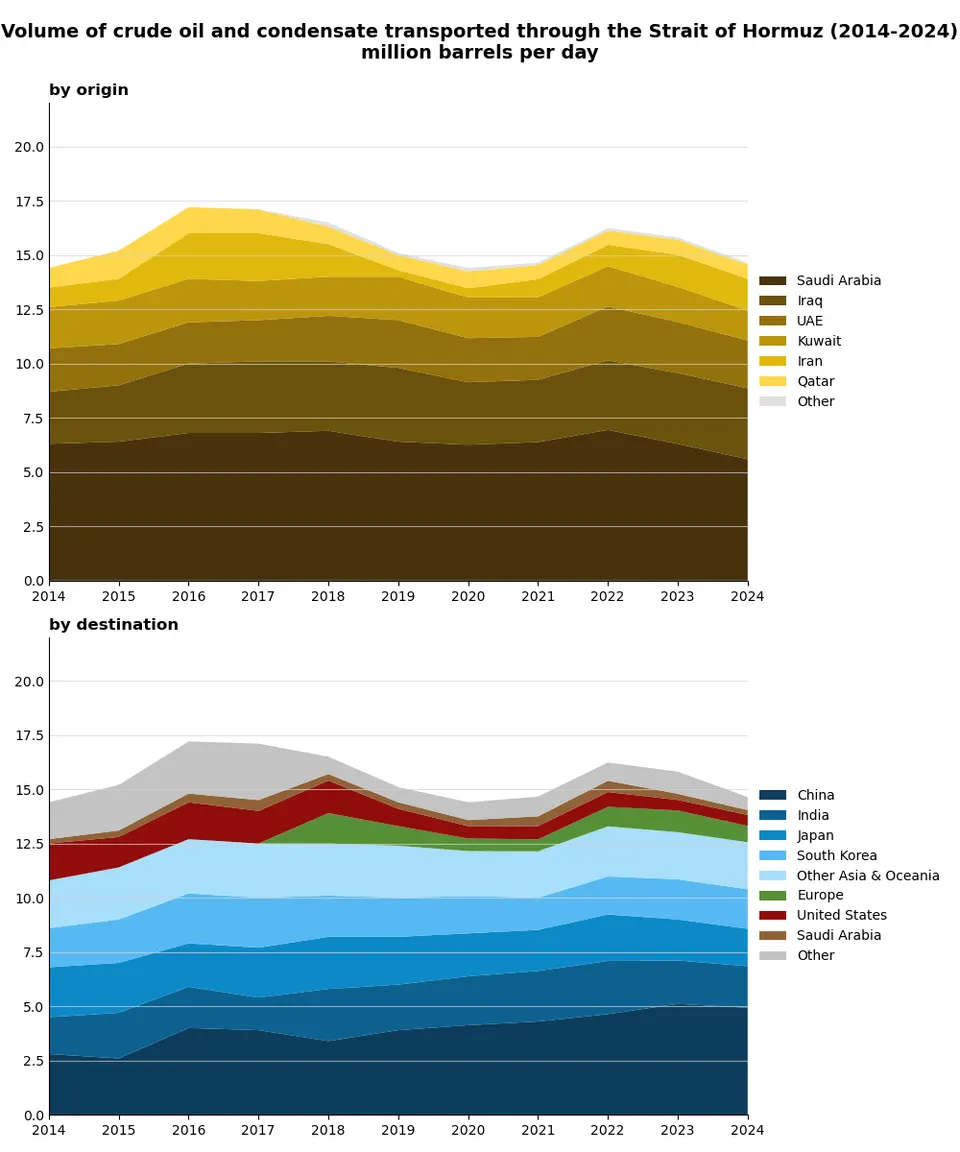
One of the most critical geopolitical chokepoints for global energy supply is the Strait of Hormuz. This narrow waterway, situated between Iran and Oman, is the sole sea passage from the Persian Gulf to the open ocean, through which an estimated one-fifth of the world's total petroleum liquids consumption and a significant portion of liquefied natural gas (LNG) pass daily. Its strategic location means that any disruption or threat to shipping in the Strait, whether from military action, blockades, or even heightened tensions, can immediately send shockwaves through global energy markets.
Such a disruption in the Strait of Hormuz would constitute a severe "oil supply shock." This term describes a sudden and significant reduction in the supply of oil to the global market, typically leading to sharp increases in oil prices. These price surges can have far-reaching economic consequences, including higher fuel costs for industries like aviation (as seen with airlines facing financial strain), increased inflation as transportation costs rise, and a general slowdown in economic activity as businesses and consumers face higher energy expenses. Understanding the vulnerability of global energy supplies to geopolitical events in critical regions like the Persian Gulf is crucial for comprehending broader economic stability.