Press Freedom Crisis Hits 25-Year Low as Toman Climbs to 189,100 Amid Fed Guidance Paralysis
بحران آزادی مطبوعات در پایینترین سطح ۲۵ سال اخیر؛ جهش دلار به ۱۸۹ هزار تومان در سایه بنبست فدرال رزرو
As the world marks World Press Freedom Day with record-low safety scores, the Iranian Toman has surged to 189,100 against the USD. Meanwhile, Federal Reserve officials admit that regional conflicts are now actively limiting their ability to provide economic guidance.
At time of publishing
USD
189,100
Toman
Gold 18K
20.99M
Toman / gram
Bitcoin
$78,668
US Dollar
Tether
18,875
Toman
The Silent Crisis: Press Freedom and the Quest for Accountability
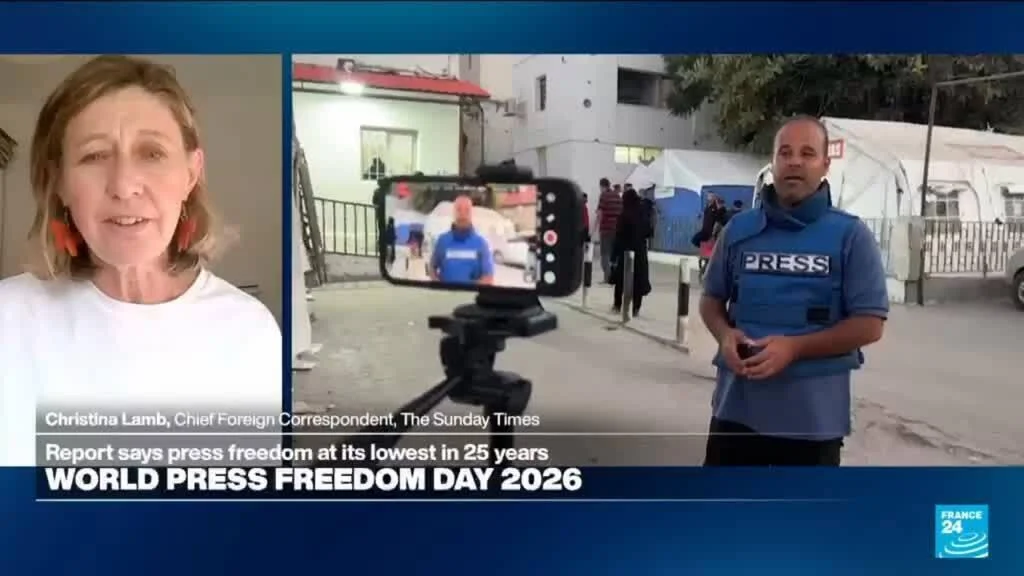
On this World Press Freedom Day, the global landscape for journalism has reached its most precarious state in a quarter-century. Christina Lamb, the Chief Foreign Correspondent for The Sunday Times, has issued a stark call for the creation of a new international body specifically tasked with investigating crimes against journalists. This isn't just a matter of professional safety; it is a fundamental pillar of global stability. According to the latest Reporters Without Borders (RSF) index, more than half of the world's countries are now classified as having 'difficult' or 'very serious' conditions for the press. From the deadly reporting environment in Gaza to the closed borders of Eritrea, the flow of reliable information is being choked off at the source.
For investors and policy analysts, this decline in press freedom represents a significant 'information risk.' When journalists cannot operate safely, the transparency required for stable markets evaporates. We are seeing a direct correlation between the suppression of news and the rise of geopolitical volatility. Without independent eyes on the ground, rumors often outpace facts, leading to the kind of knee-jerk market reactions we have observed in the energy and currency sectors over the last 48 hours. Lamb’s proposal for an independent investigative body aims to bridge this gap, ensuring that those who target the 'messengers' of global truth face actual consequences rather than the current climate of impunity.
Market Paralysis: The Toman’s Surge and the Fed’s Uncertainty
The Iranian currency market is feeling the heat of these global uncertainties. In the last 24 hours, the USD/IRR exchange rate moved from 184,000 to 189,100, marking a significant +2.8% jump. This volatility isn't happening in a vacuum. Neel Kashkari of the Federal Reserve recently noted that the ongoing regional conflicts, particularly the shadow of the Iran-Israel war, are severely limiting the Fed's ability to provide clear interest rate guidance. When the world's most powerful central bank admits it is 'flying blind' due to geopolitical factors, the ripple effects are felt in every corner of the globe, especially in emerging and sanctioned markets like Iran.
Gold and coin prices have followed this upward trajectory, reflecting a flight to safety among local savers. Gold 18k per gram rose from 20,669,698 to 20,992,428 (+1.6%), while the Emami coin climbed from 203,000,000 to 206,000,000 (+1.5%). This shift suggests that the 'Hormuz Risk' and the potential for further sanctions are being priced in by the street faster than by official institutions. As the Toman devalues, the cost of living for the average Iranian continues to climb, creating a feedback loop of inflation and currency speculation that the central bank is struggling to contain.
Environmental and Health Hazards: From the Colorado River to the Atlantic
Beyond the financial screens, two major environmental and health stories are shaping the global risk profile. In the American West, California, Arizona, and Nevada have proposed a desperate water-saving plan for the Colorado River as Lake Mead and Lake Powell hit historically low levels. This is a survival strategy for 40 million people. The failure of previous negotiations highlights a growing global trend: the inability of political systems to manage dwindling resources. While this seems distant from Tehran, the reality of resource scarcity is a global driver of migration, conflict, and economic shifts that eventually impact global trade routes and commodity prices.
Meanwhile, a suspected virus outbreak on an Atlantic cruise ship has claimed three lives, with the World Health Organization investigating a confirmed case of Hantavirus. This incident serves as a grim reminder of how quickly 'black swan' events can disrupt the global travel and tourism industry, which had only recently stabilized. For an interconnected world, these health scares act as friction on the global economy, often leading to localized lockdowns or travel restrictions that further complicate the logistics of international trade. Whether it is water in the desert or a virus on the high seas, the fragility of our current systems is being exposed on multiple fronts simultaneously.

Chaotic Trends: Speed Running and Public Safety
In a bizarre turn of social media influence, New York City has seen a surge in 'speed running' incidents, where groups of teenagers storm private and public buildings for viral content. The latest target was a Scientology church in Manhattan, where property was damaged and a staff member was injured. While this might seem like a minor local news item, it reflects a broader breakdown in social order driven by digital platforms. This trend of 'gamifying' trespassing and assault is creating a new layer of urban risk that insurance companies and security firms are now forced to account for in their risk models.
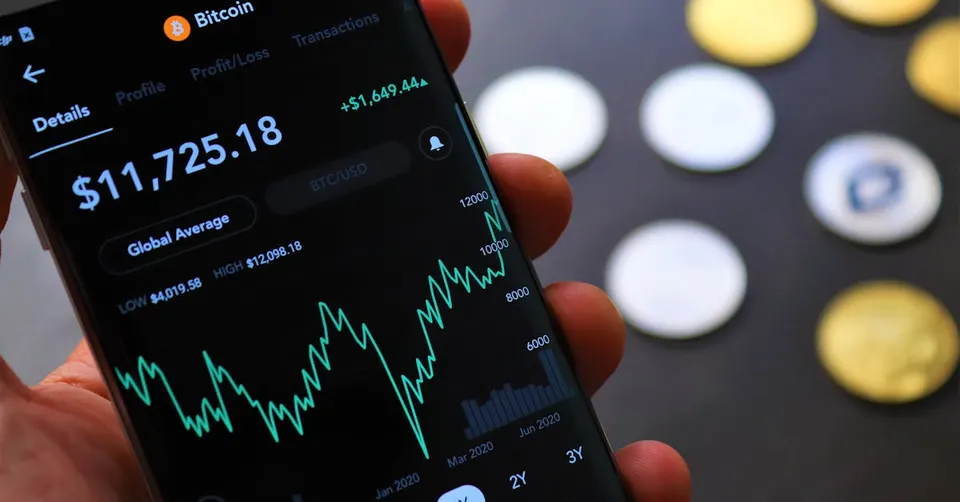
This social volatility mirrors the unpredictable nature of the current geopolitical climate. Whether it is teens storming a building in New York or creditors moving to seize North Korean assets in the DeFi space (as seen with the Kelp DAO ETH freeze), the boundaries of traditional law and order are being tested. For the global citizen, these events underscore the need for a diversified approach to both personal safety and financial security. As the traditional anchors of stability—be they central bank guidance or local law enforcement—face increasing pressure, the premium on 'safe haven' assets like gold and decentralized currencies like Bitcoin (currently hovering near $78,668) remains exceptionally high.
Frequently Asked Questions
Why is the USD/IRR rising so sharply today?
What is the significance of Christina Lamb's proposal on World Press Freedom Day?
How is the 'Hantavirus' outbreak on the cruise ship affecting markets?
What did Neel Kashkari say about the Fed's interest rate guidance?
Understanding Currency Depreciation and Its Economic Impact
When a news headline states that a currency, like the Toman, "climbs" to a higher number against a foreign currency (e.g., 189,100 against the USD), it signifies a significant economic phenomenon: currency depreciation. This means that it now takes more units of the local currency to purchase a single unit of the foreign currency. In simpler terms, your local currency has lost value, and its purchasing power has diminished. This is a critical concept for understanding economic stability, especially in nations facing various domestic and international pressures.
Currency depreciation can be triggered by several factors. High domestic inflation, where prices for goods and services rise rapidly, erodes the value of money internally and externally. Economic instability, political uncertainty, and large trade deficits (where a country imports more than it exports) can also weaken a currency. In some cases, external factors like international sanctions or a lack of confidence from foreign investors can accelerate this decline. The headline's mention of "Fed Guidance Paralysis" might hint at broader global economic uncertainty, which often disproportionately affects emerging market currencies.
The immediate consequences of a depreciating currency are far-reaching for ordinary citizens and businesses. Your savings, held in the local currency, lose value, effectively reducing your wealth. Imported goods, from essential medicines to consumer electronics, become more expensive, fueling inflation further. This can lead to a significant reduction in the population's overall purchasing power and a decline in living standards. Businesses that rely on imported raw materials face higher costs, which they often pass on to consumers.
In response to severe currency depreciation and high inflation, individuals and businesses often seek ways to protect their wealth. This strategy is known as hedging. A common method is to convert local currency into more stable assets, such as foreign currencies (like the US Dollar) or precious metals (like gold). The mention of "Gold price Iran Toman" and "Emami coin price hike" directly reflects this behavior, as people turn to tangible assets perceived as safe havens to preserve their capital against the erosion caused by a weakening local currency. Understanding currency depreciation is key to grasping these economic dynamics.
Topics
Related Articles