Tehran Rejects UK and UAE Claims as Gold Prices Surge 2.5%; Oil Falls Below $100 on Trump’s Hormuz Pause
رد اتهامات لندن و ابوظبی توسط تهران همزمان با جهش ۲.۵ درصدی طلا؛ سقوط نفت به زیر ۱۰۰ دلار با عقبنشینی ترامپ
Iran has dismissed accusations of anti-Semitism from London and involvement in UAE attacks as 'baseless,' while domestic gold prices hit new highs despite a slight dip in the dollar. Meanwhile, global oil markets reacted sharply to President Trump's decision to pause naval escorts in the Strait of Hormuz.
At time of publishing
USD
181,200
Toman
Gold 18K
20.51M
Toman / gram
Bitcoin
$81,572
US Dollar
Tether
17,900.9
Toman
Diplomatic Tensions Flare as Iran Rejects 'Baseless' Accusations
The diplomatic atmosphere between Tehran and the West has soured significantly this Wednesday as Iran’s embassy in London issued a sharp rebuke against British officials. The embassy dismissed recent allegations of anti-Semitism as “baseless and irresponsible,” expressing deep concern over what it views as a coordinated effort to marginalize Iranian interests in Europe. This friction comes at a delicate time when market participants were hoping for a de-escalation in rhetoric, but the latest exchange suggests that the diplomatic rift is widening rather than closing.
Simultaneously, the Iranian Revolutionary Guard Corps (IRGC) through the Khatam Al-Anbiya Central Headquarters has firmly denied any involvement in recent missile or drone operations against the United Arab Emirates. Tehran has warned Abu Dhabi against “collusion” with the United States and Israel, asserting that any military action taken by Iran would be announced clearly and firmly. For the Iranian reader, this geopolitical noise is a double-edged sword; while it maintains a stance of strength, it injects a persistent risk premium into the local markets, keeping the Rial under pressure despite temporary stabilization.
Oil Markets Retreat as Trump Pauses Hormuz Escort Plan
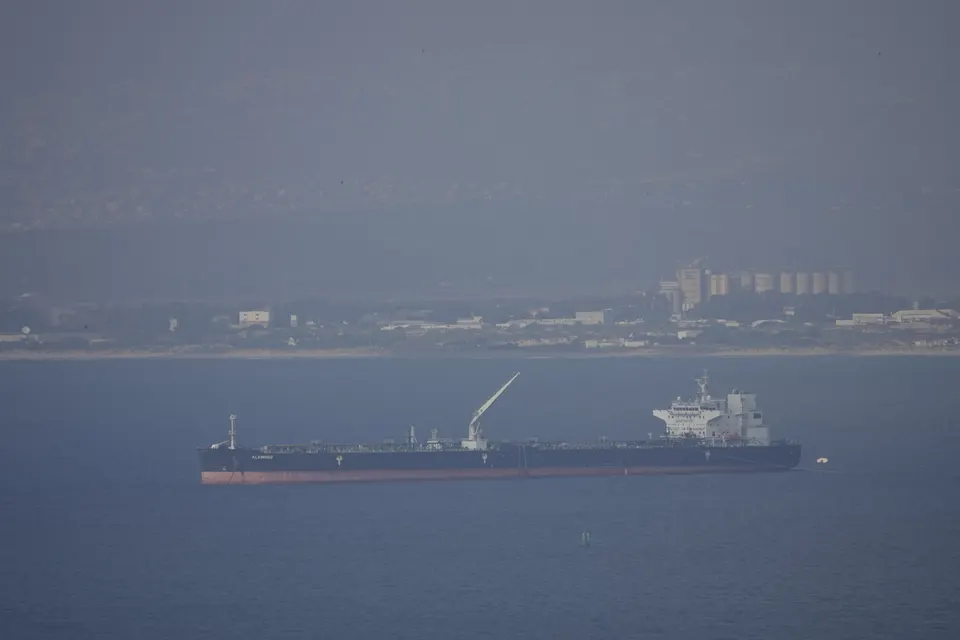
Global energy markets experienced a significant correction today as Brent crude fell toward $106.50 and West Texas Intermediate (WTI) tumbled below the $100 mark, currently trading at $98.55. This price action follows an unexpected announcement from President Donald Trump, who stated that the United States would pause its "Project Freedom" plan to escort commercial vessels through the Strait of Hormuz. The move has been interpreted by analysts as a tactical pause to allow for back-channel diplomacy or a potential peace deal, cooling the immediate fears of a full-scale naval blockade.
However, the drop in oil prices presents a complex outlook for the Iranian economy. While a de-escalation of conflict is generally positive for consumer sentiment, lower global oil prices mean a reduction in the foreign exchange revenue that the Iranian government relies on to support the Rial. If oil prices continue to trade below the $100 threshold, the Central Bank of Iran may find it increasingly difficult to intervene in the currency market, potentially leading to higher USD/IRR rates in the coming weeks as the supply of hard currency tightens.
Domestic Gold Surges Despite Marginal Rial Gains
The most striking movement in the Iranian markets today is the decoupling of gold from the US Dollar. While the USD/IRR pair saw a marginal decline of 0.1%, moving from 181,300 to 181,200 Toman, the price of 18k gold surged by 2.5%, climbing from 20,009,464 to 20,510,873 Toman per gram. This spike is largely driven by the global gold ounce, which has soared to $4,677.20. Local investors are increasingly treating gold as the ultimate hedge against both regional geopolitical uncertainty and global inflation, leading to a crowded trade in Emami coins, now priced at 196,000,000 Toman.
In the technology and crypto sectors, the narrative is shifting toward the "AI machine economy." Solana Foundation President Lily Liu noted at a recent summit that blockchain infrastructure is now being built to serve not just humans but autonomous AI agents. This aligns with the broader trend of sovereign tech, exemplified by the Finnish AI lab QuTwo reaching a $380 million valuation. For Iranian investors, these global shifts highlight the importance of diversifying into digital assets and hard commodities as the traditional financial landscape becomes increasingly volatile and interconnected with high-tech developments.
Frequently Asked Questions
Why is gold rising in Iran while the US Dollar is stable?
What does Trump's pause on the Hormuz escort mean for oil?
How is the Iran-UK diplomatic spat affecting the markets?
Is the UAE missile claim confirmed?
Why the Strait of Hormuz Is a Global Oil Bottleneck
The Strait of Hormuz, a narrow waterway between Oman and Iran, is one of the world’s most critical chokepoints for oil transport. Roughly 20% of daily global petroleum consumption—about 21 million barrels—passes through this 21‑kilometre‑wide strait each day. Its strategic importance stems not only from geography but also from the fact that many of the world’s largest oil‑producing nations, especially Saudi Arabia, Iraq, the United Arab Emirates, and Kuwait, rely on it to ship crude to international markets.
Because the strait is so tight, any threat of closure—whether from military conflict, piracy, or political signaling—can instantly tighten global oil supplies. Traders react sharply: even rumors of a disruption can push Brent and WTI futures higher, while confirmed closures can cause price spikes that reverberate through the global economy. The 2019 attacks on oil tankers and the 2020‑2021 COVID‑19‑induced demand shock both demonstrated how quickly the market can swing when Hormuz is in the headlines.
U.S. policy has repeatedly used the strait as leverage. In 2026, President Trump’s decision to pause naval operations near Hormuz was framed as a de‑escalation move, yet it also signaled to Tehran and its allies that the United States could intervene if shipping were threatened. Such diplomatic gestures influence expectations about supply security, often leading to short‑term price adjustments—like the dip below $100 per barrel mentioned in recent headlines—because markets anticipate a reduced risk of a sudden supply shock.
Understanding Hormuz’s role helps explain why oil price movements can be so volatile and why countries far from the Middle East watch developments there closely. It also highlights the broader geopolitical interplay: regional rivalries, great‑power naval presence, and the economics of energy all converge in this 21‑kilometre corridor, making it a barometer for both political tension and market sentiment.
For anyone following global energy trends, the Strait of Hormuz serves as a reminder that geography still shapes economics. A single vessel’s passage—or its blockage—can ripple through gasoline pumps, airline tickets, and even the price of gold, as investors seek safe‑haven assets when oil markets wobble.
Topics
Related Articles