Jerusalem Settler Trial Ignites Tensions; Global Retailers Brace for Iran War Impact; Hormuz Mission Looms
محاکمه شهرکنشین اسرائیلی در قدس تنشها را شعلهور میکند؛ خردهفروشان جهانی آماده تاثیرات جنگ ایران میشوند؛ ماموریت هرمز در افق
A significant trial begins in Jerusalem as an Israeli settler faces charges for assaulting a French nun, stirring religious and political sensitivities. Meanwhile, global retailer JD Sports warns of declining profits, citing the Middle East conflict and youth unemployment as key factors impacting consumer spending. This comes as France pre-positions an aircraft carrier for a potential mission in the Strait of Hormuz, underscoring ongoing regional instability.
At time of publishing
USD
176,900
Toman
Gold 18K
20.36M
Toman / gram
Bitcoin
$80,358
US Dollar
Tether
17,687.1
Toman
Israeli Settler Faces Trial for Attack on French Nun in Jerusalem
A deeply sensitive trial has commenced in Jerusalem, where an Israeli settler, Yona Simcha Schreiber, is facing charges for allegedly assaulting a 48-year-old French Catholic nun. The incident, which took place on Mount Zion near the Old City, involved Schreiber reportedly kicking and wounding the nun, a researcher at Jerusalem’s French School of Biblical and Archaeological Research. Israel’s justice ministry has confirmed the charges, emphasizing that the assault was motivated by hostility towards a religious group, a detail that underscores the profound religious and cultural tensions simmering in the holy city.
This trial is not merely about an individual act of violence; it carries significant geopolitical weight, particularly for international relations and the delicate balance of religious coexistence in Jerusalem. The French government, known for its strong stance on protecting its citizens and cultural institutions abroad, will undoubtedly be closely monitoring the proceedings. For the wider region, including Iran, such incidents are often viewed through the lens of ongoing Israeli-Palestinian dynamics, potentially fueling narratives of religious intolerance and further complicating efforts towards regional de-escalation. The outcome of this trial could set a precedent for how religiously motivated attacks are prosecuted and perceived globally.
Global Retailer JD Sports Warns of Profit Dip Amid Middle East Conflict and Youth Unemployment
In a stark indicator of how geopolitical tensions and economic headwinds are impacting global consumer markets, retail giant JD Sports has issued a profit warning, anticipating a decline in earnings for the upcoming year. The company, which operates 4,800 stores worldwide under various brands including JD, Blacks, and Millets, cited a “muted market” environment, directly attributing the expected profit fall to concerns stemming from the Middle East conflict and weaker spending power among young people facing rising unemployment. This assessment highlights a tangible economic consequence of protracted regional instability, suggesting a ripple effect that extends far beyond immediate conflict zones.
This warning from a major international retailer provides a sobering snapshot of global economic sentiment, where consumer confidence is fragile. The mention of the Middle East conflict, implicitly referencing the ongoing tensions including those involving Iran, underscores how geopolitical events are now directly factoring into corporate financial forecasts. For Iranian readers, this situation indirectly reflects on the broader economic landscape: a downturn in global consumer spending, exacerbated by regional instability, can affect demand for goods and services, potentially influencing trade flows and commodity prices. In the local market, the Iranian Toman saw the USD rise from 176,000 to 176,900 (+0.5%), while Gold 18k/gram increased from 19,963,987 to 20,362,666 (+2.0%) and Emami coin moved from 193,000,000 to 195,000,000 (+1.0%), suggesting a persistent local inflationary pressure or demand for safe-haven assets amidst these global uncertainties.

Trump Pushes for Limited Iran Deal as French Aircraft Carrier Pre-positions for Hormuz Mission
Diplomatic efforts surrounding Iran are reportedly shifting focus, with former President Trump pushing for a “limited deal” with Tehran, a move that appears to sideline Israel’s broader war priorities. This development suggests a strategic recalibration, moving away from a comprehensive peace agreement towards a more contained pact aimed at de-escalating the immediate standoff over the frozen conflict, which has threatened a global economic meltdown. Israel, particularly under Prime Minister Netanyahu, has reportedly been keen to continue its campaign against Hezbollah and would be reluctant to see its efforts constrained by a Washington-Tehran accord, indicating the complex web of regional interests at play.
Adding another layer of strategic maneuvering to the region, France has announced the pre-positioning of its aircraft carrier, the Charles de Gaulle, towards the southern Red Sea. This move is explicitly aimed at preparing for a possible mission to restore navigation in the Strait of Hormuz. An aide to President Emmanuel Macron emphasized that this action sends a clear signal of France's readiness and capability to secure the vital maritime chokepoint. The Strait of Hormuz remains a critical artery for global oil shipments, and any perceived threat to its navigation immediately elevates international concerns about energy security and global trade. These intertwined diplomatic and military developments highlight the ongoing fragility of the Middle East, with potential implications for oil prices and regional stability, which directly impacts Iran’s economic outlook and geopolitical standing.

NTSB Report Suggests Cockpit Struggle in Deadly China Eastern Crash
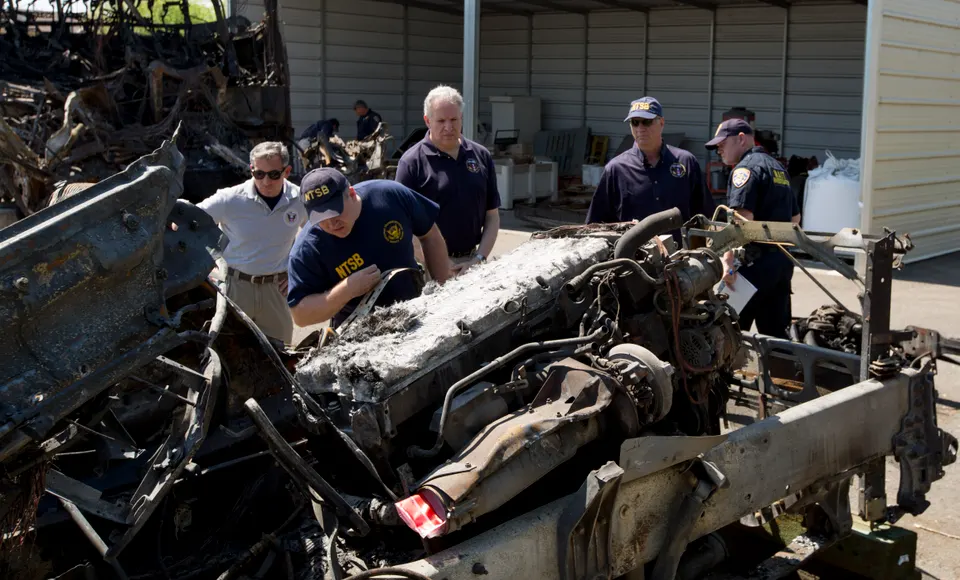
A new report from the U.S. National Transportation Safety Board (NTSB) has shed further light on the tragic China Eastern Airlines crash of 2022, which claimed the lives of all 132 people on board. The report offers new details that suggest a struggle occurred in the cockpit during the flight's final moments. While the full implications of these findings are still being analyzed, such an indication points towards a highly unusual and deeply concerning scenario, moving beyond typical mechanical failures or pilot error to suggest a potential human intervention or struggle for control within the aircraft.
This revelation is profoundly significant for global aviation safety and crash investigation protocols. Understanding the precise sequence of events and the nature of any struggle in the cockpit is crucial for preventing future tragedies and for informing aircraft design, crew training, and security measures. For the international community, particularly those involved in air travel and regulatory oversight, this report will undoubtedly prompt rigorous re-evaluations of cockpit security and emergency response procedures. The incident continues to resonate globally, reminding us of the persistent complexities and critical importance of every detail in ensuring the safety of air passengers worldwide.
Watch
Israel's war priorities sidelined as Trump pushes toward a limited deal with Iran • FRANCE 24
FRANCE 24 English
Frequently Asked Questions
What are the specific charges against the Israeli settler in Jerusalem?
How is the Middle East conflict impacting global retailers like JD Sports?
What is the significance of France pre-positioning an aircraft carrier in the Red Sea?
How have local Iranian markets reacted to the global and regional developments?
What new information has emerged regarding the China Eastern Airlines crash?
Why the Strait of Hormuz Matters: A Global Oil Chokepoint
The Strait of Hormuz is a narrow waterway, only about 21 nautical miles (39 km) wide at its narrowest point, that connects the Persian Gulf with the Gulf of Oman and the wider Indian Ocean. Despite its modest size, it is one of the world’s most critical maritime chokepoints because it serves as the primary export route for the oil and gas produced by Iran, Iraq, Kuwait, Saudi Arabia, and the United Arab Emirates. Roughly 20% of global petroleum liquids – about 21 million barrels per day – pass through the strait, making any disruption instantly felt on international energy markets.
Because of its outsized role in global energy supply, the strait has long been a flashpoint for geopolitical tension. Iran has repeatedly threatened to close the passage in response to sanctions or military actions, and it has demonstrated the capability to do so, notably during the 2019 attacks on oil tankers that were later linked to Iranian-backed militias. The presence of naval forces from the United States, the United Kingdom, France, and other NATO members – including the deployment of French aircraft carriers such as Charles de Gaulle – reflects a broader strategy of “freedom of navigation” to deter any unilateral closure.
The economic ramifications of a shutdown are profound. Oil prices would spike, shipping costs would rise, and countries heavily dependent on Middle‑Eastern energy imports could see inflationary pressures ripple through their economies. Retailers like JD Sports, which already warned of profit squeezes due to broader Middle‑East instability, would feel the impact through higher logistics costs and reduced consumer spending power. Moreover, countries that rely on oil‑laden trade routes for commodities unrelated to energy – such as grain or electronics – would also suffer from longer transit times and higher insurance premiums.
Strategically, the strait illustrates the concept of a “geopolitical chokepoint”: a narrow geographic passage that can be leveraged to exert political pressure far beyond its physical dimensions. Control or threat of control over Hormuz gives a state a disproportionate bargaining chip in international negotiations, a reality that underpinned the 2015 Joint Comprehensive Plan of Action (the “Trump Iran deal”) and continues to shape diplomatic calculations today.
Understanding the Strait of Hormuz helps explain why news of a French‑led mission, a potential Iranian retaliation, or even a high‑profile trial in Jerusalem can trigger market jitters worldwide. The interconnection of security, energy, and economics means that a single incident in this narrow waterway can cascade into global supply‑chain disruptions, currency volatility, and political realignments.
Topics
Related Articles