CME to Launch Bitcoin Volatility Bets as Nvidia’s $40B AI Spree and Hungary’s Political Pivot Shake Global Markets
ورود بورس شیکاگو به شرطبندی روی نوسان بیتکوین؛ سرمایهگذاری ۴۰ میلیاردی انویدیا و زلزله سیاسی در مجارستان
CME Group moves to institutionalize crypto volatility trading, while Nvidia cements its AI dominance with a massive $40 billion investment streak. Simultaneously, the Iranian Toman inches closer to the 180,000 threshold as geopolitical shifts in Europe redefine regional alliances.
At time of publishing
USD
177,600
Toman
Gold 18K
20.27M
Toman / gram
Bitcoin
$80,440
US Dollar
Tether
17,791.5
Toman
CME Group Redefines Crypto Risk with Volatility Futures
The CME Group, one of the world's largest derivatives marketplaces, has announced plans to launch Bitcoin volatility futures on June 1, pending regulatory approval. This move marks a significant evolution in the institutionalization of digital assets. Unlike standard futures that track the price of Bitcoin itself, these new contracts allow traders to bet specifically on the degree of price swings. For institutional investors, this provides a sophisticated tool to hedge against market turbulence without necessarily taking a directional bet on whether Bitcoin will go up or down. At a time when Bitcoin is holding steady around $80,440, the introduction of these tools suggests that the market is maturing beyond simple speculation into a complex financial ecosystem.
For the average observer and the Iranian retail trader, this development is more than just a technical update. Historically, high volatility in the crypto market has been a primary driver for USDT demand in Tehran, as local investors rush to capture quick gains or flee to safety. By providing a regulated way to trade this volatility, CME is likely to attract even more liquidity from global hedge funds. This increased liquidity often leads to more stable price discovery in the long run, but in the short term, it could lead to 'volatility clusters' that ripple through global exchanges, influencing the price of Tether (USDT) which currently sits at 17,792 Toman in the domestic market.

Nvidia’s $40 Billion AI Conquest and the 'NACHO' Trade
Nvidia has moved beyond being a mere hardware supplier to becoming the central banker of the artificial intelligence revolution. Reports today confirm that the company has committed a staggering $40 billion to equity deals in AI-related startups this year alone. By investing heavily in the very companies that buy its chips, Nvidia is creating a self-sustaining ecosystem that ensures its H100 and H200 GPUs remain the industry standard. This aggressive vertical integration strategy has left competitors struggling to keep pace and has turned Nvidia into a proxy for the entire global tech economy. When Nvidia moves, the Nasdaq follows, and the ripples eventually reach the safe-haven demand for gold and hard currencies in emerging markets like Iran.
While Nvidia dominates the tech headlines, Wall Street has also been buzzing with the so-called 'NACHO' trade—an acronym representing bets on higher oil prices and persistent inflation. This sentiment is fueled by high energy costs and a realization that the transition to green energy and AI infrastructure is more expensive than initially projected. For Iranian investors, this 'sticky inflation' narrative in the West usually translates to a stronger US Dollar globally. As the USD/IRR rate rose from 176,700 to 177,600 (+0.5%) over the last 24 hours, it is clear that global macro pressures are aligning with local fiscal realities to push the Toman toward new psychological lows.

Geopolitical Earthquake: The End of the Orbán Era
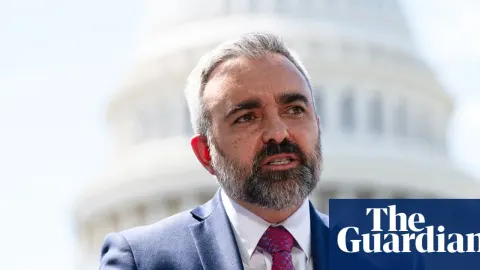
Hungary has witnessed its most significant political shift in nearly two decades as Peter Magyar was officially sworn in as Prime Minister, ending Viktor Orbán’s 16-year tenure. Magyar, a former opposition leader who achieved a landslide victory, has promised to dismantle the 'illiberal democracy' established by his predecessor and realign Hungary with the European Union. This shift is expected to unlock billions in frozen EU funds and change the voting dynamics within NATO and the European Council. For global markets, a more predictable and pro-EU Hungary reduces the 'political risk premium' in Eastern Europe, potentially stabilizing the Euro, which currently sells for 209,400 Toman in Tehran.
This transition comes at a delicate time for global health and logistics as well. The WHO is currently monitoring a Hantavirus outbreak on a cruise ship heading toward Tenerife, with the organization’s chief emphasizing that this is 'not another Covid.' While the scale is limited to a few cases and deaths, the rapid repatriation of citizens by EU nations highlights a heightened sensitivity to biological risks. In a world still scarred by 2020, even minor health scares can trigger a 'risk-off' sentiment, leading investors to pull capital from emerging markets and seek refuge in assets like Gold, which in Iran has seen a 0.4% increase to 20,271,711 Toman per gram within the last day.

Local Market Perspective: The 180,000 Toman Barrier
The Tehran market is currently operating under a cloud of cautious anticipation as the US Dollar nears the 180,000 Toman milestone. With the current sell rate at 177,600, the 0.5% daily climb suggests that the market has not yet found its ceiling despite various central bank interventions. Gold and coin markets are following suit; the Emami coin rose 0.3% to reach 195,500,000 Toman. These movements are not happening in a vacuum; they are a direct response to the 'NACHO' trade dynamics and the ongoing geopolitical friction in the Persian Gulf. As the cost of living continues to track these exchange rates, the focus for most Iranians remains on wealth preservation through hard assets.
Looking ahead, the market's eyes are fixed on the upcoming Trump-Xi summit and the potential for new trade protocols that could either ease or tighten the sanctions regime on Iranian oil. For now, the combination of high global gold prices (currently $4,715.70 per ounce) and a weakening Toman creates a 'double whammy' for domestic consumers. Whether the Toman breaks the 180k barrier this week will likely depend on the next round of diplomatic signals from Washington and the sustained appetite for AI-driven growth in the US markets, which continues to suck liquidity out of the global periphery.
Frequently Asked Questions
What are Bitcoin volatility futures and how do they differ from regular futures?
Why is Nvidia investing $40 billion in other AI companies?
How does the political change in Hungary affect the global economy?
What is the 'NACHO' trade mentioned by Wall Street analysts?
Understanding Volatility Derivatives: Betting on Market Swings
Financial markets are often characterized by their ups and downs, but beyond the direction of price movement, there's another crucial dimension: volatility. Volatility measures the rate and magnitude of price changes over a period. While many investors focus on whether an asset's price will go up or down, sophisticated traders and institutions also "bet" on how much it will swing. This is where volatility derivatives come into play, offering instruments that allow participants to speculate on, or hedge against, the degree of market turbulence.
Volatility derivatives are financial contracts whose value is derived from the expected or realized volatility of an underlying asset or market index. Unlike traditional futures or options that bet on the price of an asset (like crude oil or a stock), these derivatives focus specifically on the amount of price fluctuation. Common examples include futures and options on volatility indices, such as the VIX (often called the "fear index"), or options on individual assets where the implied volatility component is a key driver of the option's premium.
The recent news of CME (Chicago Mercantile Exchange) launching Bitcoin volatility bets highlights the growing sophistication of the cryptocurrency market. Such products allow investors to gain exposure to Bitcoin's anticipated price swings without directly owning the digital asset. For instance, if an investor believes Bitcoin will experience significant price swings in the near future, regardless of direction, they could buy a volatility derivative. Conversely, an investor holding Bitcoin might use these derivatives to hedge against unexpected large movements, protecting their portfolio from extreme market turbulence.
Understanding volatility derivatives is crucial for grasping modern financial risk management and speculative strategies. They provide powerful tools for portfolio managers to fine-tune their exposure to market risk, for arbitrageurs to exploit price discrepancies, and for speculators to profit from market uncertainty. As markets become more interconnected and complex, the ability to trade volatility itself offers a unique dimension to investment and hedging strategies.
Topics
Related Articles