Cannes Blacklist Scandal & The $700B AI Power Grab: Global Markets Braced for Volatility
جنجال لیست سیاه در کن و رقابت ۷۰۰ میلیارد دلاری انرژی هوش مصنوعی؛ تلاطم در بازارهای جهانی
A major censorship row erupts in French cinema involving an Iranian director, while tech giants pivot toward a $700 billion energy infrastructure race. Meanwhile, the Strait of Hormuz crisis forces a historic shift in global oil routes.
At time of publishing
USD
180,400
Toman
Gold 18K
19.84M
Toman / gram
Bitcoin
$78,194
US Dollar
Tether
18,026.1
Toman
The Cannes Blacklist: A Battle for Cultural Sovereignty
The French film industry is currently embroiled in a high-stakes confrontation between creative freedom and corporate political influence. The head of Canal+, France's most prominent film producer and a subsidiary of Vincent Bolloré’s Vivendi empire, has signaled a de facto blacklisting of hundreds of industry professionals. This move comes after more than 600 actors and directors signed a petition protesting Bolloré’s perceived right-wing political sway over French media. Among the signatories are Oscar-winner Juliette Binoche and the renowned French-Iranian filmmaker Sepideh Farsi, whose involvement highlights the international stakes of this ideological struggle. This development is more than just a localized industry dispute; it represents a seismic shift in how media conglomerates utilize their market dominance to enforce political alignment. For the Iranian diaspora and international creators, the inclusion of Sepideh Farsi in this controversy underscores the precarious nature of artistic expression even in Western democratic hubs. As the Cannes Film Festival progresses, the tension between the festival's celebratory atmosphere and the underlying threat of professional exile for political dissent creates a chilling effect that could redefine the European cultural landscape for years to come.

The $700 Billion AI Energy Grab: Meet the New 'Nvidias'
While the world has been focused on the software and chips driving the artificial intelligence revolution, a more fundamental bottleneck has emerged: electricity. Major investment firms are now identifying a new class of "gatekeepers" in the AI race—infrastructure giants like GE Vernova and Bloom Energy. As Big Tech companies commit over $700 billion to AI development, the lion's share of that capital is increasingly flowing toward power generation and grid stabilization. Without a massive surge in energy capacity, the data centers required to house the next generation of Large Language Models (LLMs) simply cannot function. This shift marks a transition from the "Silicon Era" to the "Infrastructure Era" of the AI boom. Investors are moving away from pure-play software companies toward industrial firms that can provide the literal power needed to keep the digital lights on. This $700 billion energy grab is expected to reshape global utility markets, turning once-stodgy power companies into high-growth tech plays. For the broader economy, this means that energy security is now inextricably linked to technological leadership, making the stability of power grids a matter of national security and prime investment interest.

Apple’s Privacy Gambit: Revamped Siri and the Trust Economy
In the escalating AI arms race, Apple is attempting to carve out a unique value proposition centered on user privacy. Reports indicate that the upcoming revamp of Siri, set to debut with iOS 27, will feature a groundbreaking "auto-delete" function for chat histories. By allowing users to ensure their AI interactions are not permanently logged or used for training without explicit recurring consent, Apple is betting that privacy-conscious consumers will choose their ecosystem over more data-hungry competitors like Google or OpenAI. This strategy aims to bridge the gap between Apple’s perceived lag in AI capabilities and its long-standing reputation for security. This move is significant because it challenges the current industry standard where data is the primary currency. If Apple can prove that sophisticated, chatbot-like AI can function effectively without a permanent ledger of user behavior, it could force a regulatory and industry-wide pivot. For users in sensitive geopolitical regions or those working in high-security professions, this "privacy-first" AI could become the gold standard. However, the technical challenge remains: can a privacy-restricted Siri truly compete with the predictive power of models that have unfettered access to vast personal datasets?
Market Realities: Toman Edges Higher Amid Hormuz Crisis
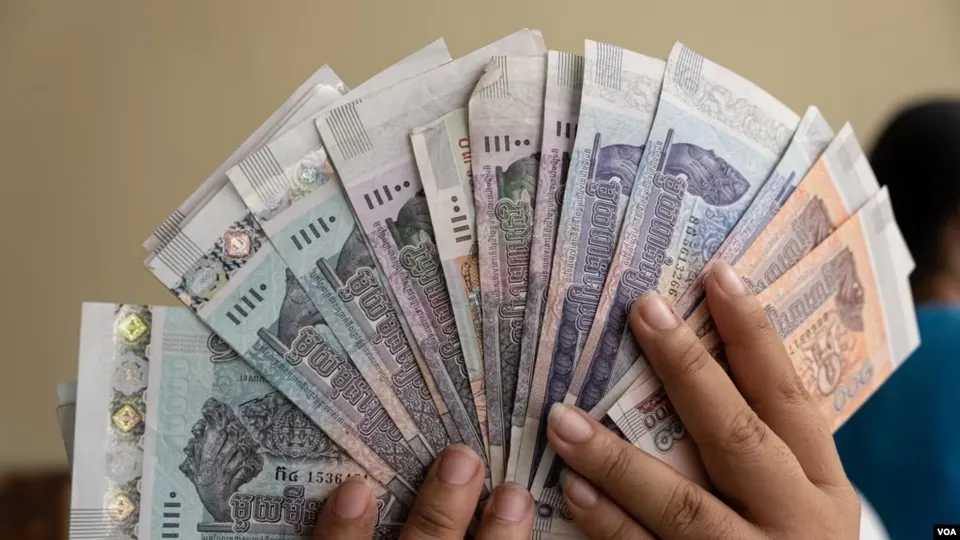
The Iranian markets remain on high alert as regional tensions dictate the flow of capital. In the last 24 hours, the USD in Tehran’s open market moved from 180,100 to 180,400 Toman, a slight but steady increase of 0.2%. This upward pressure is mirrored in the gold market, where 18k gold rose from 19,795,696 to 19,839,558 Toman per gram (+0.2%), and the Emami coin saw a 0.5% jump to 194,500,000 Toman. These movements reflect a "risk-on" sentiment among local investors who are increasingly hedging against currency devaluation as the geopolitical situation remains volatile.
Adding to the complexity is a historic shift in global oil logistics; the United States has begun shipping oil directly to Australia as the crisis in the Strait of Hormuz escalates. This bypass of traditional Middle Eastern shipping lanes suggests that major powers are preparing for a long-term disruption in the region's primary maritime artery. For the Iranian economy, this diversification of supply routes by Western allies could signal a diminishing leverage of the "Hormuz card," potentially impacting long-term trade negotiations and sanctions relief expectations. Furthermore, financial experts are now advising a massive 18-month cash cushion for individuals, as the dual threats of AI-driven job displacement and regional instability make traditional 3-month emergency funds look dangerously inadequate.
Frequently Asked Questions
Why is the US shipping oil to Australia instead of relying on the Middle East?
Who is Sepideh Farsi and why is her inclusion in the French blacklist significant?
What are 'Nvidias of power' and why are they attracting $700 billion?
Why the Strait of Hormuz Matters: A Chokepoint That Moves Global Oil Prices
The Strait of Hormuz is a narrow waterway that connects the Persian Gulf with the Gulf of Oman and the open ocean. At its narrowest point it is only about 21 nautical miles wide, making it one of the world’s most congested maritime passages. Because it sits between Iran and the United Arab Emirates, any ship that wants to move oil from the Gulf’s major producers—Saudi Arabia, Iraq, Kuwait, and the United Arab Emirates—must pass through this corridor.
Despite its modest size, the strait carries roughly 20% of the world’s petroleum liquids each day, including crude oil and refined products. In 2023 the flow averaged about 18‑20 million barrels per day, a volume that dwarfs most other oil routes. This concentration means that even a brief disruption can reverberate through global markets, pushing prices higher and prompting traders to reassess risk premiums.
The strategic importance of the Hormuz chokepoint has made it a flashpoint for geopolitical tension. In 1980‑88, during the Iran‑Iraq War, both sides mined the waterway and attacked tankers, leading to a sharp spike in oil prices. More recently, Iran has repeatedly threatened to close the strait in response to sanctions or military pressure, while the United States has conducted naval patrols to ensure freedom of navigation. Each of these episodes has reminded markets how vulnerable the global oil supply chain is to political risk.
In early 2024, heightened rhetoric between Tehran and Washington, combined with a surge in regional naval activity, caused oil futures to swing wildly. Analysts noted that the mere possibility of a closure—whether through missile strikes, mines, or a naval blockade—adds a “geopolitical risk premium” to oil pricing. Investors therefore watch Hormuz closely, as any incident can trigger rapid capital flows into commodities like gold and the U.S. dollar, amplifying overall market volatility.
Understanding the Strait of Hormuz helps explain why headlines about “oil crises” or “market volatility” often reference a narrow stretch of water rather than broader economic fundamentals. It is a classic example of how geography can shape global finance, reminding traders that a single point on the map can move the price of a barrel of oil by several dollars.
Topics
Related Articles