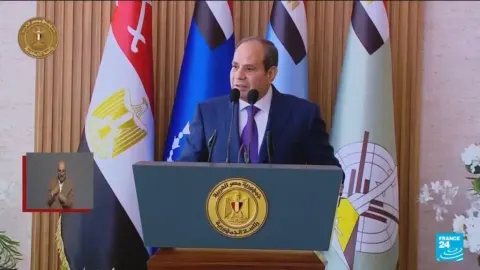
Oil Prices Slide as White House Refutes 'Hormuz Deal' Rumors; Airline Stocks Surge
سقوط قیمت نفت در پی تکذیب شایعات توافق هرمز؛ جهش سهام ایرلاینها در بازارهای جهانی
Oil prices have dipped despite the White House labeling Iranian reports of a draft deal as a 'complete fabrication.' As energy costs cool, airline stocks are seeing a significant boost, while the Toman remains stable at 173,000.
At time of publishing
USD
173,000
Toman
Gold 18K
18.62M
Toman / gram
Bitcoin
$74,972
US Dollar
Tether
172,029
Toman
The 'Fabrication' Paradox: Oil Falls as Diplomacy Stalls
In a whirlwind of conflicting signals at 20:00 Tehran time, global energy markets are witnessing a peculiar decoupling of news and price action. Earlier today, Iranian state media circulated reports of a 14-point draft agreement intended to reopen the Strait of Hormuz and lift the U.S. naval blockade. However, the White House has since issued a stern rebuttal, calling the reports a "complete fabrication." Despite this official denial, oil prices have continued to slide, suggesting that traders are either pricing in a back-channel breakthrough or are simply exhausted by the high-risk premiums that have defined the last quarter.
This market reaction comes as Donald Trump prepares to host his 12th cabinet meeting of his second term, with the conflict in the Middle East reaching a critical juncture. While the diplomatic path remains murky, the cooling of oil prices has provided an immediate tailwind for the aviation sector. Airline stocks are flying high globally, as investors anticipate lower operational costs and a potential easing of the maritime chokepoints that have disrupted global logistics for months. In Tehran, the USD/IRR exchange rate remains flat at 173,000, showing that the domestic market is adopting a 'wait-and-see' approach until concrete diplomatic progress is verified.
Geopolitical Attrition: GCHQ Reveals Staggering Russian Losses
Away from the energy theater, the director of Britain’s GCHQ, Anne Keast-Butler, has delivered a sobering assessment of the war in Ukraine during her inaugural public speech. According to GCHQ intelligence, nearly 500,000 Russian soldiers have been killed or wounded since the invasion began. This figure highlights the sheer scale of attrition and the immense human cost of a conflict that continues to reshape European security architecture. For global markets, this update serves as a reminder that geopolitical risk is not localized to the Middle East; the ongoing instability in Eastern Europe continues to strain global supply chains and keep inflationary pressures alive.
What this means for the savvy investor is a continued reliance on safe-haven assets. Gold, though dipping slightly by 0.8% today to 18,622,974 Toman per gram in Tehran, remains historically elevated at $4,448 per ounce. The high casualty rates reported by GCHQ suggest that a resolution in Ukraine remains distant, which in turn necessitates a long-term strategy of diversification. The persistence of this conflict ensures that the 'war premium' on commodities like aluminum and energy will likely return the moment diplomatic hopes in the Persian Gulf fade.
Tech Resilience: Micron’s 1987-Style Rally
While geopolitics remains volatile, the technology sector continues to demonstrate remarkable resilience. Micron Technology is currently experiencing a surge in investor interest, with shares performing at levels not seen since 1987. Despite the massive rally, analysts maintain that the stock remains a value play, driven by the insatiable global demand for high-bandwidth memory chips required for AI infrastructure. This 'AI party' is providing a necessary buffer for global equity markets, which might otherwise be reeling from the uncertainties of the U.S.-Iran conflict.
For the Iranian tech enthusiast and investor, this trend underscores the importance of looking beyond local currency fluctuations. While the Toman is locked at 173,000 per USD, the global AI race is creating wealth in sectors that are relatively insulated from regional kinetic conflicts. The success of firms like Micron suggests that the underlying structural shift toward an AI-driven economy is far more powerful than the temporary shocks of naval blockades or diplomatic 'fabrications.'
Domestic Thaw: Pezeshkian’s Balanced Engagement
On the home front, President Masoud Pezeshkian has reiterated his administration’s commitment to "development-oriented balanced interactions." This statement comes at a time when Iran is reportedly preparing to restore international internet access after a grueling three-month blackout. The move is seen as a strategic olive branch to both the domestic population and the international business community, signaling a desire to normalize economic activity despite the ongoing external pressures. Pezeshkian’s focus on using cultural and technological capacities to secure national interests suggests a pivot toward 'soft power' as a tool for survival.

However, the path to economic recovery remains steep. As the Australian Labor party struggles to sell its budget through memes and simplified messaging, the Iranian government faces a much more existential challenge: stabilizing a currency that has seen unprecedented volatility. The current stability of the USD at 173,000 is a fragile peace. If the 'Hormuz Deal' remains a fabrication and the naval blockade persists, the pressure on the Toman will inevitably return, making these hours of relative calm a critical window for those looking to hedge their positions in gold or crypto assets like Bitcoin, which holds firm at $74,972.
Frequently Asked Questions
Why did oil prices fall if the White House denied the Iran deal?
What does the 500,000 Russian casualty figure mean for global markets?
Is the Toman's stability at 173,000 permanent?
The Strategic Importance of the Strait of Hormuz in Global Oil Markets
The Strait of Hormuz, a narrow waterway between Oman and Iran, is the world’s most critical oil chokepoint. Roughly 20% of daily global petroleum consumption—about 21 million barrels—passes through this 21‑mile wide passage each day. Because the strait connects the Persian Gulf’s vast oil fields with the open ocean, any disruption can instantly tighten supply and send oil prices soaring.
Geopolitical tension is the primary driver of risk in the Hormuz corridor. Historical flashpoints—such as Iran’s 2019 seizure of a British tanker and the 2020 threats to close the strait amid U.S.–Iran confrontations—have repeatedly proven that even the rumor of a “Hormuz deal” can trigger market panic. Traders react to perceived supply threats by bidding up futures contracts, which then ripple through spot prices, affecting everything from gasoline at the pump to airline operating costs.
The economics of the strait are also shaped by its physical constraints. The channel’s shallow depth limits the size of vessels that can safely transit, and the narrow navigation lanes require precise piloting. Consequently, any incident—whether a mechanical failure, a mine, or a military encounter—can cause a backlog of tankers, amplifying price volatility. Energy analysts therefore monitor ship‑traffic data and satellite imagery to gauge the strait’s operational status in real time.
Because the Hormuz bottleneck influences global oil supply, it also affects related financial markets. A sudden price dip, as seen when the White House dismissed rumors of a new Hormuz agreement in May 2026, can boost airline stocks that benefit from lower fuel costs, while simultaneously prompting investors to shift into safe‑haven assets like gold. Understanding the strait’s role helps investors and policymakers anticipate how regional events translate into worldwide economic consequences.
Topics
Related Articles