Trump Slams Netanyahu as ‘Crazy’ Amid Rapid Iran Talks; Toman Edges Higher to 174,500
ترامپ نتانیاهو را «دیوانه» خطاب کرد؛ همزمان با پیشرفت مذاکرات ایران، دلار به ۱۷۴,۵۰۰ تومان رسید
Tensions between Donald Trump and Benjamin Netanyahu have reached a boiling point as the US President pursues a rapid diplomatic deal with Tehran. While Tehran markets see a slight rise in the Dollar and Gold, geopolitical volatility remains high following a massive Russian strike on Kyiv.
At time of publishing
USD
174,500
Toman
Gold 18K
19.13M
Toman / gram
Bitcoin
$69,481
US Dollar
Tether
173,897
Toman
Trump-Netanyahu Friction Flares Over Iran Peace Prospects
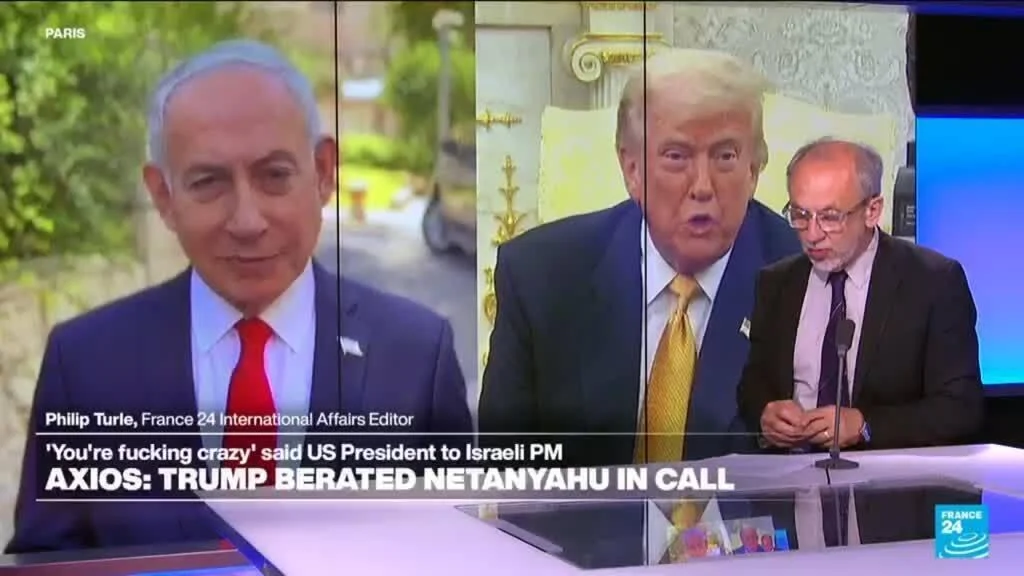
In a dramatic escalation of rhetoric, US President Donald Trump has reportedly characterized Israeli Prime Minister Benjamin Netanyahu as "crazy" during private discussions regarding the ongoing conflict in Lebanon and negotiations with Iran. According to reports from Axios, the friction stems from Trump’s belief that Netanyahu’s military offensive against Hezbollah was undermining a rapidly progressing diplomatic track with Tehran. Despite earlier reports from Iranian state media suggesting a suspension of dialogue, Trump insisted on Monday that talks with Iran are moving at a "rapid pace," claiming he has successfully pressured both Israel and Hezbollah to de-escalate their hostilities. This diplomatic tug-of-war has immediate implications for the Iranian economy, which remains hyper-sensitive to every headline involving the White House and the Prime Minister’s Office. In the Tehran open market, the US Dollar (USD) moved from 174,300 to 174,500 Toman, a modest increase of 0.1%. While the currency remains relatively stable, the underlying tension suggests that traders are waiting for a definitive signal from these "rapid" talks. If a deal is indeed struck, the psychological barrier of the 170,000 Toman level could be tested; however, the current friction between Washington and Tel Aviv adds a layer of unpredictability that prevents any aggressive downward movement in exchange rates.
Kyiv Under Fire as Russia Inflicts Psychological Toll
The geopolitical landscape darkened further today as Russia launched a series of deadly strikes across the Ukrainian capital. Rescuers in Kyiv are currently pulling bodies from the rubble of an apartment block where at least 18 people, including an eight-year-old boy, were killed. This latest barrage follows a week of explicit threats from Moscow, a delay that analysts suggest was intentionally designed to inflict a severe psychological toll on the city’s residents. The strikes mark a significant escalation in the intensity of the air war, even as global commodity markets attempt to price in a potential de-escalation in the Middle East. For the global economy, the persistence of the Ukraine conflict serves as a permanent floor for energy and grain prices. While Brent crude pulled back to approximately $93.35 per barrel following Trump’s claims of a Lebanon ceasefire, the instability in Eastern Europe ensures that risk premiums remain high. For Iranian readers, this translates to continued global inflationary pressure, which reflects in the local gold market. Gold 18k per gram rose today from 18,971,328 to 19,128,768 Toman (+0.8%), tracking international gold prices which have climbed to a staggering $4,528.90 per ounce. Interestingly, the Emami coin diverged from this trend, falling from 187,000,000 to 184,000,000 Toman (-1.6%), suggesting a cooling of the speculative bubble in the domestic coin market. ---
US Domestic Politics and Market Resilience
Across the Atlantic, the American political machine is churning as Californians head to the polls for a high-stakes gubernatorial primary that could signal the future direction of the Democratic party. At the same time, Donald Trump’s influence over the domestic legal system continues to manifest in controversial ways. The recent release of Tina Peters from prison—following Trump’s successful pressure on Colorado’s governor to commute her sentence—highlights the President’s aggressive stance against what he terms "politicized prosecutions." This domestic maneuvering is often a precursor to shifts in foreign policy, as a domestic political base energized by these victories often supports more unilateral diplomatic moves abroad, including the current push for an Iran deal.

In the financial sector, the resilience of the US economy is being tested by high-yield environments. While high-yield savings accounts are currently offering up to 4.10% APY, the semiconductor sector is seeing a renewed surge. Nvidia CEO Jensen Huang recently highlighted Marvell Technology as a potential member of the "trillion-dollar club," causing an immediate spike in its stock. This tech-driven optimism contrasts with the crypto markets, where Bitcoin (BTC) has struggled to maintain its footing. BTC dropped toward $69,481 as large-scale sales from major holders spooked retail investors. For Iranian crypto traders, this volatility is compounded by the USDT/Toman rate, which currently sits at 173,897, reflecting the slight premium often found in the local peer-to-peer markets during periods of global uncertainty.
Watch
'Crazy': Trump-Netanyahu tensions flare over Iran and Hezbollah • FRANCE 24 English
FRANCE 24 English
Frequently Asked Questions
Why is there tension between Trump and Netanyahu regarding Iran?
Why did the Emami coin price drop while gold prices rose?
What is the impact of the Russian strikes on Kyiv on global markets?
The Interplay of Geopolitics and Currency Valuation: The Case of the Iranian Toman
Currency valuation is often seen as a reflection of a nation's economic health, driven by factors like interest rates, inflation, and trade balances. However, in an increasingly interconnected and politically charged world, geopolitical events frequently exert an equally powerful, if not greater, influence on a currency's strength. This is particularly evident in economies under international scrutiny or sanctions, where the ebb and flow of diplomatic relations can dramatically alter market sentiment and, consequently, exchange rates. The recent fluctuations of the Iranian Toman provide a compelling case study for this intricate relationship.
The mechanism behind this influence is straightforward: geopolitical developments directly impact investor confidence and capital flows. Positive news, such as progress in international negotiations or the prospect of sanctions relief (like the "Iran talks" mentioned in the headline), signals potential economic opening, increased trade, and foreign investment. This optimism can attract capital, increase demand for the local currency, and lead to its appreciation. Conversely, heightened tensions, political instability, or the imposition of new sanctions can trigger capital flight, reduce foreign currency inflows, and cause the local currency to depreciate sharply.
The Iranian Toman (an informal denomination of the Iranian rial) has historically been highly sensitive to the geopolitical landscape, especially regarding nuclear negotiations and international sanctions. When there's a perceived improvement in the prospects for a nuclear deal or a loosening of sanctions, the Toman often strengthens, as market participants anticipate an increase in oil revenues, easier access to global markets, and greater foreign investment. The headline's observation that the Toman "edges higher" suggests a market reaction to perceived positive developments or expectations surrounding the ongoing "Iran talks," indicating a belief that these discussions might lead to outcomes favorable for the Iranian economy.
Such significant currency volatility, driven by external political factors, presents substantial challenges for a nation's economy. It complicates economic planning, affects the cost of imports and exports, and can erode the purchasing power of citizens, leading to inflation. For businesses, both domestic and international, this uncertainty makes long-term investment and stable trade relations difficult to sustain. Understanding this dynamic is crucial for anyone seeking to comprehend the broader economic implications of global politics.
In essence, a nation's currency, especially in politically sensitive regions, serves not merely as an economic indicator but also as a barometer of its diplomatic standing and geopolitical stability. Its value reflects not just its internal economic fundamentals but also the world's perception of its future, heavily influenced by the intricate dance of international relations and power politics.
Topics
Related Articles