Macron’s ‘Quest for Truth’ in Paris and Trump’s Hezbollah Acknowledgment: Tehran Markets Edge Lower Amid Global Shifts
مأموریت حقیقت مکرون در پاریس و تحقیر نتانیاهو توسط ترامپ؛ عقبنشینی قیمتها در بازار تهران
French President Emmanuel Macron inaugurates a Rwanda genocide memorial in Paris, marking a major shift in European historical accountability. Meanwhile, Donald Trump’s rhetoric regarding Hezbollah causes friction in Israel, as the Toman and gold prices in Tehran see a notable cooling period.
At time of publishing
USD
173,900
Toman
Gold 18K
18.87M
Toman / gram
Bitcoin
$66,919
US Dollar
Tether
173,801
Toman
Macron’s Historical Reckoning and the European Diplomatic Pivot
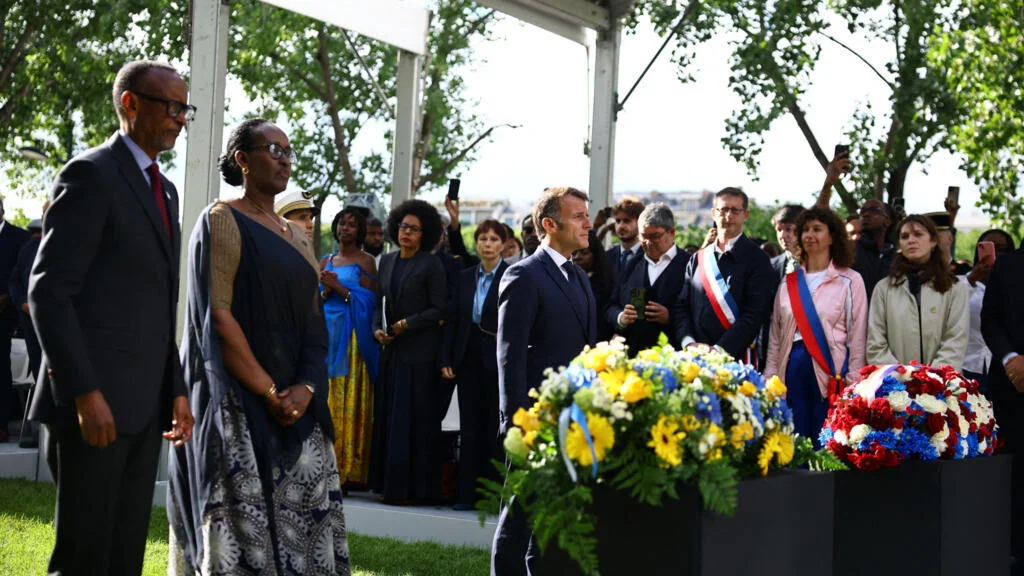
French President Emmanuel Macron, alongside his Rwandan counterpart Paul Kagame, inaugurated a memorial in Paris on Tuesday dedicated to the victims of the 1994 Rwanda genocide. Located on the banks of the Seine, the monument represents what Macron described as a "long and patient quest for truth." This move is more than just a commemorative act; it is a profound admission of France’s historical failure to heed warnings of the impending massacres three decades ago. By confronting these ghosts of the past, Macron is attempting to reset France’s moral standing and its relationship with the African continent, signaling a shift toward a more transparent and accountable foreign policy.
For the global diplomatic community, and specifically observers in Tehran, this pivot suggests a Europe that is increasingly focused on internal reconciliation and the stabilization of its peripheral alliances. While the event is historical in nature, its timing reflects a broader French effort to maintain relevance as a diplomatic arbiter during a period of intense global polarization. As France addresses its colonial and post-colonial legacies, it may find more room to negotiate in complex Middle Eastern files where its previous 'paternalistic' reputation often hindered progress. This 'truth quest' could pave the way for a more pragmatic European approach to regional conflicts, focusing on long-term stability rather than short-term tactical gains.

---
The Hezbollah Paradox: Trump’s Rhetoric and Netanyahu’s Dilemma
In a move that has sent shockwaves through the Israeli political establishment, Donald Trump has reportedly acknowledged Hezbollah’s role within the context of ongoing de-escalation talks. While Israel continues its military campaign in southern Lebanon, the apparent Washington-brokered negotiations have created a sharp divide between the White House and Prime Minister Benjamin Netanyahu. Reports from Jerusalem suggest that Trump’s pragmatic acknowledgment of the Iran-backed group is viewed as "utterly humiliating" for Netanyahu, who has long campaigned on the total eradication of Hezbollah’s influence. This shift in tone from the U.S. executive branch indicates a preference for a rapid, deal-oriented resolution over a prolonged military engagement.
For the Iranian economy, this diplomatic friction is a double-edged sword. On one hand, the Toman has reacted with a slight strengthening as the prospect of a regional ceasefire looms larger. In the last 24 hours, the USD/IRR moved from 174,300 down to 173,900, a decrease of 0.2%. This suggests that the market is pricing in a reduction in immediate kinetic risk. However, the unpredictability of the Trump administration’s 'deal-making' style remains a source of underlying anxiety. If a deal is struck that bypasses traditional Israeli security concerns, it could lead to a volatile realignment of regional power dynamics that the Tehran market is not yet fully prepared to navigate.

---
Global Market Warnings: The S&P 500 Paradox and Tehran’s Correction
The S&P 500 has notched its ninth consecutive day of gains, a feat that usually signals robust economic health. However, analysts are raising alarms over a "breadth paradox," where a shrinking number of mega-cap tech stocks are carrying the entire weight of the index. This lack of broad participation is a classic warning sign of market exhaustion. As capital rotates out of traditional equities and into high-flying AI stocks, even stalwarts like Bitcoin are feeling the pressure of opportunity cost. BTC is currently trading at $66,919, as investors weigh the risks of a 'choppy summer' against the lure of tech-driven returns. This global uncertainty is mirroring the caution seen in domestic Iranian gold markets, where Emami coins fell from 187,000,000 to 183,000,000 Toman, a sharp 2.1% drop.
This correction in Tehran is partly a response to the cooling of global gold prices, which saw 18k gold per gram move from 18,971,328 to 18,870,446 Toman (-0.5%). For the average Iranian saver, the question mirrors that of the 75-year-old couple in recent financial news: is it possible to have too much cash in a volatile environment? While $1.5 million in stocks and $425,000 in savings might seem like a dream for many, the underlying lesson is about diversification. In Tehran, the shift from coins back into the Toman or USDT (currently at 173,801) suggests that local investors are seeking liquidity as they wait for the next major geopolitical trigger. The 'breadth paradox' in the U.S. and the price correction in Iran both point to a market that is searching for a new floor.
---
Latin American Shifts: Trump’s Potential New Ally in Colombia
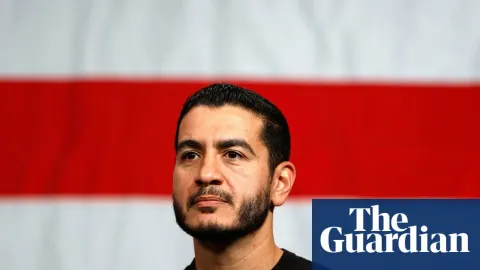
Geopolitical shifts are not limited to the Middle East or Europe. In Colombia, the rise of Abelardo De La Espriella, a hard-line right-wing presidential candidate, signals a potential new alliance for the Trump administration. De La Espriella has pledged to crush drug traffickers and align closely with Washington’s conservative wing, a move that would represent a significant departure from the current left-leaning administration in Bogotá. This development is part of a broader trend of 'Trump-aligned' leaders gaining ground globally, from Brazil to Europe, creating a network of partners who share a transactional approach to international relations.
For the global economy, a shift in Colombia means a change in the management of critical trade routes and narcotics interdiction policies, which indirectly affects global risk appetites. If Trump gains a key ally in South America, his leverage in international forums—including those involving sanctions and oil trade—will increase. Iranian policymakers and market participants should watch these developments closely, as a more unified 'Trumpian' bloc across the Americas could lead to stricter enforcement of secondary sanctions or a more aggressive stance on global energy exports. The interconnectedness of these elections highlights that the value of the Toman is no longer just tied to local events, but to the shifting political tides in every corner of the globe.
Frequently Asked Questions
Why is Macron's Rwanda memorial significant for diplomacy now?
How did the Tehran market respond to the latest regional news?
What is the 'breadth paradox' in the S&P 500?
Geopolitical Risk: How Global Events Shape Financial Markets
Geopolitical risk refers to the potential for political events and instability to disrupt the normal course of international relations and economic activity, ultimately impacting financial markets. These risks can stem from a wide array of sources, including interstate conflicts, civil wars, terrorist attacks, political coups, diplomatic tensions, trade wars, and even significant shifts in foreign policy by major global powers. The headline, mentioning “Trump’s Hezbollah Acknowledgment” and “Iran Israel conflict updates,” directly points to such risks, highlighting how political developments can create uncertainty that reverberates through economies.
When geopolitical risks escalate, their primary effect on markets is often increased uncertainty and volatility. Investors, facing an unpredictable future, tend to move away from riskier assets and into perceived safe havens like gold, certain stable currencies, or government bonds. This shift can lead to capital flight from emerging markets, currency depreciation (as seen with the Toman in the keywords), and drops in local equity or commodity markets. For instance, heightened tensions in the Middle East can directly impact oil prices, which then affects inflation and economic stability globally.
The impact is particularly pronounced in economies already facing external pressures or sanctions, such as Iran. The “Tehran Markets Edge Lower” and “Emami coin price drop” mentioned in the keywords are classic symptoms of geopolitical risk manifesting in a sensitive market. Sanctions, diplomatic isolation, or the threat of military action can severely restrict a country's access to international trade and finance, leading to currency devaluation, inflation, and a general erosion of investor and consumer confidence. Understanding these dynamics is crucial for interpreting market movements in regions prone to political instability.
Topics
Related Articles