Lebanon Ceasefire Hinges on Hezbollah as Broadcom Slides and Marjane Satrapi Passes Away
آتشبس مشروط در لبنان در سایه مخالفت حزبالله؛ سقوط سهام برادکام و درگذشت مرجان ساتراپی
Israel and Lebanon have agreed to a conditional ceasefire brokered in Washington, yet Hezbollah's immediate rejection casts a shadow over regional stability. On Wall Street, Broadcom shares are retreating after a cautious AI outlook, while the global Iranian community mourns the loss of Persepolis author Marjane Satrapi.
At time of publishing
USD
174,500
Toman
Gold 18K
19.03M
Toman / gram
Bitcoin
$63,177
US Dollar
Tether
172,154
Toman
The Fragile Hope of a Conditional Ceasefire
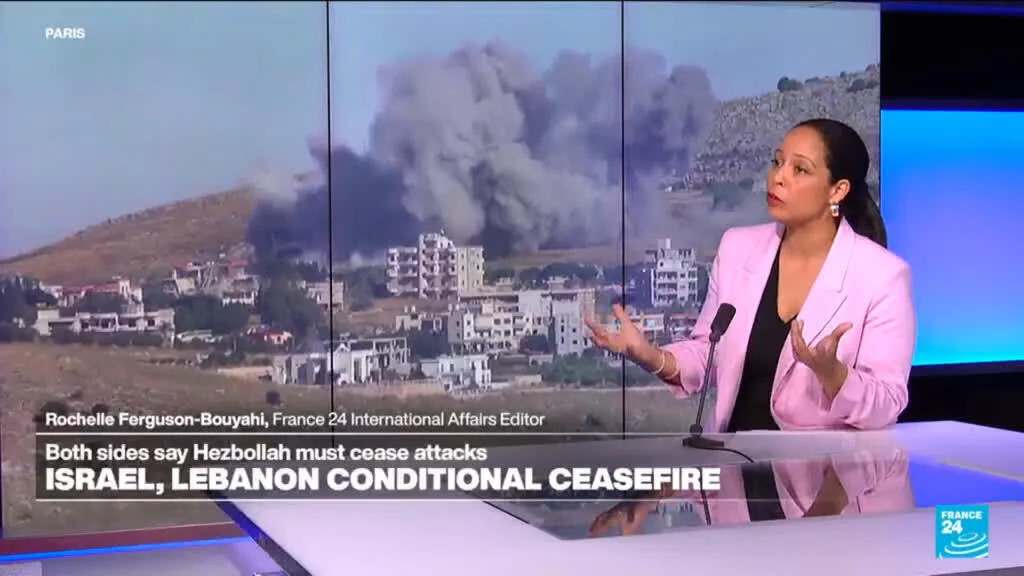
In a significant diplomatic move at 17:00 Tehran time, Israel and Lebanon have reportedly agreed to a conditional ceasefire following intensive US-led negotiations in Washington. The agreement, as reported by France 24, mandates a complete cessation of fire and the establishment of "pilot zones" where the Lebanese Armed Forces will exercise exclusive control, effectively aiming to sideline non-state actors. However, the ink was barely dry before Hezbollah’s leadership announced they would not honor a deal in which they were not direct participants. This defiance highlights the immense difficulty of implementing peace when the primary combatants on the ground feel excluded from the high-level diplomatic table.
For the Iranian economy and the Toman, this development is a double-edged sword. While the news of a potential truce usually calms the currency market, the immediate rejection by Hezbollah suggests that the threat of a wider regional escalation remains active. Traders in Tehran are watching closely; if the ceasefire holds, we could see a retreat in the risk premium currently baked into the USD/IRR rate. For now, the US Dollar remains steady at 174,500 Toman, showing a 0.0% change over the last 24 hours, as the market adopts a "wait and see" approach toward the stability of this new diplomatic framework.

Market Jitters: Broadcom’s AI Outlook and Misleading Jobless Data
Global markets are experiencing a moment of localized turbulence, particularly in the technology sector. Broadcom, a bellwether for the semiconductor industry, saw its stock price fall sharply after its latest earnings report. Despite posting solid numbers, the company’s refusal to raise its AI-related revenue guidance for the coming year disappointed investors who have become accustomed to "beat and raise" cycles from AI giants. This caution from Broadcom suggests that while the AI boom is real, the pace of infrastructure spending may be reaching a plateau or at least a phase of more measured growth, causing a ripple effect across tech-heavy indices.
Simultaneously, US economic data provided a confusing signal as jobless claims jumped to a four-month high. However, analysts warn against interpreting this as a sign of a cooling labor market. The spike is largely attributed to the timing of the Memorial Day holiday, which often creates noise in weekly filings. For Iranian investors tracking gold and global trends, this data has helped push Gold 18k/gram up by 1.5% in the last 24 hours, moving from 18,752,481 to 19,029,041 Toman. The combination of tech volatility and steady inflation expectations continues to make hard assets like gold and the Emami coin, currently at 183,500,000 Toman, attractive hedges against global uncertainty.
Cultural Loss: The Legacy of Marjane Satrapi
The world of literature and the Iranian diaspora are mourning the death of Marjane Satrapi at age 56. As the author of the iconic graphic novel "Persepolis," Satrapi transformed the way the world viewed the Islamic Revolution and the Iran-Iraq War through the eyes of a young girl. Her work was not just a memoir but a bridge of empathy that humanized the Iranian experience for millions of Western readers. The Oscar-nominated film adaptation of her work remains a staple of modern cinema, and her passing marks the end of an era for a generation of artists who found their voice through her brave, black-and-white illustrations.
Satrapi’s death comes at a time when the themes she explored—identity, exile, and the struggle for personal freedom—remain as relevant as ever in the Iranian discourse. While this is a cultural story, its impact on the collective psyche of the diaspora and the intellectual community in Iran cannot be understated. In times of economic hardship and geopolitical tension, figures like Satrapi provide a sense of shared history and cultural resilience. Her legacy will likely continue to influence the "soft power" of the Iranian identity globally, even as the nation navigates its current complex political and economic landscape.
---
Geopolitical Tensions and US Policy Shifts
Beyond the Levant, the US House of Representatives has taken a symbolic but potent step by voting to curb President Trump’s war powers regarding Iran. This resolution seeks to prevent unilateral military action without congressional approval, reflecting a deep-seated domestic concern over the potential for an unplanned conflict in the Middle East. While the move is largely political and faces a likely veto, it signals to Tehran that the American political establishment is divided on the path forward, potentially opening small windows for back-channel negotiations. This legislative friction occurs as efforts to reopen the Strait of Hormuz remain stagnant, keeping global energy markets on edge.
In Somalia, another flashpoint has emerged as heavy fighting broke out in the capital, Mogadishu. Rival political factions have engaged in gun battles that residents describe as the worst in years. While seemingly distant from the streets of Tehran, such instability in the Horn of Africa often impacts maritime security and shipping insurance rates, which eventually filter down to the cost of imported goods in the region. For the savvy observer, these disparate events—from the halls of Congress to the streets of Mogadishu—all contribute to the complex risk matrix that determines the value of the Toman and the price of gold in the local bazaar.
Watch
Israel, Lebanon agree to conditional ceasefire • FRANCE 24 English
FRANCE 24 English
Frequently Asked Questions
Why did Broadcom's stock fall despite the AI boom?
What are the main conditions of the Israel-Lebanon ceasefire?
How did the Tehran gold market react to today's global news?
Understanding Geopolitical Risk and its Impact on Financial Markets
Geopolitical risk refers to the potential for political instability, conflicts, or international tensions to disrupt the global economy and financial markets. These risks can stem from various sources, including regional conflicts, civil unrest, trade wars, or shifts in international alliances. The uncertainty generated by such events often leads investors to reassess their portfolios, seeking safety or adjusting for potential disruptions to supply chains, commodity prices, or consumer demand.
When geopolitical tensions escalate, a common market reaction is a flight to "safe-haven assets." These are investments perceived to hold or increase their value during periods of market turbulence. Gold, for instance, is a classic safe haven; its price often rises as investors flock to it as a store of value when other assets are deemed riskier. Similarly, the currencies of stable, major economies, such as the US dollar or Swiss franc, may strengthen as global capital seeks refuge. Conversely, currencies of nations directly affected by or close to conflict zones, like the Iranian Rial in a regionally volatile Middle East, may depreciate due to capital flight and reduced investor confidence.
The situation in Lebanon, where a ceasefire's success hinges on a major non-state actor like Hezbollah, exemplifies a significant geopolitical risk. The outcome of such negotiations, whether leading to stability or renewed conflict, directly influences investor sentiment across the region and beyond. A perceived increase in risk could drive up gold prices in markets like Tehran and further pressure the USD/IRR exchange rate, reflecting concerns about regional stability and its economic consequences. Understanding these dynamics is crucial for anyone trying to decipher market movements in an interconnected world.
Topics
Related Articles