
California’s Power Struggle and WFP’s Hunger Warning: A High-Stakes Friday for Global Markets
رقابت میلیمتری در کالیفرنیا و هشدار گرسنگی جهانی؛ جمعهای سرنوشتساز برای بازارهای مالی و منطقهای
As California's governor race remains a dead heat between Steve Hilton and Xavier Becerra, the WFP warns of a massive hunger crisis looming over Iran. Meanwhile, New York's sudden ban on data centers sends shockwaves through the AI and energy sectors.
At time of publishing
USD
174,100
Toman
Gold 18K
18.35M
Toman / gram
Bitcoin
$60,762
US Dollar
Tether
174,510
Toman
The Battle for California: A Proxy for America’s Future
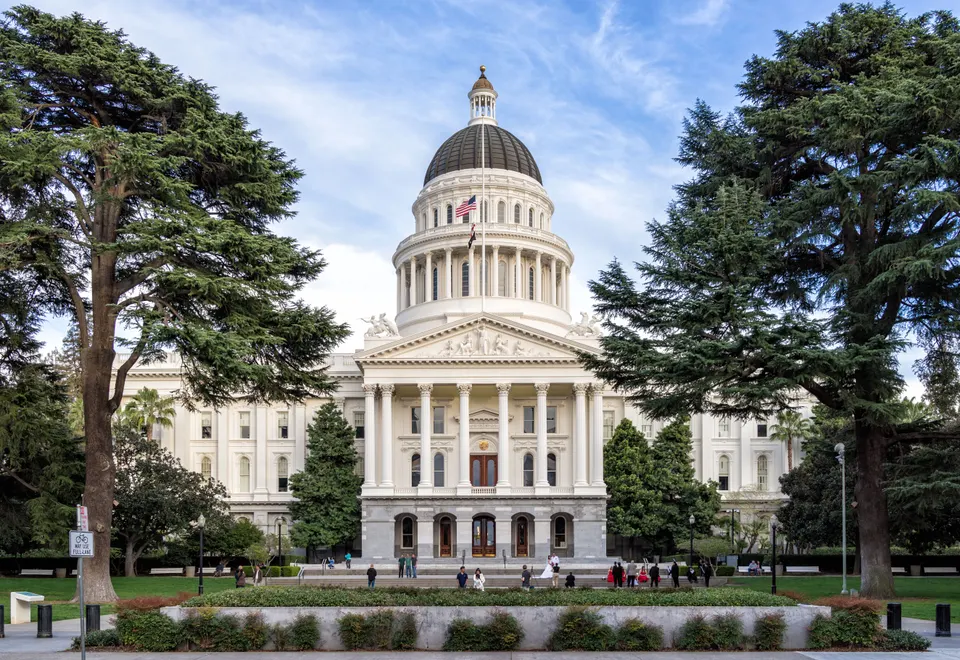
Three days after Californians headed to the polls, the race for the governor’s mansion remains too close to call, creating a vacuum of political certainty in the world’s fifth-largest economy. As of Friday morning, British-born conservative pundit Steve Hilton holds a narrow lead with approximately 60% of the ballots counted. However, Xavier Becerra, the former U.S. Health and Human Services Secretary under the Biden administration, is trailing by a margin so thin that experts believe the final tally could take several more days. This primary is critical because the top two vote-getters will advance to the general election in November, essentially deciding whether California will double down on its progressive path or pivot toward the populist-conservative wave currently sweeping parts of the United States.
For global markets and the tech sector, this isn't just a local election. California’s regulatory environment dictates the pace of innovation for Silicon Valley and the transition to green energy for the entire country. A victory for a candidate like Hilton could signal a massive deregulation of the tech industry, while a Becerra win would likely mean continued alignment with federal Democratic policies. Investors are watching closely because California’s fiscal health and its approach to corporate taxation—including the controversial 'billionaire tax' currently being debated—will set the precedent for other states. The uncertainty is reflected in the cautious movement of broader indices, as the political identity of the West Coast hangs in the balance.
WFP Issues Dire Warning as Regional Conflict Strains Resources
The United Nations World Food Programme (WFP) has issued a staggering alert, stating that the ongoing regional conflict involving the U.S., Israel, and Iran could tip up to 45 million people into acute hunger. This warning comes at a time when the Iranian economy is already navigating a complex web of sanctions and internal inflationary pressures. The WFP’s analysis suggests that if the current cycle of strikes and counter-strikes continues, the disruption to supply chains and the destruction of agricultural infrastructure will create a humanitarian crisis that transcends borders. This is not merely a logistical issue; it is a fundamental threat to regional stability that could lead to mass migration and long-term economic scarring.
In the local markets, we are seeing the immediate effects of this geopolitical tension. The USD/IRR exchange rate moved from 173,700 to 174,100, a modest increase of +0.2% over the last 24 hours. However, the more dramatic shift occurred in the gold market, where 18k gold fell from 18,843,436 to 18,347,107 Toman per gram, a significant drop of -2.6%. This divergence suggests that while the currency remains under pressure, some investors may be liquidating gold assets to maintain liquidity or shifting toward other safe havens as the reality of a prolonged conflict settles in. The Emami coin remained flat at 183,500,000 Toman, indicating a temporary standoff between buyers and sellers in the physical bullion market.

New York’s AI Moratorium: A New Hurdle for Big Tech
In a move that has stunned the technology industry, New York lawmakers have passed a one-year moratorium on the construction of new large-scale data centers. The bill, which now awaits the signature of Governor Kathy Hochul, is the first statewide ban of its kind and is intended to give policymakers time to assess the environmental impact and the strain these facilities place on the energy grid. Data centers are the backbone of the AI revolution, requiring immense amounts of electricity and water for cooling. By halting new developments, New York is signaling that the era of unchecked digital expansion may be coming to an end, prioritizing utility price stability for residents over the rapid growth of tech infrastructure.
This decision carries significant implications for companies like Nvidia and Vertiv, which have seen their valuations rocket based on the assumption of endless data center expansion. If other states follow New York’s lead, the 'AI trade' could face its first major regulatory bottleneck. For the reader, this means that the cost of computing power—and by extension, the cost of AI-driven services—could begin to rise. It also highlights a growing tension between national technological ambitions and local environmental realities. As energy prices remain a sensitive political issue, the battle over where and how we build the brains of the digital age is becoming as much a matter of public policy as it is of engineering.

Frequently Asked Questions
Why is the California governor's race affecting global markets?
What caused the 2.6% drop in Tehran's gold price today?
How does New York's data center ban impact AI stocks?
Understanding Energy Security in a Volatile World
Energy security is a concept that has gained immense prominence in an increasingly interconnected and volatile global landscape. At its core, energy security refers to the uninterrupted availability of energy sources at an affordable price. It encompasses three main pillars: reliability of supply, affordability for consumers and industries, and increasingly, sustainability to mitigate environmental impact. For nations, achieving energy security is paramount for economic stability, national defense, and the overall well-being of their citizens, as energy underpins nearly every aspect of modern life, from transportation and manufacturing to communication and healthcare.
The recent headlines highlight various facets of this complex challenge. The "Global oil market Brent $95" underscores the persistent vulnerability to price shocks and supply disruptions in fossil fuel markets, which can cripple economies reliant on imported oil. Meanwhile, the "AI energy consumption policy" and the "New York data center ban" due to energy concerns point to a new frontier in energy security: managing the burgeoning demand from rapidly advancing technologies. As artificial intelligence and digital infrastructure expand, their massive electricity requirements place unprecedented strain on existing grids, necessitating robust policies and investments in new generation and transmission capabilities.
Furthermore, state-level actions, such as "California’s Power Struggle" and decisions made during a "California Governor Race," demonstrate the critical role of regional governance in shaping energy futures. These local policies determine the energy mix – whether it leans towards renewables, fossil fuels, or nuclear – and the resilience of the grid against climate change impacts or cyber threats. Balancing economic growth, environmental stewardship, and reliable power supply becomes a high-stakes endeavor for policymakers, directly impacting the daily lives and long-term prosperity of their constituents.
Ultimately, energy security is not merely about having enough fuel; it's about the strategic foresight to anticipate future needs, diversify sources, build resilient infrastructure, and foster international cooperation. In an era marked by geopolitical tensions, climate change imperatives, and rapid technological shifts, understanding energy security is crucial for comprehending global market dynamics and the fundamental challenges facing nations worldwide.
Topics
Related Articles