Hormuz Drone Clash Triggers USD Spike; Smoke Clouds Putin’s Economic Forum; EV Tariff Crisis Looms in Europe
تنش پهپادی در هرمز و جهش دلار؛ سایه جنگ بر مجمع اقتصادی پوتین و بحران تعرفه خودروهای برقی در اروپا
US forces down Iranian drones in the Strait of Hormuz, driving Tehran's USD rate to 176,000 Toman. Meanwhile, drone strikes over St. Petersburg disrupt Russia's flagship economic event and European automakers plead for tariff relief.
At time of publishing
USD
176,000
Toman
Gold 18K
18.44M
Toman / gram
Bitcoin
$62,215
US Dollar
Tether
175,901
Toman
US Intercepts Drones in Hormuz as Tehran Markets React
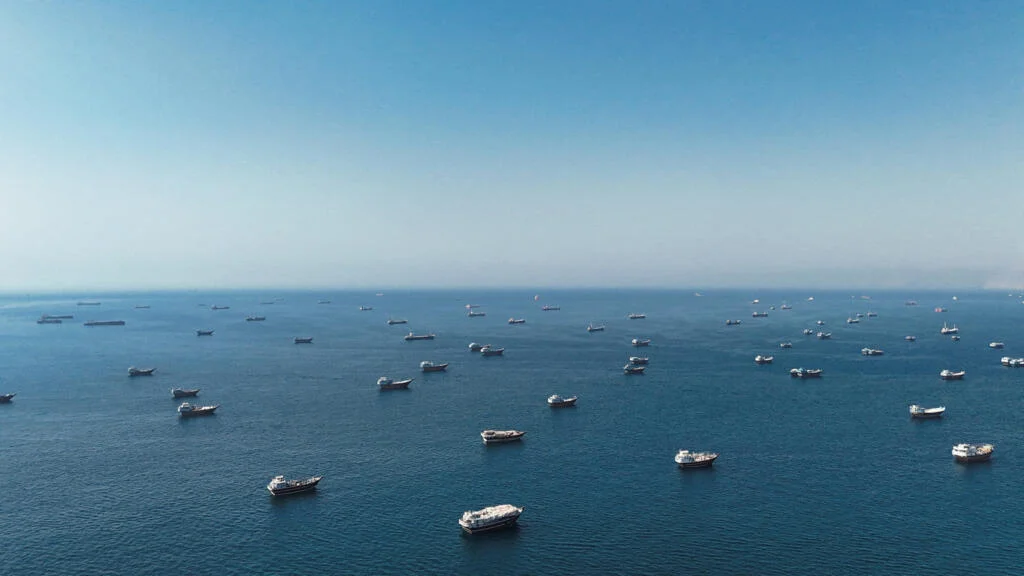
The US military's announcement of downing two Iranian attack drones in the Strait of Hormuz on Saturday night has sent a fresh wave of anxiety through the region's shipping lanes. This latest kinetic engagement highlights the ongoing shadow war that frequently spills into the open in one of the world's most critical maritime chokepoints. For Iranian markets, such incidents are rarely just military footnotes; they often translate directly into currency volatility. As news of the confrontation spread, the USD in Tehran's open market moved from 174,800 to 176,000 Toman, a 0.7% increase that reflects the risk premium traders immediately bake into the exchange rate.
This escalation is particularly sensitive given the strategic importance of the Strait, through which a significant portion of the world's oil supply passes. While the US claims the drones were a direct threat to shipping traffic, Tehran often views these interceptions as provocations or infringements on its regional surveillance. The immediate impact on gold is also visible, with the 18k gold gram price rising 0.7% from 18,318,712 to 18,443,833 Toman. For the average Iranian consumer, these military maneuvers in the Persian Gulf are not just headlines—they are precursors to the next wave of price hikes in imported goods and household staples.
Smoke Over St. Petersburg: Putin’s Economic Forum Under Fire
The St. Petersburg International Economic Forum (SPIEF), once a glitzy gateway for Western investment into Russia, has been physically and symbolically clouded by the ongoing conflict in Ukraine. Reports from the ground describe a plume of smoke rising over the city following Ukrainian drone strikes—a stark contrast to the polished rhetoric of economic resilience coming from inside the forum. President Vladimir Putin has long used this event to project an image of a Russia that is "open for business" despite Western sanctions, but the sight of smoke over the imperial capital serves as a visceral reminder that the war is no longer a distant reality for the Russian elite.
The drone attacks targeting St. Petersburg signify a strategic shift in Ukraine's ability to strike deep into Russian territory, hitting the very heart of the Kremlin's economic messaging. While the forum attempted to focus on "multipolarity" and new partnerships with the Global South, the physical insecurity of the venue undermines the narrative of stability. For global markets, the persistence of these strikes suggests that the energy and commodity supply chains originating from Russia remain under constant threat, keeping a floor under global energy prices and ensuring that the geopolitical risk discount remains a permanent fixture of the regional economy.

Automotive Industry Pleads for Delay in Brexit EV Tariffs
In the economic sphere, the European and UK car industries are sounding the alarm over impending Brexit-related tariffs on electric vehicles (EVs). Under the current Trade and Cooperation Agreement, strict "rules of origin" are set to kick in by 2027, requiring a high percentage of battery components to be sourced locally to avoid a 10% tariff. However, manufacturers are now admitting that they simply cannot meet these targets due to the slow pace of battery factory construction in Europe. This has led to urgent lobbying of the European Commission to delay the tariffs for a second time, as the industry fears it will lose market share to cheaper Chinese imports if prices rise further.
The situation highlights the massive gap between political climate goals and industrial reality. While governments are pushing for a rapid transition to green energy, the infrastructure required to support a localized supply chain is lagging years behind schedule. If the tariffs are enforced, it could lead to a significant increase in the cost of EVs for consumers, potentially stalling the transition to sustainable transport. For investors, this uncertainty creates a volatile environment for automotive stocks, as the industry waits to see if Brussels will prioritize trade rules or the survival of its domestic manufacturing base in the face of global competition.

Political Polarization in Australia: The Case of Ben Roberts-Smith
In Australia, a different kind of storm is brewing as One Nation leader Pauline Hanson publicly threw her weight behind Ben Roberts-Smith, the former SAS soldier embroiled in war crimes allegations. Speaking at a rally in Brisbane, Hanson compared the prosecution of Roberts-Smith to her own 2003 imprisonment, which was later overturned. Her rhetoric, calling him a person she "respects and admires," has reignited a fierce national debate over military accountability versus the lionization of special forces figures. The rally, which saw about 100 supporters gather in Rocks Riverside Park, featured calls for an "army of civilians" to stand by the disgraced soldier, signaling a deepening cultural divide in Australian politics.
This development is more than just a local political stunt; it represents a broader global trend where populist leaders challenge established judicial and military oversight processes. By framing Roberts-Smith as a victim of a "witch hunt," Hanson is tapping into a vein of nationalist sentiment that resonates with her core constituency. For international observers, this move illustrates the fragility of the post-war consensus on international humanitarian law, as political figures increasingly prioritize domestic populist narratives over the findings of rigorous legal inquiries into military conduct during foreign interventions.
Frequently Asked Questions
Why did the USD price in Tehran rise after the Hormuz incident?
How did the drone strikes affect the St. Petersburg Economic Forum?
What are the 'rules of origin' affecting the EV industry in Europe?
Geopolitical Risk Premium: Why Wars and Tensions Make the Dollar Jump
When a flashpoint erupts – such as a drone clash in the Strait of Hormuz or a Russian strike on a European city – investors rush to the safest assets they can find. The most common safe‑haven is the U.S. dollar, which tends to appreciate as risk‑averse money flows into dollar‑denominated securities. This extra return that investors demand for holding assets exposed to geopolitical uncertainty is called the geopolitical risk premium.
The risk premium works like a surcharge on the cost of capital. In calm periods, a sovereign bond from a stable country might yield 2 % annually. If geopolitical tension spikes, investors require a higher yield – perhaps 3 % or more – to compensate for the chance of sudden market disruptions, sanctions, or supply‑chain shocks. The higher yield pushes the bond price down, which in turn lifts the currency’s value because foreign investors must buy the domestic currency to purchase the bond.
In practice, the premium shows up in several ways. First, the dollar’s exchange rate often surges relative to other currencies, as seen in June 2026 when the USD/IRR price spiked after reports of Iranian drones threatening oil tankers. Second, commodity prices such as gold can move inversely to the dollar; a stronger dollar makes gold more expensive in other currencies, sometimes dampening the “gold rush” that typically follows crises. Finally, the premium can affect policy decisions – central banks may tighten or loosen monetary policy to counteract excessive currency swings caused by geopolitical news.
Understanding the geopolitical risk premium helps investors and policymakers anticipate market moves before they happen. By monitoring flashpoints – from the Hormuz strait to the St. Petersburg Economic Forum – and the accompanying media coverage, they can gauge the likely pressure on the dollar and adjust portfolios or fiscal strategies accordingly. The concept also underscores why diversification across asset classes and regions remains a core tenet of long‑term investing.
For a deeper dive, see the articles on sovereign risk premiums, the role of the dollar as a safe‑haven currency, and case studies of past geopolitical shocks that reshaped global finance.
Topics
Related Articles