Berlin Embassy Slams Global Silence on Aggression; Toman Gains as Iran Prepares for National Farewell
هشدار تند سفارت ایران در برلین به سکوت غرب؛ پیشروی تومان در آستانه مراسم وداع ملی
Iran's embassy in Berlin has rebuked international silence over regional aggression as the nation finalizes funeral arrangements for the late Leader. Meanwhile, the Toman has strengthened against the dollar, and global oil prices have surged to $96.
At time of publishing
USD
172,500
Toman
Gold 18K
17.62M
Toman / gram
Bitcoin
$64,117
US Dollar
Tether
172,000
Toman
Diplomatic Defiance Amid National Transition
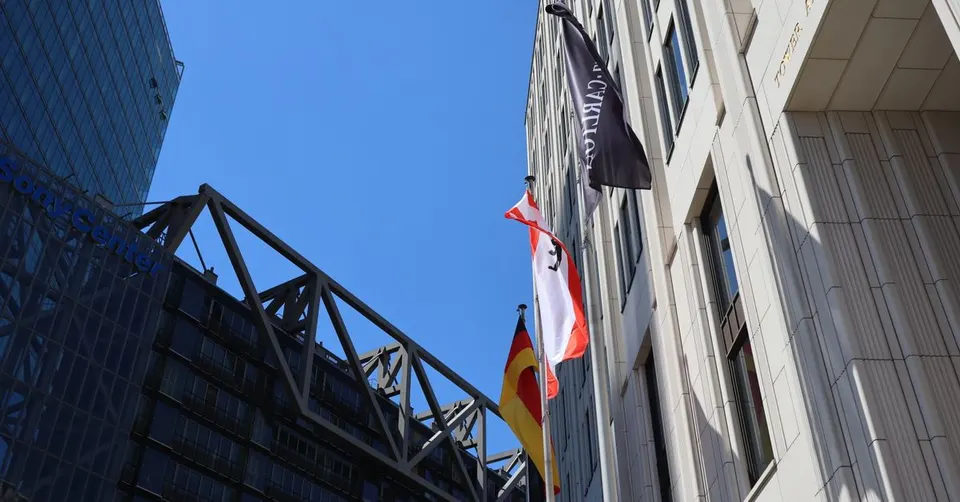
The Iranian Embassy in Berlin has issued a strongly worded statement condemning the international community's "unforgettable silence" regarding military actions by the United States and Israel. This diplomatic maneuver comes on the first anniversary of specific regional escalations, with Tehran signaling that the lack of accountability from Western capitals only serves to undermine global security frameworks. The embassy’s rhetoric underscores a persistent stance of defiance, even as the nation enters a sensitive period of domestic transition. By framing the silence of European nations as a moral and political failure, Iran is asserting its narrative on the global stage, ensuring that its grievances remain central to the ongoing geopolitical discourse.
Simultaneously, the internal focus of the country has shifted toward the final farewell for the late Leader of the Islamic Revolution, Ayatollah Seyyed Ali Khamenei. A dedicated committee has now released the official funeral schedule, which includes major ceremonies in Tehran and Qom, culminating in a burial in his hometown of Mashhad. This period of mourning is being managed with high precision to maintain national stability. For observers, the seamless coordination of these events is a signal of institutional continuity. The transition is not merely a domestic matter; it carries significant weight for regional diplomacy, as world leaders watch closely to see how the next chapter of Iranian policy will be written amidst the backdrop of these funeral proceedings.
---
Market Reaction: Toman Rebounds as Oil Hits $96
In the financial markets, the Iranian Toman has shown surprising resilience during this period of national transition. The USD/IRR exchange rate moved from 174,600 down to 172,500, representing a 1.2% appreciation for the local currency. Even more dramatic was the correction in the gold market, where the Emami coin dropped from 182,000,000 to 175,000,000 Toman, a significant -3.8% decrease in just 24 hours. This downward trend in hard asset prices suggests that the market had already priced in much of the political uncertainty, and the clarity regarding the transition process—combined with persistent rumors of a diplomatic 'off-ramp' with the West—has encouraged a wave of profit-taking and currency stabilization.
This domestic cooling comes as global energy markets face renewed volatility. Brent crude and WTI have seen upward pressure, with oil prices touching the $96 per barrel mark. Prominent market analysts, including Jim Cramer, have highlighted companies like ConocoPhillips as primary beneficiaries of this price surge. For Iran, the $96 oil price is a double-edged sword; while it bolsters potential state revenue, it also increases the geopolitical stakes in the Persian Gulf and the Strait of Hormuz. The divergence between a strengthening Toman and rising global energy costs creates a complex environment for Iranian traders, who must now balance domestic political sentiment against high-stakes global commodity shifts.

---
The AI Divide: Anthropic’s Liability and Global Access
In the technology sector, the fallout from the U.S. government’s ban on high-tier AI exports continues to reverberate. Anthropic has officially disabled its most advanced models, Fable 5 and Mythos 5, for foreign nationals, citing national security concerns. This move has transformed what was once Anthropic's greatest competitive advantage—its focus on safety and constitutional AI—into a significant liability. By being the first to strictly comply with these draconian access restrictions, the company risks alienating a global developer base that is increasingly looking toward open-source or non-U.S. alternatives to power the next generation of industrial and financial applications.
For countries like Iran and other regional players, this "AI Iron Curtain" represents a significant hurdle for technological integration. The inability to access top-tier LLMs (Large Language Models) means that local firms must accelerate their own indigenous AI development or find workarounds through neutral third-party hubs. As the U.S. tightens its grip on AI compute and model weights, the global tech landscape is fracturing into distinct blocs. This fragmentation ensures that AI is no longer just a tool for productivity but a primary instrument of geopolitical leverage, where access to intelligence is as heavily sanctioned as access to the global banking system.
Frequently Asked Questions
Why is the Toman strengthening despite the national transition?
What impact does $96 oil have on the Iranian economy right now?
How does the Anthropic AI ban affect Iranian tech companies?
Understanding Exchange Rate Dynamics in Geopolitically Sensitive Economies
Exchange rates represent the value of one currency relative to another, acting as a critical barometer for a nation's economic health and its connections to the global market. Their fluctuations directly impact international trade, investment, and even the purchasing power of citizens. While often seen as a purely economic phenomenon, a myriad of factors—from interest rates and inflation to economic growth and political stability—constantly influence these values.
For a currency like the Iranian Toman (officially the Rial, with 1 Toman equaling 10 Rials), these dynamics are further complicated by a unique geopolitical landscape. General economic principles still apply: a high demand for foreign currency (e.g., for imports) or a low supply (e.g., due to reduced exports or capital flight) would typically weaken the Toman. Conversely, robust oil revenues, which are a primary source of foreign exchange for Iran, can bolster its supply and potentially strengthen the currency.
However, in economies under international scrutiny or sanctions, political events and sentiment play an outsized role. While a national farewell or perceived "aggression" might typically introduce uncertainty and weaken a currency, a smooth political transition, a strong display of national unity, or even strategic government intervention can sometimes lead to unexpected stability or short-term gains for the Toman. Such gains might reflect a market perception of resilience, effective state management during a sensitive period, or a resolution of prior uncertainties.
Moreover, the Iranian financial system often operates with multiple exchange rates – an official rate set by the central bank and a free-market rate. Government policies, including central bank actions to inject or withdraw foreign currency, and controls on capital movement, are crucial in managing the Toman's value across these different segments. Therefore, comprehending the Toman's movements requires an intricate understanding of not just fundamental economic indicators but also the complex interplay of domestic politics, regional geopolitics, and state economic policies.