Iran Talks Off, Gold Dips as UK Borrowing Soars Under 'Iran War' Shadow; Hormuz Mines Persist
مذاکرات ایران متوقف شد، طلا افت کرد در حالی که استقراض بریتانیا تحت سایه «جنگ ایران» اوج گرفت؛ مینهای هرمز همچنان پابرجا
Swiss officials have announced an abrupt halt to crucial Iran talks, casting a shadow over a recently signed agreement and raising questions about its future. Meanwhile, the UK grapples with higher-than-expected borrowing, partially attributed to the economic fallout of the 'Iran war,' while the Strait of Hormuz remains hazardous with 80 mines needing clearance before normal shipping can resume. Gold prices saw a notable dip today, reflecting broader market uncertainties.
At time of publishing
USD
155,700
Toman
Gold 18K
15.69M
Toman / gram
Bitcoin
$62,721
US Dollar
Tether
161,460
Toman
Swiss Officials Announce Halt to Iran Talks, Future of Agreement Uncertain
Swiss officials have declared an immediate halt to ongoing talks concerning Iran, a development that has sent ripples of uncertainty through diplomatic circles. This abrupt announcement raises significant questions about the fate of an agreement that President Trump reportedly signed just this week, with many critical details still awaiting resolution. The suspension of these negotiations, which were likely aimed at fleshing out the practicalities and enforcement mechanisms of the broader accord, underscores the volatile nature of international diplomacy with Tehran.
The implications for regional stability and Iran's economic outlook are substantial. A breakdown or even a prolonged pause in these talks could signal a return to heightened tensions, potentially impacting currency markets, trade relations, and the confidence of foreign investors who closely monitor such diplomatic progress. For Iranian citizens, the continuation of sanctions and the lack of clarity on international agreements directly translate into economic pressures and uncertainty regarding the future trajectory of the nation's financial health, including the stability of the Toman against major currencies like the USD, which remained stable today at 155,700 (+0.0%).
UK Economy Faces Fiscal Headwinds as 'Iran War' Takes Toll
The United Kingdom recorded a higher-than-expected public sector net borrowing figure of £23.3 billion in May, a stark indicator of the fiscal challenges confronting the nation. This figure, the second highest for any May on record, has been explicitly linked by officials to the ongoing economic fallout from what is being termed the 'Iran war'. The conflict's broader geopolitical and economic ramifications, including disruptions to global supply chains and energy markets, are clearly impacting even distant economies like the UK, leading to increased government expenditure and reduced revenue.
This economic strain presents a significant challenge for any future leadership, including potential Labour leader Andy Burnham, who recently secured a decisive by-election victory. The need to manage a burgeoning national debt amidst external geopolitical pressures will necessitate difficult budgetary decisions and could influence domestic policy, including public spending and taxation. For global markets, this underscores how regional conflicts can have far-reaching, tangible economic consequences, potentially dampening investor sentiment and contributing to broader economic slowdowns as nations divert resources or face increased costs due to international instability. Gold 18k/gram, often a safe-haven asset, surprisingly dropped from 15,983,655 to 15,687,935 (-1.9%) today, perhaps reflecting a complex interplay of factors beyond immediate conflict fears.

Strait of Hormuz Still Blocked by 80 Mines, Shipping Resumption Delayed
Despite the recent signing of a memorandum of understanding between the US and Iran, normal shipping operations through the crucial Strait of Hormuz are far from resuming. According to an independent tanker owner trade body, the central channel of the strait remains blocked by approximately 80 mines, requiring extensive clearance before vessels can safely navigate the chokepoint. This ongoing hazard forces ships to either risk running aground by taking alternative Omani routes or face significant delays, directly impacting global energy supply chains and increasing shipping costs.
This persistent threat highlights the fragile security situation in one of the world's most vital maritime passages, through which a significant portion of the world's oil supply transits. The presence of these mines, even after a diplomatic agreement, underscores the complexities of de-escalation and the long-term consequences of conflict in the region. For Iranian readers, this situation directly affects the country's oil exports and overall trade, as well as regional security dynamics, reinforcing the need for continued vigilance and international cooperation to ensure safe passage and prevent further economic disruption. The uncertainty surrounding the Strait of Hormuz contributes to a broader sense of geopolitical risk, which can influence investor confidence and currency stability in the region.
Australian Leadership Dismisses 'Frosty' Relationship Reports
In Australian politics, Treasurer Jim Chalmers has publicly dismissed reports of a 'frosty' relationship with Prime Minister Anthony Albanese, aiming to quash speculation about internal tensions within the government. These reports emerged amid broader discussions on economic policy and potential reforms, particularly concerning housing and taxation. Chalmers’s strong denial seeks to project an image of unity and stability at the top of the Australian government, which is crucial for maintaining public confidence and effective governance.
While seemingly a domestic political matter, the stability of leadership in key global economies can have ripple effects. Australia, as a significant player in the Indo-Pacific region and a major commodity exporter, relies on a cohesive government to navigate complex geopolitical and economic challenges. Any perceived internal discord could, in theory, impact policy implementation, investor confidence, or Australia's standing on the international stage. For an international audience, it serves as a reminder that even stable democracies grapple with internal political dynamics that, while not immediately impacting global markets, contribute to the overall political risk landscape.
Frequently Asked Questions
What specific details were left unresolved in the Trump-Iran agreement before talks were halted?
How might the halt in Swiss-mediated talks impact Iran's currency market and economic prospects?
What are the economic implications of the 'Iran war' for the UK's public borrowing?
What is the timeline for clearing mines in the Strait of Hormuz and resuming normal shipping?
How do regional geopolitical tensions, such as those in the Strait of Hormuz, affect global oil prices?
The Strategic Importance of the Strait of Hormuz
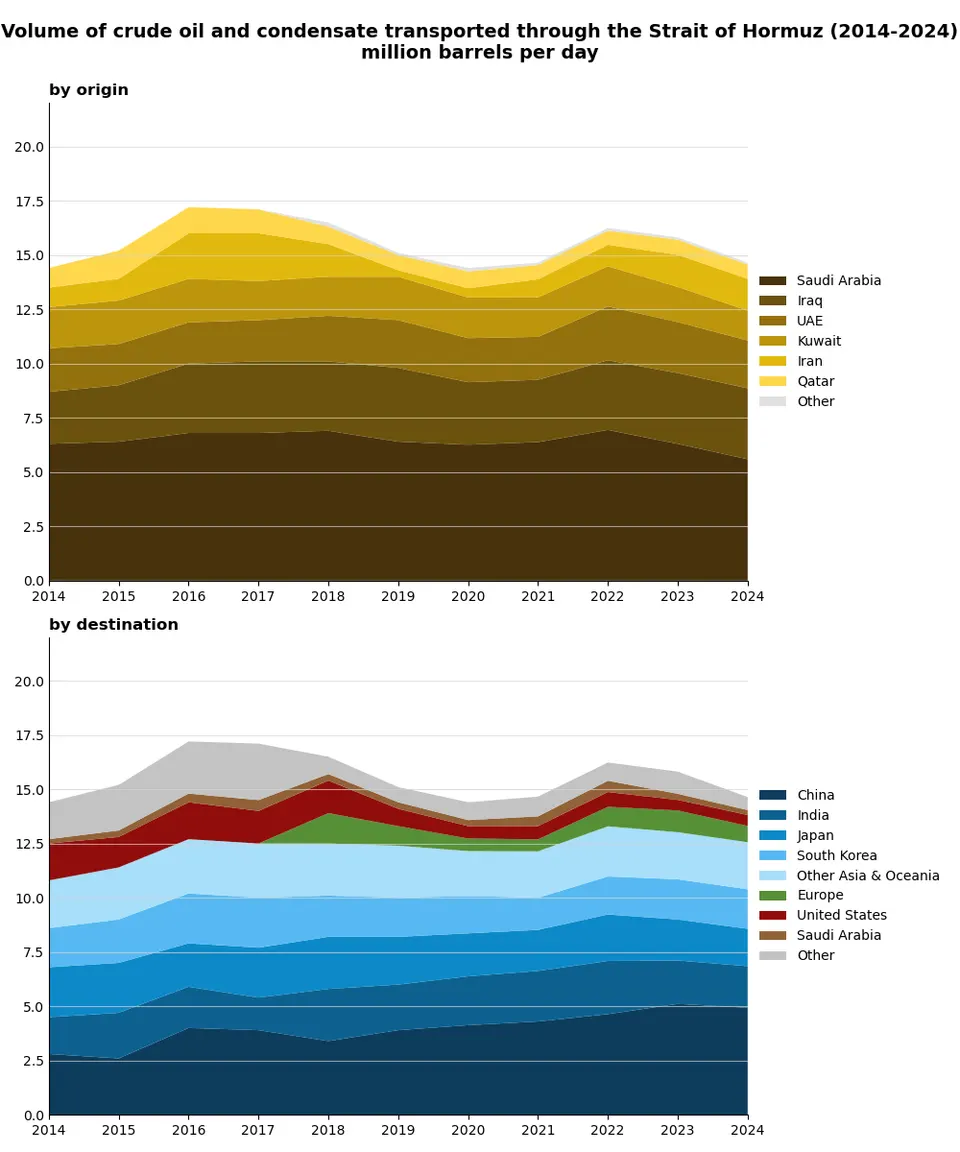
The Strait of Hormuz, a narrow waterway between Oman and Iran, is one of the world’s most critical maritime chokepoints. At its narrowest point it is only about 21 nautical miles wide, yet it funnels roughly 20% of global oil consumption and a significant share of liquefied natural gas (LNG) shipments each day. Because so much energy passes through this corridor, any disruption—whether from geopolitical tension, naval incidents, or mining of the sea floor—can instantly reverberate through global markets, inflating oil prices and prompting investors to seek safe‑haven assets like gold.
Control of the strait has long been a lever of Iranian foreign policy. Iran’s ability to threaten closure, either by deploying naval forces, laying mines, or using small fast‑attack craft, gives it disproportionate influence relative to its size. The 2015 Joint Comprehensive Plan of Action (JCPOA) and subsequent diplomatic talks often included assurances that Iran would keep the waterway open, underscoring how maritime security is intertwined with broader nuclear and sanctions negotiations.
For shipping companies, the risk calculus involves not just the possibility of a direct attack but also the cost of rerouting. An alternative route around the Cape of Good Hope adds roughly 10,000 nautical miles and several weeks to a voyage, dramatically raising fuel consumption and freight rates. Consequently, insurers raise premiums for vessels transiting the Hormuz corridor, a cost that is ultimately passed on to consumers and reflected in the price of commodities worldwide.
In recent months, heightened rhetoric over a potential “Iran war” and reports of mines in the Hormuz waters have revived concerns about supply chain fragility. Analysts watch closely for any escalation because even a brief shutdown can trigger a cascade: oil price spikes, currency market volatility, and heightened demand for gold as a hedge. Understanding the strategic geography of the strait helps explain why events there have outsized effects on economies far beyond the Middle East.