Mideast Tensions Flare: Lebanon Airstrikes Test US-Iran Deal as Talks Postponed
تشدید تنشها در خاورمیانه: حملات هوایی در لبنان توافق آمریکا-ایران را به چالش میکشد و مذاکرات به تعویق میافتد
Escalating violence in Lebanon, including Israeli airstrikes following Hezbollah attacks, has put immediate pressure on the newly inked US-Iran de-escalation deal, leading to the postponement of crucial talks in Switzerland. Meanwhile, global economic shifts continue with EU support for Ukraine alongside internal spending challenges, and India's Jio announces a massive share sale, signaling growing economic prowess.
At time of publishing
USD
155,700
Toman
Gold 18K
15.69M
Toman / gram
Bitcoin
$62,392
US Dollar
Tether
161,006
Toman
Mideast Tensions Flare: Lebanon Airstrikes Test US-Iran Deal, Talks Postponed
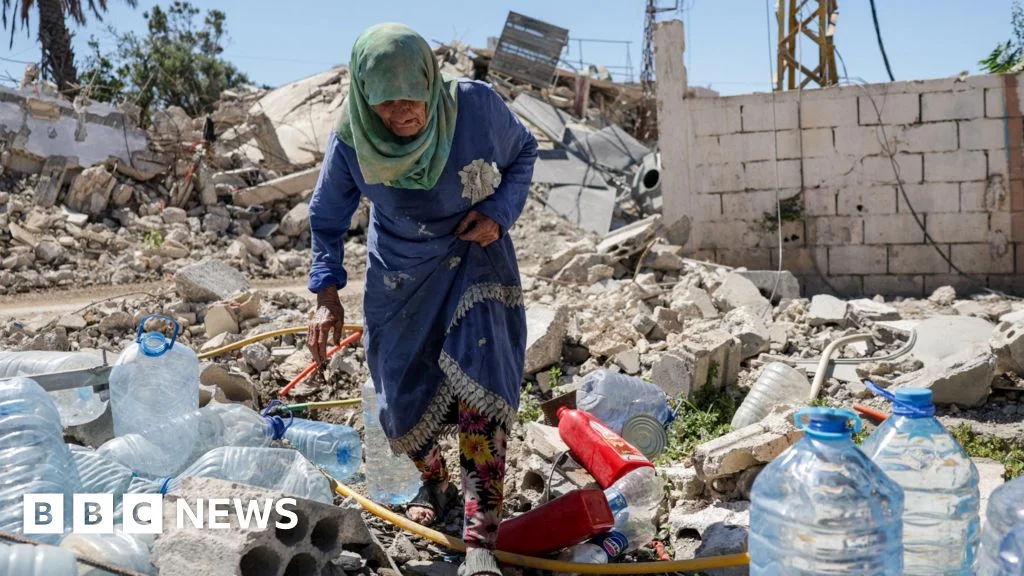
The fragile de-escalation deal between the U.S. and Iran is facing an immediate and severe test as violence erupts in southern Lebanon. Israel launched a series of airstrikes targeting Hezbollah militants after four of its soldiers were killed in cross-border attacks. This intense escalation directly challenges the spirit and terms of the recently signed agreement, which aimed to curb hostilities across the region, including in Lebanon. The swift return to conflict underscores the deep-seated complexities and volatile nature of the Middle East, making any pathway to lasting peace incredibly precarious.
Adding to the regional instability, Switzerland announced the postponement of a round of U.S.-Iran talks that were previously scheduled for Friday. These talks were seen as a critical diplomatic channel to build on the nascent de-escalation deal and address broader issues. The delay reflects the immediate impact of the renewed fighting in Lebanon, as the environment for constructive dialogue has clearly deteriorated. For Iranian citizens and regional markets, this news dampens hopes for immediate economic stability or relief from sanctions, as geopolitical uncertainty continues to loom large. The Toman exchange rate against the USD remains stable (+0.0%), but underlying market sentiment is likely to be impacted by the increased regional risk.
EU Leaders Back Ukraine Amid Internal Fiscal Challenges
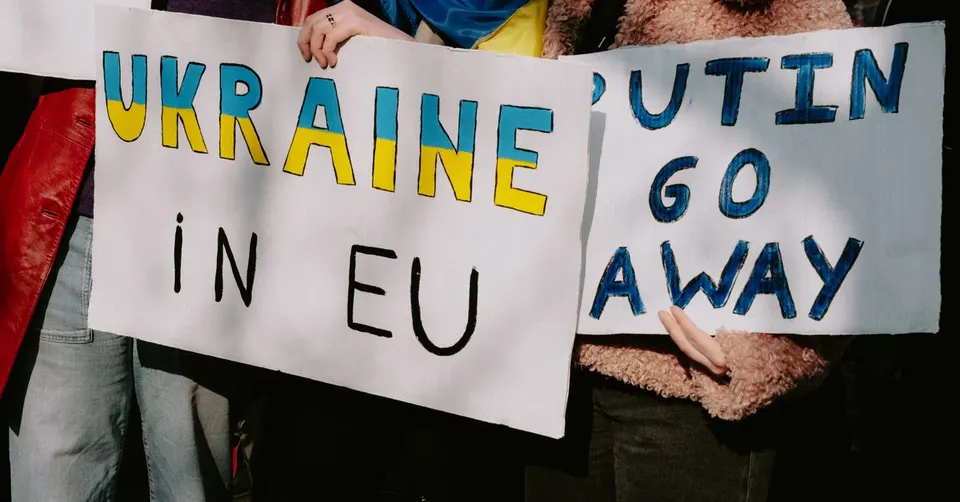
European Union leaders have reaffirmed their unwavering support for Ukraine by signing a joint statement, mirroring a similar commitment made by G7 nations earlier this week. This collective show of solidarity underscores the continued Western resolve to counter Russian aggression and support Kyiv's defense efforts. Despite the unified political stance, the practicalities of sustained military and financial aid present ongoing challenges for individual member states, highlighting the complex balancing act between geopolitical commitments and domestic economic realities.
Illustrating these internal pressures, Czech Republic Prime Minister Andrej Babiš confirmed that his country is set to miss its 2% GDP defense spending target for the year. The government had already cut its original defense spending plan to approximately 1.7-1.8% of GDP, indicating the fiscal constraints faced even by nations committed to bolstering European security. This situation, while not unique to the Czech Republic, points to the broader economic strain within the EU, which could impact the bloc's overall capacity for long-term strategic investments and its ability to fully meet NATO commitments. The broader geopolitical climate, influenced by ongoing conflicts, contributes to market uncertainty, which can indirectly affect global trade and commodity prices, even as gold prices saw a slight decline of -1.8% in the last 24 hours.
India's Jio Announces Potentially Largest Share Sale, Signaling Economic Ascent
India's economic landscape is buzzing with the announcement from billionaire Mukesh Ambani's Reliance Jio, which is preparing for what could be the country's largest-ever share sale. The telecom giant is reportedly aiming to raise approximately $4 billion, a move that would inject significant capital into its operations and further solidify its dominant position in India's rapidly expanding digital sector. This massive fundraising initiative is a clear indicator of the immense growth potential within the Indian economy and its increasing attractiveness to both domestic and international investors.
This colossal share sale is not merely a corporate finance event; it carries broader geopolitical and economic significance. It underscores India's rising prominence as a global economic powerhouse, capable of generating substantial capital and driving innovation at scale. Such large-scale investment activity helps to further integrate India into the global financial system, potentially leading to increased trade partnerships and a shift in economic influence. For countries like Iran, a stronger and more vibrant Indian economy could translate into a more robust trading partner, particularly in sectors such as energy and commodities, offering alternative avenues for economic engagement amidst ongoing international complexities.
Ukraine Strikes Moscow, Escalating War Dynamics
The conflict in Ukraine has seen a significant escalation with a recent drone attack on Moscow, which sent plumes of smoke rising over the Russian capital. This strike, attributed to Ukrainian forces, marks a notable expansion of the war's geographic scope, bringing the reality of conflict directly to Russia's heartland. The action has intensified Ukrainian hopes of demonstrating their capability to strike deep within enemy territory, challenging the Kremlin's narrative that the war is a distant, contained operation.
This targeting of Moscow represents a potent psychological and strategic blow, aiming to disrupt Russian public morale and military operations. It underscores Ukraine's determination to retaliate against ongoing aggression and force Russia to divert resources for domestic defense. For global geopolitics, such escalations heighten tensions significantly, raising the stakes for all parties involved and increasing the potential for further retaliatory measures. This continuous state of heightened conflict contributes to global market volatility, particularly affecting risk appetite and potentially influencing energy prices and supply chains, factors that indirectly impact economic stability and confidence in regions like Iran.

Achraf Hakimi Rape Trial Formally Confirmed in France
In a development that has garnered significant international attention, French prosecutors have formally confirmed that Morocco captain Achraf Hakimi will stand trial for rape. The accusations against the prominent football star date back to 2023, and the legal process has now moved to a definitive stage. This confirmation follows a period of investigation and legal proceedings, bringing the high-profile case closer to a judicial resolution.
While primarily a legal and sports story, the trial of a globally recognized athlete like Hakimi draws considerable public and media scrutiny. It highlights the ongoing discussions around accountability for public figures and the serious implications of legal charges, regardless of an individual's celebrity status. For a global audience, including readers in Iran, such international legal developments are often followed due to their human interest and broader implications for justice and public perception, though its direct impact on Iran's economy or financial markets is minimal.
Frequently Asked Questions
What specifically led to the postponement of the US-Iran talks in Switzerland?
How might the renewed violence in Lebanon impact the recently signed US-Iran de-escalation deal?
What are the economic implications for Europe if countries like the Czech Republic miss defense spending targets?
What does Jio's large share sale signify for India's global economic standing?
What is the current state of the US-Iran deal regarding regional conflicts?
Proxy Warfare: Understanding Indirect Conflict in Global Hotspots
In international relations, proxy warfare refers to a conflict where major powers instigate, support, or direct combatants that are not their own forces. Instead of engaging in direct military confrontation, which carries high risks of escalation, cost, and political backlash, powerful states provide financial aid, weapons, training, and intelligence to non-state actors or smaller states to fight on their behalf. This strategy allows larger powers to advance their strategic interests, weaken rivals, or maintain influence in a region without committing their own troops or directly triggering a larger-scale war.
Historically, proxy wars were a hallmark of the Cold War, where the United States and the Soviet Union supported opposing sides in conflicts across Asia, Africa, and Latin America. In the contemporary Middle East, proxy warfare remains a prevalent and complex dynamic. States like Iran and Saudi Arabia, for instance, often back various armed groups or political factions in countries like Yemen, Syria, and Lebanon, transforming local disputes into arenas for regional power struggles. These conflicts are characterized by their prolonged nature, devastating humanitarian impact, and the potential to destabilize entire regions.
Hezbollah in Lebanon serves as a prominent example of a non-state actor operating as a proxy. Supported by Iran, Hezbollah wields significant political and military influence within Lebanon and has been involved in conflicts with Israel and other regional actors. Actions taken by Hezbollah, such as rocket attacks or cross-border skirmishes, can be seen not just as local incidents but as maneuvers within a broader strategic competition between Iran and its adversaries, including the United States and Israel.
Such indirect conflicts pose significant challenges to diplomacy. When headlines speak of "Mideast Tensions Flare" or "Lebanon Airstrikes Test US-Iran Deal," it often highlights how actions by proxies can complicate and undermine efforts to de-escalate tensions or forge direct agreements between major powers. A diplomatic deal between the U.S. and Iran, for example, might aim to manage nuclear ambitions or direct military threats, but the ongoing activities of proxies can generate new flashpoints, erode trust, and ultimately lead to the postponement or collapse of broader diplomatic initiatives, as the core issues of regional influence remain unresolved through indirect means.