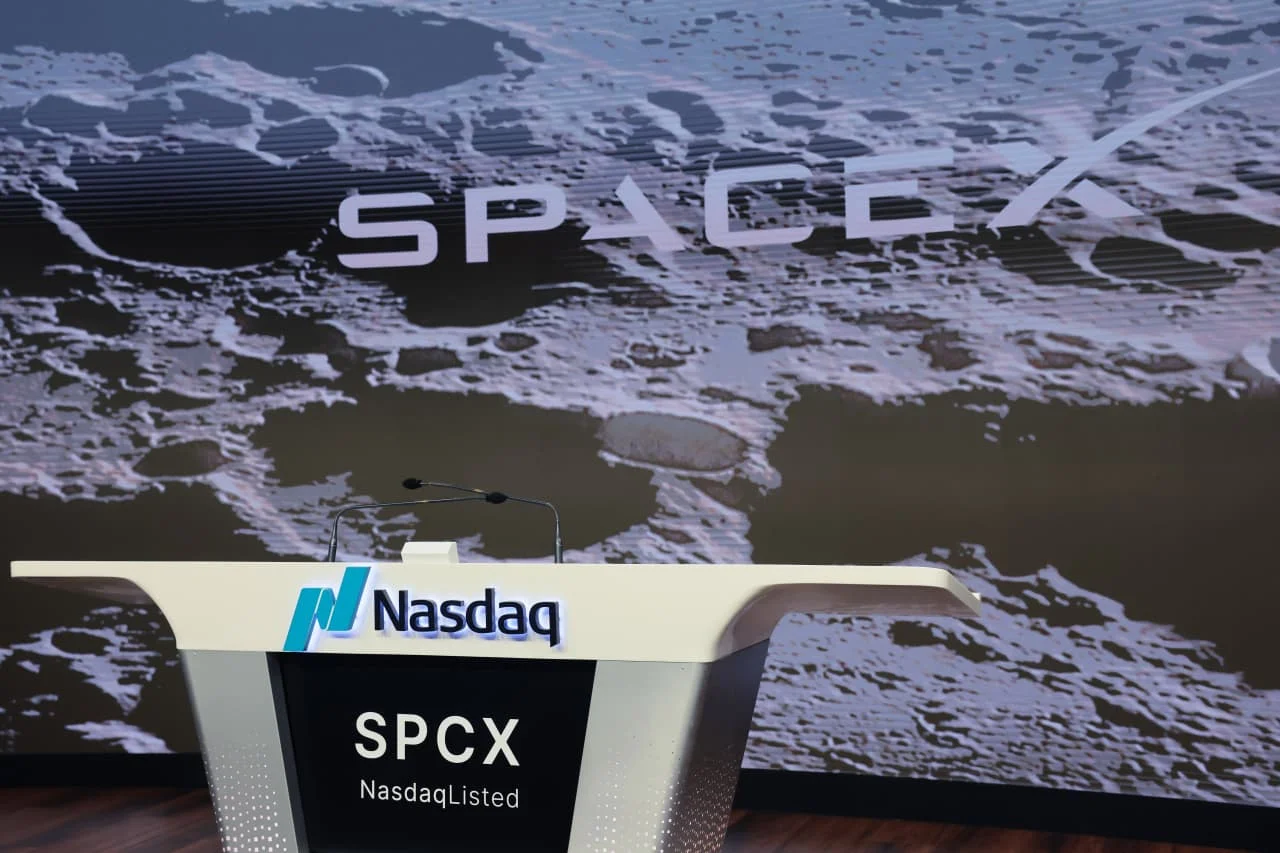
The IPO Time Bomb: Why OpenAI and SpaceX Could Trigger a 40% Market Correction Amid Global Volatility
بمب ساعتی در بازار سرمایه: چرا عرضه اولیه OpenAI و SpaceX میتواند باعث ریزش ۴۰ درصدی شود؟
Market analysts warn that a massive IPO pipeline, led by OpenAI and SpaceX, could mirror the crashes of 1929 and 2000. Meanwhile, Bitcoin struggles under $62,900 as Tehran's gold and dollar prices surge amid regional and environmental crises.
At time of publishing
USD
166,850
Toman
Gold 18K
16.53M
Toman / gram
Bitcoin
$60,197
US Dollar
Tether
168,500
Toman
The Shadow of 1929: Why the IPO Pipeline Threatens a 40% Crash
Financial historians and market analysts are sounding a loud alarm: the current pipeline of mega-IPOs, most notably OpenAI and SpaceX, bears a striking resemblance to the equity issuance peaks of 1929 and 2000. According to recent market reports, prior records for U.S. equity issuance were set just before the two most significant market crashes in modern history. The logic is simple yet brutal: when private companies rush to go public at astronomical valuations, it often signals a liquidity peak where the market is being asked to absorb more than it can handle. If OpenAI and SpaceX hit the public markets simultaneously, they could act as a massive vacuum, draining liquidity from other sectors and potentially triggering a correction of up to 40%.
For the average investor, this means that the current 'bull market' may be built on fragile foundations. While these companies are technological giants, their public debut often marks the exit point for early venture capitalists rather than an entry point for retail wealth. The concern is that the sheer volume of new shares will overwhelm buyer demand, leading to a cascade of sell-offs. This historical pattern suggests that 'white whale' IPOs are often the final act of a speculative cycle. Investors are being cautioned to watch the IPO calendar not as a list of opportunities, but as a countdown to a potential structural shift in global equity pricing.

Bitcoin Trapped as Gold and USD Surge in Tehran
At 23:00 Tehran time, the local markets are showing significant movement even as global crypto assets remain stagnant. In the last 24 hours, the USD in Tehran rose from 164,750 to 166,850 Toman, a +1.3% increase that reflects ongoing regional jitters. This upward pressure is even more pronounced in the gold market, where 18k gold climbed from 16,229,281 to 16,530,310 Toman (+1.9%) and the Emami coin jumped from 163,000,000 to 166,000,000 Toman (+1.8%). This flight to safety in Tehran highlights a growing disconnect between local inflation expectations and global risk appetite.
On the global stage, Bitcoin is currently trapped in a bearish trend, unable to break above the critical $62,900 level. Currently trading at $60,197, the digital asset is being dragged down by a broader sell-off in precious metals like gold and silver. This is a reversal of the 'digital gold' narrative; instead of acting as a hedge, Bitcoin is currently moving in lockstep with liquidated commodities as a hawkish Federal Reserve keeps interest rates high. The unwinding of this hedge trade means that until gold stabilizes on the international market, Bitcoin may continue to find its ceiling lower than many bulls anticipated.
Crisis in Venezuela and Utah: Environmental Toll on Geopolitics
A humanitarian catastrophe is unfolding in northern Venezuela as the death toll from twin earthquakes has surpassed 1,400. Rescue teams are currently in a race against time to find survivors trapped under the rubble, with the next few hours being described as critical. Interestingly, this disaster is serving as an unexpected test for the Trump administration's foreign policy. While the U.S. has maintained a complex relationship with Caracas, the administration has committed aid, signaling an attempt to expand commercial interests beyond just the oil sector. This 'disaster diplomacy' could redefine regional power dynamics if the aid leads to a more permanent thaw in relations.
Simultaneously, in the United States, the Cottonwood fire in Utah has exploded overnight, covering 92,000 acres of the Fishlake National Forest. With 0% containment and strong winds accelerating the spread, it has become the largest active blaze in the country. These large-scale environmental disasters—both seismic and atmospheric—are increasingly impacting market sentiment by threatening supply chains and public infrastructure. For global markets, these events are no longer just 'tragic news'; they are becoming line items in risk assessment models that factor in the cost of climate and geological instability on national budgets.

, Public domain]
AI's Identity Crisis: From 'Garbage In' to Executive Poaching
The narrative surrounding Artificial Intelligence is splitting into two distinct camps: the skeptics and the builders. Famed author Margaret Atwood recently voiced the concerns of the former, describing the current state of AI as 'garbage in, garbage out.' Atwood’s critique focuses on the quality of the data used to train these models, suggesting that if the foundational information is flawed or biased, the output will inevitably be cultural or intellectual waste. This perspective is gaining traction among institutional investors who are starting to question the long-term value proposition of generative models that rely on scraping public internet data.
However, the 'builders' at OpenAI are not slowing down. In a major move, Paul Meade, the Apple vice president who led the Vision Pro project, is reportedly leaving the tech giant to join OpenAI’s hardware team. This move signals a massive shift in OpenAI's strategy; they are no longer content with being just a software or 'brain' company. By poaching top hardware talent from Apple, Sam Altman’s firm is clearly preparing to build its own physical interfaces—perhaps the long-rumored 'AI iPhone.' This executive shuffle suggests that while the markets might be worried about an IPO crash, the actual technology companies are doubling down on a future where AI is integrated into every piece of hardware we touch.

Frequently Asked Questions
Why are analysts comparing the current IPO market to 1929 and 2000?
Why is Bitcoin falling when it is usually considered a hedge for inflation?
What does OpenAI hiring an Apple hardware executive mean for the industry?
Understanding Market Bubbles and Corrections
The headline's ominous phrase "IPO Time Bomb" and the specter of a "40% Market Correction" point directly to a critical economic phenomenon: market bubbles and subsequent corrections. A market bubble occurs when the price of an asset or a class of assets rises rapidly and significantly beyond its intrinsic or fundamental value. This surge is often fueled by speculative buying, irrational exuberance, and the "fear of missing out" (FOMO) among investors, rather than by a proportional increase in underlying earnings, revenue, or technological breakthroughs. Iconic examples include the Dot-com bubble of the late 1990s and the U.S. housing bubble of the mid-2000s.
The potential IPOs of highly anticipated companies like OpenAI and SpaceX, with their already sky-high private valuations, could act as catalysts in a market prone to speculative fervor. If these companies go public at valuations that are perceived as unsustainable or if their initial market performance fails to meet the hyped expectations, it can trigger a reassessment of other highly valued assets, particularly in the tech sector. This reassessment can lead to a widespread "profit-taking" phase, where investors sell off assets to lock in gains, fearing further declines.
When a bubble bursts, or when market sentiment shifts from irrational optimism to realism (or even pessimism), a market correction often ensues. A market correction is typically defined as a decline of 10% or more in the value of a market index (like the S&P 500) or an individual asset from its recent peak. While a correction can feel painful to investors, it is often viewed as a healthy and necessary process that helps "reset" asset prices to more sustainable levels, aligning them more closely with fundamental values. The "40% market correction" mentioned in the headline suggests a more severe downturn, often associated with the bursting of a significant bubble rather than a minor adjustment.
Global volatility, as highlighted in the headline, further exacerbates the risk. Factors such as geopolitical tensions, inflation concerns, interest rate changes, or unexpected economic data can make markets more sensitive to triggers like major IPOs. In such an environment, the entry of mega-cap companies into the public market, especially if their valuations are already stretched, can either absorb significant capital with positive sentiment or, conversely, expose systemic overvaluation, potentially initiating a broader downward trend. Understanding these dynamics is crucial for investors navigating today's complex financial landscape.