Justice Reform Campaigns Gain Momentum as Anthropic AI Returns and Oil Markets Face Hormuz Reality Check
از کارزار عدالتخواهی برای قربانیان خشونت تا بازگشت مدلهای پیشرفته هوش مصنوعی و نوسان در بازار نفت
Grieving mothers successfully lobby for stricter sentencing in domestic murder cases, while the US lifts export bans on Anthropic's most powerful AI models. Meanwhile, oil prices grapple with a disconnect between diplomatic optimism in Qatar and actual shipping data from the Strait of Hormuz.
At time of publishing
USD
172,450
Toman
Gold 18K
16.56M
Toman / gram
Bitcoin
$58,698
US Dollar
Tether
173,268
Toman
The Human Cost of Legal Gaps: A Victory for Justice Reform
A powerful campaign led by grieving mothers in the United Kingdom has finally reached a breakthrough in closing the so-called "sentencing gap" for domestic murders. Carole Gould and Julie Devey, whose daughters were brutally murdered by former partners, have spent years lobbying the government to address the disparity between sentences for killings committed in public versus those committed in the home. Justice Secretary David Lammy’s recent decision to increase the minimum sentence for domestic murder victims is seen as a landmark victory, acknowledging that a life lost behind closed doors is no less valuable than one lost in the streets.
For many observers, this development highlights a universal struggle for legal parity in cases of domestic violence. The campaign emphasized that previous sentencing guidelines often treated domestic killings as "crimes of passion" with lower starting points for jail time, effectively devaluing the lives of women killed in their own homes. This shift in policy is expected to influence similar legislative debates globally, including in regions like the Middle East, where activists frequently call for more robust legal protections and harsher penalties for gender-based violence. The persistence of these mothers serves as a reminder of how grassroots activism can force systemic change even in the most entrenched legal frameworks.
Anthropic’s AI Powerhouses Return to the Global Stage
In a major shift for the technology sector, the United States government has officially lifted export controls on Anthropic’s most advanced artificial intelligence models, Claude Fable 5 and Mythos 5. These models were abruptly suspended from international markets in June due to concerns that their high-level reasoning and coding capabilities could be exploited by malicious actors for sophisticated cybersecurity attacks. However, after intensive collaboration with US regulators to implement new "classifiers"—software filters designed to identify and block dangerous tasks—Anthropic is now cleared to redeploy its technology to a global audience.

This move marks a pivotal moment in the ongoing "AI arms race." By allowing Anthropic to compete globally again, the US is signaling a confidence in its regulatory safeguards while ensuring that its domestic AI champions are not sidelined by international competitors. For businesses and developers, the return of Fable 5 means access to top-tier reasoning capabilities that are essential for everything from pharmaceutical research to complex financial modeling. It also sets a precedent for how governments might manage the dual-use nature of AI—balancing the need for national security with the economic necessity of technological leadership.
Geopolitical Optimism vs. The Reality of the Strait of Hormuz
Oil markets are currently caught in a state of cognitive dissonance. While crude oil prices ended the quarter with a significant decline—Brent shedding nearly 40%—this downward pressure is largely fueled by optimism surrounding high-level talks in Qatar between US and Iranian officials. Diplomats are working toward a lasting peace deal that could stabilize the region and secure energy flows. However, commodity strategists at ING warn that this optimism may be premature. Despite the diplomatic chatter, actual traffic through the Strait of Hormuz remains severely depressed. Total tanker crossings were estimated at just 11 on Tuesday, a sharp drop from the peak of 24 seen only a week ago.
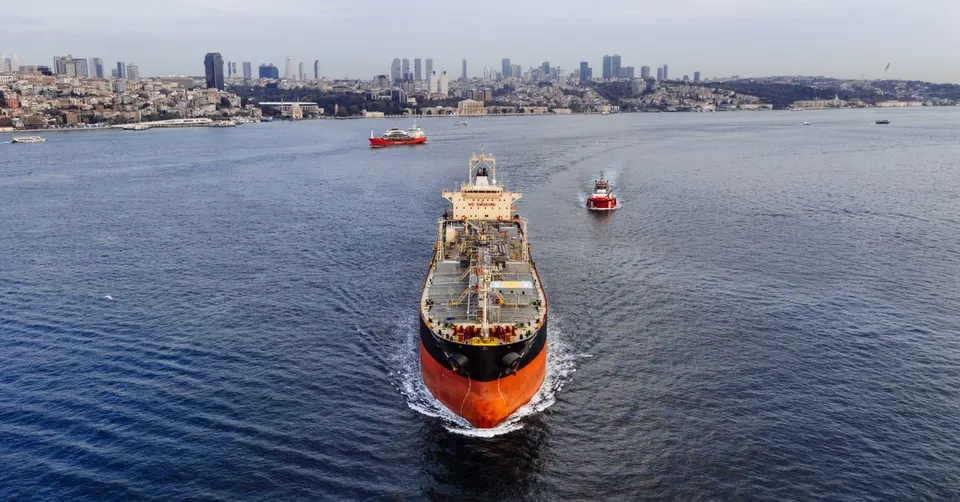
For the Iranian economy, this discrepancy is critical. While Foreign Minister Abbas Araghchi describes recent talks in Baghdad and Qatar as "constructive," the physical reality of shipping and sanctions continues to weigh heavily on the ground. Iran has maintained at the Collective Security Treaty Organization (CSTO) that recent military aggressions by the US and Israel failed to achieve their objectives, yet the economic bottleneck in the Persian Gulf persists. Until the gap between diplomatic hope and maritime reality closes, oil prices are likely to remain volatile, and the Iranian Rial will continue to react to every headline coming out of Doha.
Market Snapshot: Gold Retracts as Bitcoin Tests Multi-Year Lows
The financial landscape this hour is characterized by a notable retreat in safe-haven assets and a deepening crisis in the crypto market. Gold 18k per gram in Iran has seen a sharp decline, moving from 16,841,959 Toman to 16,557,320 Toman (-1.7%) over the last 24 hours. This drop in local gold prices, despite the global gold ounce sitting at a high of $3,965.00, suggests a temporary cooling of local demand or a shift in currency expectations. Meanwhile, the USD/IRR exchange rate remained relatively stable with a minor decrease from 172,550 to 172,450 Toman (-0.1%), providing a rare moment of calm in the currency market.
In the digital asset space, Bitcoin has plummeted to $58,900, nearing a 22-month low. This sell-off is attributed to "rate jitters" and a significant rotation of capital, as investors move away from spot Bitcoin ETFs, which saw their worst month on record in June with $4.5 billion in outflows. Some analysts point to the massive SpaceX IPO as a major driver of this capital rotation, as institutional money seeks out high-profile private equity opportunities over the current volatility of the crypto market. For Iranian investors, who often use crypto as a hedge against inflation, this double-dip in both gold and Bitcoin represents a challenging period for wealth preservation.
Frequently Asked Questions
Why did the US lift export controls on Anthropic's AI models?
Why are oil prices falling despite low traffic in the Strait of Hormuz?
What caused the 1.7% drop in Iranian gold prices today?
Why is Bitcoin hitting a 22-month low?
The Strait of Hormuz: Global Energy's Critical Chokepoint
The Strait of Hormuz, a narrow waterway connecting the Persian Gulf to the Arabian Sea and the Gulf of Oman, stands as one of the world's most strategically vital maritime passages. Despite its modest width – just 21 nautical miles (39 km) at its narrowest point – this strait is the sole sea passage from the Persian Gulf to the open ocean for a vast number of oil-exporting countries, including Saudi Arabia, Iran, Iraq, Kuwait, Qatar, and the UAE. Its geographic position makes it an indispensable conduit for global energy markets.
What makes the Strait of Hormuz so critical is the sheer volume of oil that transits through it daily. Approximately one-fifth of the world's total petroleum consumption, and roughly one-third of all seaborne traded oil, passes through this chokepoint. Tankers carrying crude oil and liquefied natural gas (LNG) from major producers in the Middle East supply key consuming nations across Asia, Europe, and North America. Any disruption to this flow can have immediate and severe repercussions on global oil prices and energy security.
Consequently, the Strait's vulnerability to geopolitical tensions is a constant concern for international markets. Past incidents, including tanker attacks and threats to block the strait, have repeatedly underscored its fragile nature. The "Hormuz reality check" mentioned in the headline refers to the ever-present risk that regional conflicts or political disputes, such as those involving Iran and the US, could escalate and jeopardize the free passage of oil, leading to significant price spikes and economic instability worldwide. Understanding this chokepoint is fundamental to grasping the dynamics of global energy supply and demand.