Trump Ends Iran Ceasefire as Oil Surges; Farage Resignation Shakes UK Politics
پایان آتشبس ایران و آمریکا توسط ترامپ؛ جهش قیمت نفت و شوک استعفای فاراژ در بریتانیا
President Trump has officially declared the interim ceasefire with Iran 'over' at the NATO summit, triggering a massive 7% surge in global oil prices and a 2.2% drop in the Iranian Toman. Meanwhile, the UK political landscape faces a bizarre shift as Nigel Farage’s resignation is accepted amid the rise of satirical candidates like Count Binface.
At time of publishing
USD
179,650
Toman
Gold 18K
17.86M
Toman / gram
Bitcoin
$61,520
US Dollar
Tether
180,415
Toman
The End of the Interim Ceasefire and Market Chaos
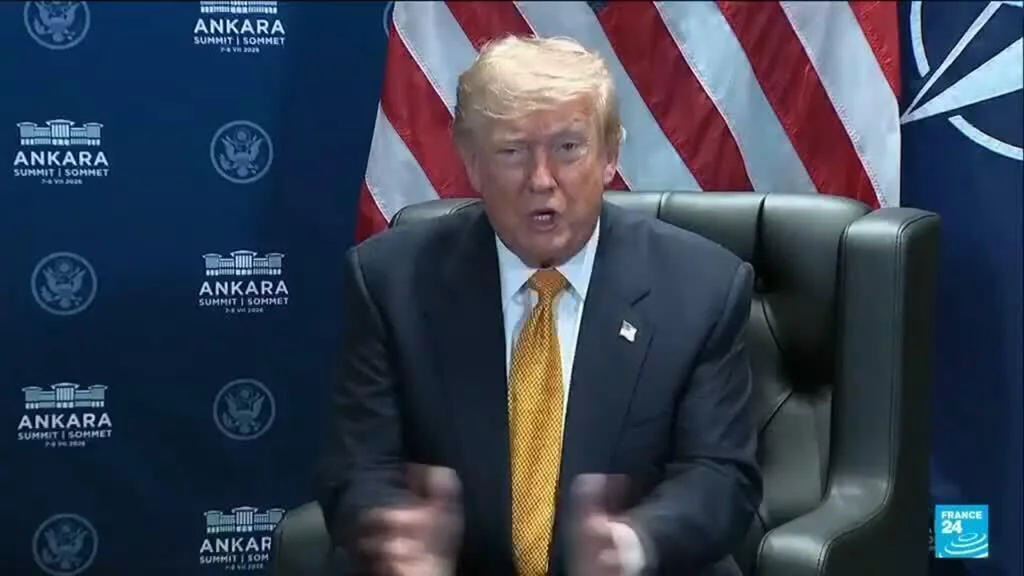
In a move that has sent shockwaves through global energy and currency markets, U.S. President Donald Trump announced at the NATO summit in Ankara that the interim ceasefire with Iran is officially "over." Describing the recent memorandum of understanding as a "waste of time," Trump’s rhetoric has immediately reignited fears of a direct military escalation in the Persian Gulf. This declaration follows reports of Iranian attacks on three commercial vessels in the Strait of Hormuz, which prompted retaliatory strikes from U.S. forces. The diplomatic window, which many hoped would lead to a long-term resolution, appears to have slammed shut, leaving markets in a state of high alert. The impact on prices was instantaneous and severe. Brent crude prices jumped 7.6% to reach $79.76 per barrel, while the Iranian Toman experienced significant downward pressure. In Tehran's open market, the USD/IRR rate moved from 175,800 to 179,650, marking a 2.2% increase in just 24 hours. For Iranian citizens, this sudden shift signals a return to peak volatility, as the prospect of renewed heavy sanctions and military friction threatens to further destabilize the domestic economy. Gold prices followed suit, with 18k gold rising 1.3% to 17,863,243 Toman per gram, as investors scrambled for safe-haven assets.
Farage Resigns Amid UK Political 'Farce'
Across the Atlantic, British politics is witnessing its own brand of turmoil. The UK Treasury has officially confirmed the acceptance of Nigel Farage’s resignation, a move that Rachel Reeves refused to block despite requests for a standards inquiry. The Clacton by-election, which was already being described by critics as a "farce," has taken a surreal turn with the emergence of Count Binface as a primary media figure. Farage’s departure from the front lines of Reform UK, even if temporary, leaves a significant vacuum in the populist right-wing movement, just as the country grapples with post-election economic adjustments. While the resignation of a British politician might seem distant to the average Iranian trader, it reflects a broader trend of political fragmentation in the West. As traditional alliances and internal stabilities in the UK and Europe waver, the collective ability of the West to maintain a unified front on Middle Eastern policy—including sanctions and nuclear negotiations—becomes more questioned. The distraction of domestic "farces" in London often provides regional powers with more room to maneuver, although the immediate economic consequence remains tied to the strength of the British Pound, which currently sells for 240,250 Toman in Tehran.

Regional Symbolism and Legal Setbacks for Trump
In the Middle East, the funeral ceremonies for Iran's late supreme leader have moved into Iraq, with his coffin being carried through the holy Shia shrines of Najaf and Karbala. These ceremonies, now in their fifth day, serve as a powerful display of the transnational religious and political ties between the two nations. For the Iranian government, these events are not merely religious but are a strategic assertion of influence at a time when the U.S. is signaling a return to a maximum pressure campaign. The massive crowds in Iraq underscore the complexity of the regional landscape that the Trump administration is attempting to reshape. Meanwhile, back in the United States, Donald Trump faced a legal setback as a federal judge in Florida threw out his $3.8 billion defamation lawsuit against the Washington Post. The judge, a Trump appointee, ruled that Trump’s media group failed to provide evidence of "actual malice" regarding an article about the funding of his social media platform. While this is a domestic legal matter, it highlights the ongoing domestic battles Trump faces even as he attempts to project strength on the global stage. For observers in Tehran, the legal and political volatility surrounding the U.S. presidency remains the single most important factor in predicting the long-term trajectory of the Toman and the survival of any future diplomatic agreements.

Health Risks in Consumer Goods: The Asbestos Warning
In a story that has caught the attention of global regulators, new research has revealed that children’s play sand sold in Australia—and potentially elsewhere—contains toxic airborne asbestos. The Australian Competition and Consumer Commission (ACCC) confirmed that these products, often brightly colored and marketed for crafts, can release hazardous fibers when handled. This discovery contradicts previous official statements that labeled the products as "low risk," sparking a new wave of safety concerns for parents and retailers alike. This development serves as a reminder of the persistent issues in global supply chain oversight. For international markets, such health scandals can lead to sudden regulatory crackdowns and trade barriers for specific manufacturing sectors. While not directly linked to the current oil or currency crisis, it adds to the general atmosphere of uncertainty and risk that is currently defining the mid-2026 global economy. As investors and consumers look for stability, these types of environmental and health risks often trigger unexpected shifts in consumer behavior and corporate liability.
Watch
Count Binface has pledged to run against Reform UK leader Nigel Farage in Clacton. #BBCNews
BBC News
Frequently Asked Questions
Why did the USD/IRR rate jump to 179,650 today?
How did the end of the ceasefire affect global oil prices?
What is the significance of Nigel Farage's resignation for markets?
Is the current gold price in Iran a record high?
Understanding the Geopolitical Risk Premium in Oil Prices
The concept of a geopolitical risk premium refers to the additional cost built into the price of crude oil due to actual or perceived political instability, conflicts, or supply disruptions in major oil-producing regions or along critical transit routes. It's essentially an insurance policy against future uncertainty, where traders and investors demand a higher price to account for potential supply shortages or increased costs of obtaining oil if geopolitical tensions escalate.
This premium is not based on current supply and demand fundamentals alone, but rather on the market's anticipation of future events. When headlines suggest an end to a ceasefire, as implied by the keywords, or a heightened risk of conflict in a region like the Middle East, markets quickly factor in the possibility of disrupted oil flows. For instance, the Strait of Hormuz, a narrow waterway through which a significant portion of the world's seaborne oil passes, becomes particularly sensitive. Any threat to its passage can immediately trigger a surge in oil prices, reflecting this heightened risk premium.
The mechanism behind this involves speculation and hedging. Oil futures contracts, which allow buyers and sellers to lock in prices for future delivery, become more expensive as traders bet on reduced supply or increased demand in a crisis. This speculative activity, combined with genuine concerns about physical supply, pushes up the spot price of oil. The premium can fluctuate dramatically based on the perceived severity and likelihood of a geopolitical event, making oil prices highly volatile in times of political uncertainty.
The economic consequences of a rising geopolitical risk premium are far-reaching. Higher oil prices translate into increased costs for transportation, manufacturing, and energy across the globe, contributing to inflation and potentially slowing economic growth. For countries heavily reliant on oil imports, this can strain national budgets and consumer purchasing power. Conversely, oil-exporting nations might see a temporary boost in revenue, though sustained instability can also deter investment and long-term stability.
Ultimately, understanding the geopolitical risk premium is crucial for comprehending why oil prices often react sharply to political developments, even those that haven't yet directly impacted physical supply. It highlights the interconnectedness of global politics, energy markets, and the broader economy, underscoring how events far from one's own borders can have immediate and tangible effects on daily life.