Shell Profits Double Amid Hormuz Crisis While Global Justice and Market Shifts Take Center Stage
دو برابر شدن سود شل در سایه بحران هرمز؛ از تعویق دادگاه جنجالی تا چرخش بازار به سمت سهام سلامت
Global energy giant Shell sees profits skyrocket due to Strait of Hormuz disruptions, while a landmark justice trial in Australia faces delays. Meanwhile, JPMorgan urges a pivot to healthcare stocks as geopolitical tensions in Europe and the Middle East continue to rattle traditional markets.
At time of publishing
USD
193,400
Toman
Gold 18K
18.67M
Toman / gram
Bitcoin
$64,145
US Dollar
Tether
193,833
Toman
The Long Road to Justice: Global Precedents and the Kumanjayi Trial
In a development that highlights the agonizingly slow pace of systemic legal reform, the murder trial of Kumanjayi Little Baby in Australia has been delayed until December. While this event occurs thousands of miles from Tehran, its implications resonate deeply with any society grappling with the transparency of its justice system and the rights of marginalized groups. Minister Malarndirri McCarthy noted that while some milestones in indigenous education are being met, the broader struggle against high incarceration rates and legislative hurdles remains a significant challenge. This delay serves as a stark reminder that even in established democracies, the path to accountability for state-involved actions is often fraught with procedural roadblocks.
For the Iranian reader, this story is more than a distant legal update; it is a reflection of a global conversation on human rights and the accountability of security forces. As Iranians navigate their own complex relationship with the rule of law and the transparency of judicial proceedings, the international focus on the "Closing the Gap" initiative in Australia provides a comparative lens. It underscores that the struggle for civil rights and the protection of the vulnerable is a universal pursuit, one that requires constant public pressure and international scrutiny to ensure that "justice delayed" does not ultimately become "justice denied."
Energy Giants Thrive as the Strait of Hormuz Remains a Chokepoint
The cold calculus of global energy markets has once again proven that volatility is a lucrative business for some. Shell has reported a doubling of its profits, a direct consequence of rising oil prices fueled by the ongoing conflict and disruptions in the Strait of Hormuz. As one of the world's most vital maritime arteries becomes increasingly treacherous, the risk premium attached to every barrel of crude has surged. This creates a paradoxical situation where global corporations reap record gains from the very instability that threatens the economic security of millions of individuals in the region.
Despite this macro-level turbulence, the domestic Iranian market showed a slight cooling trend today. The USD sell rate moved from 193,600 to 193,400 Toman, a minor decrease of 0.1%. Similarly, Gold 18k per gram dropped by 0.6% to 18,671,222 Toman, and the Emami coin fell 0.5% to 187,500,000 Toman. This suggests that while global energy prices are spiking, the local market may be experiencing a temporary plateau or heavy intervention by the central bank to prevent a runaway collapse of the Rial amidst the "Iran war" narrative dominating international headlines.
Geopolitical Fault Lines: From Ukraine’s Skies to Kent’s Woodlands
The shadow of conflict continues to lengthen across Europe as Russia launched a massive combined missile and drone attack on Ukraine, which notably led to a violation of Polish airspace. European Council President António Costa has labeled these actions a direct threat to the security of the entire continent. This escalation has immediate effects on global risk appetite, keeping safe-haven assets like gold at historic highs—with the gold ounce currently trading at a staggering $4,065.60. When European borders are breached, the resulting uncertainty ripples through every trading desk from London to Tokyo, reinforcing the need for diversified portfolios.
Interestingly, the friction of modern governance is not limited to war zones. In the UK, a fierce domestic battle is brewing over plans by a Reform-run council to expand a quarry into ancient woodland in Kent. While seemingly local, this "fury over the irreplaceable" reflects a growing global tension between industrial expansion and environmental preservation. For observers in Iran, who have seen their own natural resources and heritage sites threatened by mismanagement and rapid industrialization, the outcry in Kent serves as a reminder that the protection of national identity and ecological heritage is a battle being fought on multiple fronts simultaneously.

The Defensive Pivot: Why JPMorgan is Betting on Healthcare
As the cryptocurrency market experiences a "whipsaw" that wiped out $286 million in leveraged bets—leaving Bitcoin hovering around $64,145—institutional investors are looking for more stable ground. JPMorgan has issued a clear directive to its clients: overlook the noise and consider the healthcare sector. Top picks like Eli Lilly, AbbVie, and Danaher Corporation are being positioned as the new safe havens. The logic is simple: while geopolitics and interest rate decisions from the Federal Reserve create chaos in tech and crypto, the demand for healthcare remains inelastic and resilient to the whims of the market.
This shift toward defensive stocks is a crucial signal for Iranian investors who often look to global trends to hedge against domestic inflation. While the allure of Bitcoin's volatility remains, the move by major banks toward healthcare suggests a broader expectation of long-term global instability. As the Fed maintains a hawkish stance and the threat of regional wars persists, the transition from "growth at all costs" to "stability at a reasonable price" is becoming the dominant strategy for the second half of 2026. Understanding this pivot can help local investors decide whether to stay in high-risk assets or seek the relative calm of sectors that provide essential human needs.
Frequently Asked Questions
Why did Shell's profits double despite the global economic uncertainty?
How did the Iranian Rial react to the escalation in the Strait of Hormuz today?
Why is JPMorgan recommending healthcare stocks over tech or crypto right now?
Why the Strait of Hormuz Matters for Global Oil Prices
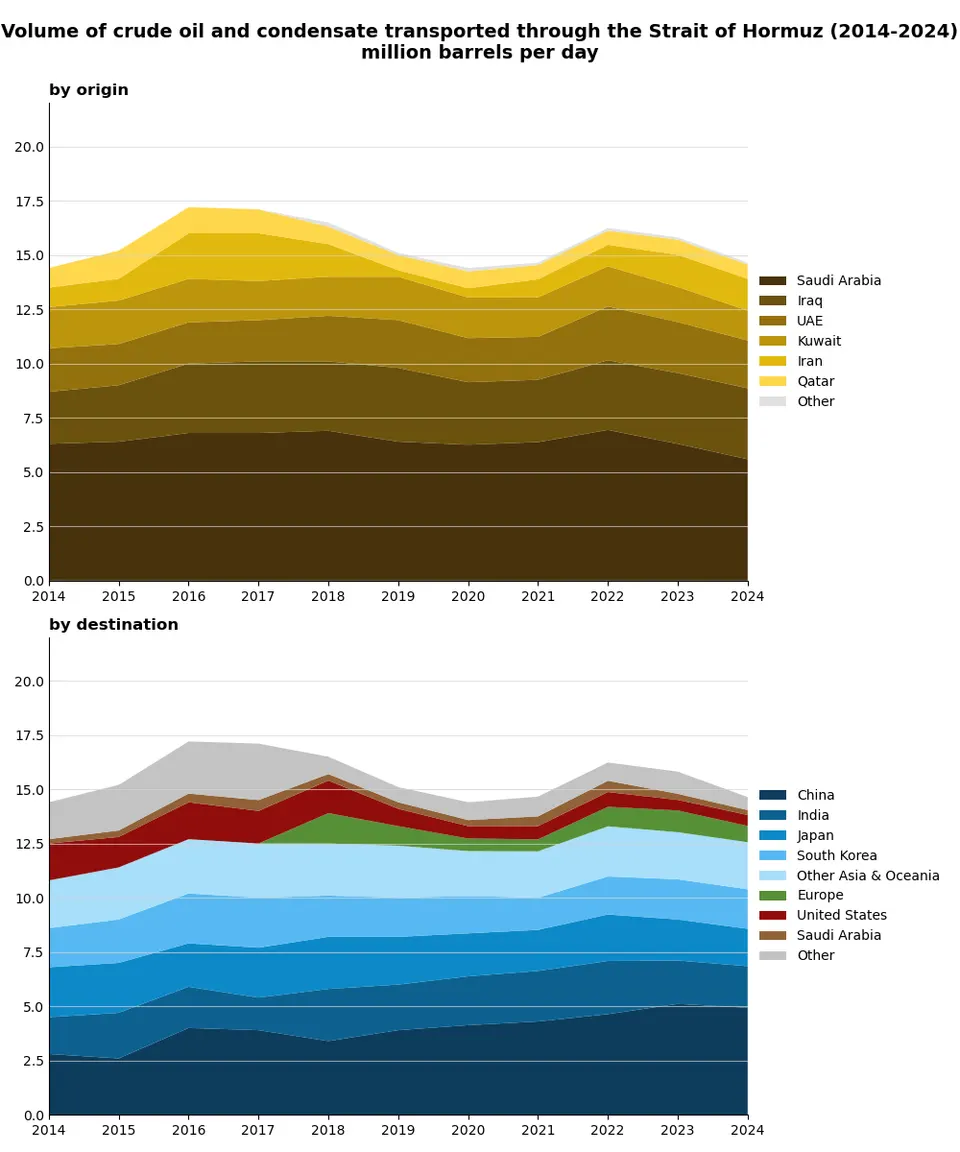
The Strait of Hormuz, a narrow waterway between Iran and Oman, is one of the world’s most critical chokepoints for petroleum transport. Roughly 20% of the planet’s daily oil consumption passes through this 21‑mile stretch, making any disruption—whether from geopolitical tension, naval incidents, or piracy—a direct shock to global supply.
When ships are delayed or rerouted, the immediate effect is a reduction in the available supply of crude on the market. Traders react by bidding up spot prices, and futures contracts quickly reflect the heightened risk premium. In 2026, heightened tensions around the strait coincided with a sharp rise in Brent and WTI benchmarks, illustrating how a localized crisis can reverberate through the entire energy value chain.
Beyond price spikes, the Hormuz bottleneck influences strategic decisions by oil‑producing nations and multinational corporations. Countries with large offshore fleets, such as Saudi Arabia and the United Arab Emirates, maintain naval escorts and alternative routing plans to safeguard shipments. For companies like Shell, a crisis can double profits if they successfully navigate higher freight rates and price differentials, but it also raises operational and reputational risks.
Understanding the strait’s role also helps explain broader macro‑economic linkages, such as the impact on exchange rates (e.g., the USD/Toman) and commodity markets like gold, which often serve as a hedge during oil‑price volatility. Policymakers therefore monitor Hormuz closely, using diplomatic channels and naval deployments to deter escalation and preserve market stability.
Topics
Related Articles