Australia Bird Flu Crisis Deepens as Tehran Rejects Trump’s ‘Negotiation’ Claims
بحران آنفولانزای پرندگان در استرالیا و تکذیب مذاکره با ترامپ توسط تهران
Australia warns of a 'long and difficult journey' as mass bird flu deaths spread to a second state, while Tehran dismisses Donald Trump's claims of progress in negotiations regarding the Strait of Hormuz. Meanwhile, the Iranian Toman faces slight pressure, with the USD rising 0.3% to 192,200.
At time of publishing
USD
192,200
Toman
Gold 18K
18.37M
Toman / gram
Bitcoin
$62,666
US Dollar
Tether
192,999
Toman
Australia’s ‘Long Journey’ Begins with Mass Bird Flu Deaths
Australia’s environment minister, Murray Watt, has issued a stark warning that the country is at the start of a "long and difficult journey" following the discovery of mass bird mortality events in a second state. Aerial surveillance and CSIRO analysis have confirmed that the deadly H5 bird flu strain has reached Baudin Rocks off the coast of South Australia, marking a significant escalation of the virus's spread across the continent. This development follows similar grim findings in other regions, suggesting that the ecological impact could be far more devastating than initially feared.
For global markets and local consumers alike, this biological crisis carries significant weight. While the immediate impact is on local biodiversity, the threat to the poultry industry and egg supply chains is immediate. In a world already reeling from inflationary pressures, a major outbreak in a key agricultural exporter like Australia could trigger another wave of food price volatility. For Iranian readers, these global supply chain disruptions often manifest as higher costs for imported agricultural technologies and protein sources, further complicating a domestic economy already struggling with currency devaluation.

Tehran Rejects Trump’s Claims of ‘Progress’ on Hormuz
The geopolitical landscape remains fraught with contradictions as the Iranian Foreign Ministry officially dismissed President Donald Trump’s claims of progress in negotiations. Over the weekend, Trump cited supposed breakthroughs regarding the security of the Strait of Hormuz as his reason for canceling a planned military strike on Iranian targets. However, Tehran’s spokesperson, Esmaeil Baqaei, stated that there are currently "no talks" happening with the United States, insisting that the "ball has long been in America’s court."
This disconnect between Washington’s optimistic rhetoric and Tehran’s cold denial has immediate consequences for the Iranian Toman. In the last 24 hours, the USD rose from 191,700 to 192,200 (+0.3%), reflecting a market that is skeptical of any lasting diplomatic de-escalation. While Trump’s decision to halt strikes provided a temporary floor for the market, the lack of a verified diplomatic channel means the "war premium" remains baked into local prices. Gold 18k also saw a slight uptick, moving from 18,322,637 to 18,368,807 (+0.3%), as investors hedge against the possibility that the current calm is merely a tactical pause rather than a strategic shift.
Europe’s Heatwave Energy Crunch and US Political Shifts
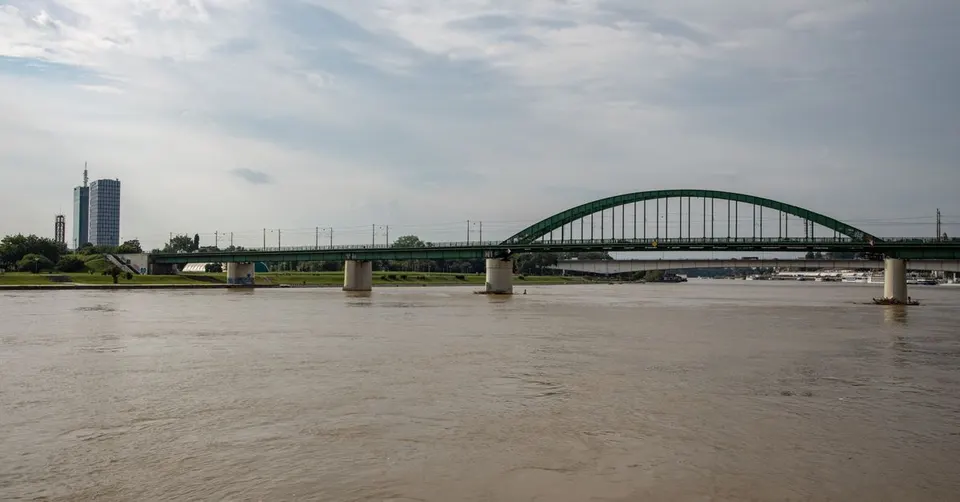
Across Europe, the climate crisis is forcing extreme measures to maintain basic infrastructure. In Romania, authorities were forced to use explosives to detonate massive rocks in the Danube River, a desperate attempt to increase water flow to cool the Cernavoda nuclear power plant. This comes as south-eastern Europe faces a brutal heatwave that has stretched energy grids to their breaking point and sparked massive wildfires near Athens. The intersection of energy scarcity and extreme weather is keeping global energy prices volatile, adding another layer of uncertainty to the global economic outlook.
Meanwhile, in the United States, Donald Trump’s pick for Attorney General, Todd Blanche, appears to have reached a compromise with skeptical Republican senators. By agreeing to withdraw the controversial $1.8 billion "anti-weaponization fund," Blanche has cleared a path for his nomination, signaling a potential shift toward a more pragmatic approach within the administration. This political stabilization in Washington is being watched closely by global manufacturers; in the UK, factory output has hit a two-year high as the initial "tariff chaos" of the Trump administration begins to settle into a predictable, albeit protectionist, pattern.
Frequently Asked Questions
Why is the bird flu in Australia affecting global sentiment?
Why did Iran deny Trump's claims of progress in negotiations?
How is the European heatwave impacting global energy markets?
The Geopolitical Significance of the Strait of Hormuz
The Strait of Hormuz, a narrow waterway connecting the Persian Gulf to the Arabian Sea, is arguably the world's most critical oil chokepoint. Stretching just 21 nautical miles (39 kilometers) wide at its narrowest point, this strategic passage is indispensable for global energy markets. Its unique geography means that a significant portion of the world's seaborne oil and liquefied natural gas (LNG) must transit through its waters, making it a focal point for international trade and geopolitical maneuvering.
Economically, the Strait's importance cannot be overstated. Roughly one-fifth of the world's total petroleum liquids consumption, and a substantial volume of LNG, passes through this strait daily. Major oil producers like Saudi Arabia, Iran, UAE, Kuwait, and Iraq rely on it for their exports, while key global economies in Asia, Europe, and North America depend on its uninterrupted flow for their energy needs. Any disruption, whether due to political tensions, military incidents, or even accidental blockages, can send immediate shockwaves through global oil prices, impacting everything from transportation costs to manufacturing and general economic stability.
Geopolitically, the Strait of Hormuz is a flashpoint, particularly given its proximity to Iran. Tehran views the Strait as a vital strategic asset and has, at various times, threatened to disrupt shipping in response to international sanctions or military threats. This potential for closure or interference creates significant security concerns for international shipping and navies, highlighting the delicate balance of power in the region. The security of the Strait is a constant source of tension and a key factor in the foreign policy calculations of global powers, directly influencing regional stability and international relations.
Understanding the Strait of Hormuz's role as a chokepoint is crucial for comprehending global energy security, international trade dynamics, and the complex geopolitical landscape of the Middle East. Its continued open passage is a non-negotiable imperative for the global economy, making any threat to its security a matter of international concern.