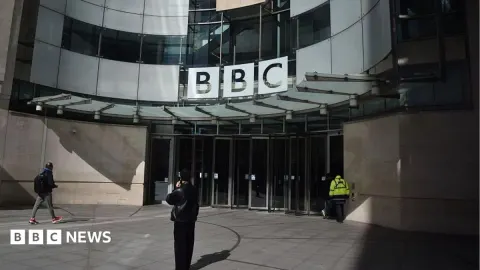
UK Proposes West Bank Trade Ban as US Carrier Rotates Amid Rising Middle East Tensions
پیشنهاد بریتانیا برای تحریم کالاهای کرانه باختری همزمان با جابجایی ناوهای هواپیمابر آمریکا در منطقه
UK’s Emily Thornberry urges a ban on West Bank goods to save the two-state solution, while the USS George Washington arrives to relieve the exhausted USS Lincoln crew. Meanwhile, Gold 18k in Iran surges 1.8% as Tehran prepares for what Trump calls an 'Economic D-Day'.
At time of publishing
USD
190,300
Toman
Gold 18K
20.31M
Toman / gram
Bitcoin
$77,208
US Dollar
Tether
188,310
Toman
UK Shifts Stance on West Bank Trade as Geopolitical Pressure Mounts
Emily Thornberry, the head of the UK’s foreign affairs select committee, has intensified pressure on the British government to adopt a formal ban on goods produced in occupied West Bank settlements. This proposal comes as a direct response to rising settler violence and a recent rebuke from the Foreign Secretary regarding Israeli construction tenders. Thornberry argues that such a ban is no longer just a moral choice but a necessary diplomatic tool to protect the viability of a future two-state solution, which many international observers believe is under existential threat.
For Iranian observers and the wider regional market, this shift in British policy signals a hardening of European attitudes toward territorial disputes in the Middle East. While the direct economic impact on Iran is limited, the precedent of using trade bans to enforce international law reflects a global environment where economic sanctions are increasingly the primary weapon of diplomacy. This rhetoric adds to the general sense of regional instability that often drives local investors toward safe-haven assets like gold.

US Carrier Rotation and Tehran’s 'Economic D-Day' Response
The USS George Washington has officially arrived in the Middle East to relieve the USS Abraham Lincoln, ending a grueling 250-day deployment for the latter. The transition comes amid troubling reports regarding the living conditions aboard the Lincoln, with families of sailors citing shortages of food and fresh water, as well as deteriorating mental health. This rotation ensures that the United States maintains its massive naval footprint near Iranian waters, even as the Pentagon faces domestic political pressure over the welfare of its personnel.
In Tehran, the atmosphere remains defiant yet cautious. Mohammad Bagher Ghalibaf, a lead negotiator and top official, stated that Iran must formulate a comprehensive plan to overcome what he termed "unjust sanctions." This follows former President Trump’s recent threats of an "economic D-Day" aimed at further isolating the Iranian financial system. Simultaneously, Major General Ali Abdollahi warned of a "devastating and regret-inducing" response to any military miscalculation by adversaries, highlighting the high-stakes military-diplomatic standoff currently defining the region.

Gold Surges and USD Stabilizes in Local Markets
Despite the geopolitical rhetoric, the Iranian Toman showed relative resilience against the US Dollar in the last 24 hours, though gold prices told a different story. The USD sell rate moved from 190,700 to 190,300 Toman, marking a slight decrease of 0.2%. This minor correction suggests that the market had already priced in much of the immediate tension. However, Gold 18k per gram saw a significant jump, rising from 19,954,753 to 20,314,880 Toman, an increase of 1.8%. This divergence indicates that while currency liquidity is being managed, the public’s appetite for gold as a hedge against long-term inflation and conflict remains extremely high.
This 1.8% surge in gold is also mirrored by the global appetite for the metal, with the international gold ounce trading at $4,598.80. In the domestic coin market, the Emami coin held steady at 199,500,000 Toman (+0.0%), suggesting a temporary ceiling in coin premiums even as the raw value of gold increases. For the average Iranian saver, the message is clear: while the exchange rate may be pinned or managed in the short term, the underlying cost of wealth preservation in precious metals continues to climb.

Nvidia and the $80,000 Bitcoin Test
On the global stage, all eyes are turning toward Nvidia’s upcoming earnings report, which many analysts believe could be the only thing capable of rescuing a stalling global stock market. As a bellwether for the AI revolution, Nvidia’s performance has a direct correlation with the risk appetite of global investors. If the chipmaker fails to exceed the massive expectations placed upon it, we could see a broader retreat from tech-heavy portfolios, which would likely spill over into the cryptocurrency markets where Bitcoin is currently testing the $77,000 to $80,000 range.
Bitcoin (BTC) is currently trading at $77,208, benefiting from a rebound in US spot ETF flows. Financial institutions like Bernstein are pointing to a liquidity-driven momentum shift that could push the premier cryptocurrency toward new all-time highs if the macro environment remains favorable. For Iranian crypto traders, the USDT rate of 188,310 Toman remains the primary gateway, and any volatility in Nvidia’s stock or Bitcoin’s price over the weekend will likely trigger immediate fluctuations in local Tether pricing.
Frequently Asked Questions
Why is the UK considering a ban on West Bank goods?
Why did gold prices in Iran rise while the USD slightly fell?
What is the significance of the USS George Washington's arrival?
The Geopolitics of Economic Sanctions
Economic sanctions are a powerful tool in international relations, serving as a non-military means for states or international bodies to exert pressure on target countries. They typically involve restrictions on trade, finance, travel, or other economic activities, aiming to compel a change in policy or behavior without resorting to armed conflict. The UK's proposed trade ban on the West Bank, set against a backdrop of rising Middle East tensions and past “Economic D-Day” pressures on Iran, exemplifies how these measures are deployed to achieve specific geopolitical objectives.
These sanctions manifest in various forms, from comprehensive trade embargoes that halt all commerce with a country to targeted financial restrictions that freeze assets of specific individuals or entities, or limit access to international banking systems. The objective is often to disrupt the target country's economy, making it difficult to fund certain activities or sustain its current policies. Historically, nations like Iran have faced extensive sanctions, impacting their ability to conduct international trade and access global financial markets.
The impact of economic sanctions is multifaceted. For the targeted nation, they can lead to severe economic hardship, including rampant inflation, currency devaluation (such as the USD/IRR Toman exchange rate fluctuations), and a decline in living standards. In response, citizens and businesses often seek alternative ways to preserve wealth and conduct transactions, turning to assets like gold as a traditional safe haven, or exploring cryptocurrencies like Tether to bypass official financial channels. This creates parallel economies and can exacerbate internal social and political tensions.
While intended to be a precise instrument of foreign policy, the effectiveness of sanctions is a subject of ongoing debate. They can sometimes fail to achieve their stated goals, instead leading to unintended humanitarian consequences or strengthening authoritarian regimes by forcing them to develop self-sufficient, isolated economies. Understanding economic sanctions is crucial for grasping the complex interplay between geopolitics, international trade, and the daily economic realities faced by millions.