
Navy Posture and Gold Surges: Georgia Defies EU Sanctions as Bitcoin Hits $77k
هشدار دریایی در نوشهر و جهش طلا: گرجستان تحریمها را دور زد، بیتکوین در قله ۷۷ هزار دلار
Iran’s Navy commander signals defiance in Noshahr while gold prices in Tehran jump 2.3% following U.S. Treasury liquidity injections. Meanwhile, Georgia breaks ranks with the EU on sanctions, and Bitcoin holds firm above $77,000.
At time of publishing
USD
190,700
Toman
Gold 18K
20.42M
Toman / gram
Bitcoin
$77,281
US Dollar
Tether
188,532
Toman
Iran’s Naval Command Signals Defiance in Noshahr
In a display of military posturing at the port of Noshahr, the Commander of the Islamic Republic of Iran’s Navy, Rear Admiral Shahram Irani, issued a stern warning to regional and international adversaries. According to state-run media, the commander emphasized that the Iranian Armed Forces are currently operating at peak readiness, stating they will not permit any external force to take even a single step into sovereign territory. This rhetoric follows similar comments from Major General Amir Hatami, who claimed that Iran’s evolving defense capabilities have forced a total recalculation of strategy by the country’s enemies.
For the average Iranian citizen and market observer, these statements reinforce the high-tension environment that has kept the Toman under significant pressure throughout the summer of 2026. While the USD/IRR remained flat at 190,700 today, the military's focus on "standing firm" often acts as a double-edged sword. While intended to project domestic strength, it frequently signals to international markets that the risk of maritime or regional escalation remains elevated, maintaining a permanent risk premium on the national currency and discouraging long-term foreign capital inflows.

Gold and Bitcoin Surge on U.S. Treasury Liquidity
The local gold market in Tehran saw a significant spike today, with 18k gold rising from 19,954,753 to 20,418,763 Toman, a sharp increase of 2.3%. This domestic surge mirrors a broader global trend where the gold ounce is trading at a staggering $4,615.80. The primary driver behind this movement is the U.S. Treasury’s recent bond buyback program, which many analysts are labeling as "Not-QE." By injecting liquidity back into the financial system to manage debt concerns, the U.S. has inadvertently weakened the dollar’s long-term outlook, sending investors fleeing into hard assets like gold and decentralized alternatives like Bitcoin.
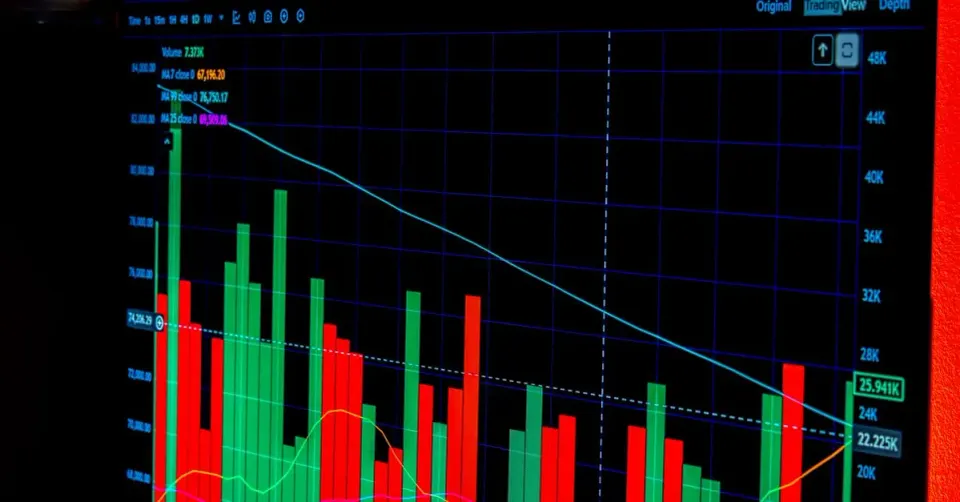
Bitcoin itself has benefited immensely from this shift in global liquidity, holding strong at $77,281 after a rally sparked by the Treasury's repurchase announcement. Crypto-related stocks and mining firms like Canaan and Metaplanet have seen double-digit gains as the market anticipates a sustained period of dollar devaluation. For Iranian investors, this dual rally in gold and crypto provides a crucial hedge against the stagnation of the Toman. However, the volatility remains extreme; while gold offers a traditional safety net, the rapid ascent of Bitcoin suggests that speculative capital is currently leading the charge in the global flight from fiat currencies.
Georgia Breaks Ranks with EU Sanctions Policy
In a major diplomatic development for Tehran, Georgia has officially declined to adopt the European Union’s latest round of anti-Iran sanctions. This decision marks a significant fracture in the Western-led economic blockade and highlights the growing importance of the Caucasus as a strategic corridor for Iranian trade. By refusing to follow the EU’s lead, Tbilisi is prioritizing its own regional economic interests and its role as a transit hub between the Middle East and Russia, effectively providing a pressure valve for the Iranian economy which has been struggling under the weight of renewed Western restrictions.
This move by Georgia is not an isolated incident but part of a broader shift in regional dynamics where neighboring states are increasingly wary of the collateral damage caused by secondary sanctions. For the Iranian government, this is a clear victory in its "Look East" and regional integration strategy. It suggests that despite the intense pressure from Washington and Brussels, the total isolation of the Iranian financial system is becoming harder to maintain. For traders, this could mean more stable, albeit clandestine, routes for goods and capital, potentially easing some of the supply-side inflationary pressures currently hitting the Iranian market.

Tesla’s China Crisis and the Tech Security War
Beyond the Middle East, the global tech landscape is being shaken by a massive recall in China affecting Tesla and eight other major electric vehicle manufacturers. The recall, ordered by Chinese regulators, focuses on critical door safety issues that reportedly make it difficult for occupants to exit vehicles in emergencies. This development is not just a blow to Tesla’s reputation in its most important growth market, but also a signal of tightening regulatory oversight that could be used as a lever in the ongoing trade disputes between Washington and Beijing.
Simultaneously, the U.S. government has launched a security probe into Chinese-made lidar technology, with researchers at the Idaho National Laboratory investigating potential vulnerabilities. Lidar is the "eyes" of autonomous vehicles, and the U.S. concern is that these sensors could be used for data harvesting or remote interference. As these two superpowers trade blows over automotive safety and sensor security, the global supply chain for high-tech components is becoming increasingly bifurcated. For the global economy, this means higher costs and slower innovation as companies are forced to choose between Western and Eastern tech ecosystems, further fueling the inflationary environment that is currently propping up gold and Bitcoin prices.
Frequently Asked Questions
Why did gold prices in Iran jump 2.3% today despite a flat USD exchange rate?
What is the significance of Georgia refusing to join EU sanctions against Iran?
Is the $77,000 Bitcoin price sustainable for Iranian investors?
Understanding Sanctions Evasion and Alternative Financial Strategies
Economic sanctions are powerful foreign policy tools used by countries or international bodies to pressure target states into changing their behavior. However, the effectiveness of sanctions often hinges on the ability of the imposing entities to prevent their circumvention. Sanctions evasion refers to the various methods employed by sanctioned nations, entities, or individuals to bypass these restrictions, maintain economic activity, and access essential goods, services, or financial networks. This often involves intricate strategies to obscure the true origin or destination of goods, funds, or services.
One primary method of evasion involves leveraging alternative trade routes and third-party intermediaries. For instance, a country under sanctions might rely on neighboring nations, like Georgia in the given context, to act as transit hubs or re-exporters, masking the ultimate destination or origin of goods. The development of "trade corridors" through less scrutinized regions, such as the Caucasus, becomes crucial for maintaining supply chains that would otherwise be severed by direct sanctions. These routes can facilitate the movement of both legitimate and illicit goods, undermining the intended economic isolation.
In the financial realm, traditional banking channels become largely inaccessible under comprehensive sanctions. This drives sanctioned entities towards non-traditional financial instruments and systems. Gold, a historically recognized store of value, often sees its demand surge as a tangible asset that can be traded internationally without relying on conventional financial institutions. Similarly, cryptocurrencies like Bitcoin have emerged as a significant tool for sanctions evasion. Their decentralized nature allows for peer-to-peer transactions that bypass government-controlled banking systems, offering a means to transfer value and conduct international trade outside the purview of sanctioning authorities.
The interplay of these strategies creates a complex geopolitical and economic landscape. While sanctioning bodies continuously work to tighten enforcement and identify evasion tactics, sanctioned states and their allies are equally adept at innovating new methods. The rise of digital assets and the strategic use of geography underscore a persistent cat-and-mouse game, where economic pressure meets determined efforts to maintain sovereignty and economic viability, often leading to shifts in global trade patterns and the emergence of parallel financial ecosystems.