Humanoid Robot Outruns Usain Bolt in Beijing as Canada-US Trade War Ignites 4.8% Surge in Tehran Gold Markets
شکست رکورد یوسین بولت توسط ربات چینی؛ شعلهور شدن جنگ تجاری و جهش ۴.۸ درصدی قیمت سکه در تهران
A humanoid robot at China's World Humanoid Robot Games has reportedly surpassed Usain Bolt's 100m world record, signaling a massive leap in android technology. Meanwhile, global markets are reeling as Canada vows 'dollar-for-dollar' retaliation against US tariffs, sending Tehran's gold and currency prices to record levels.
At time of publishing
USD
193,450
Toman
Gold 18K
20.94M
Toman / gram
Bitcoin
$77,068
US Dollar
Tether
191,898
Toman
The Silicon Sprinter: China’s Humanoid Robot Breaks Bolt’s Record
In a stunning display of technological advancement at the World Humanoid Robot Games in Beijing, an android developed in partnership with smartphone maker Honor has reportedly run faster than Usain Bolt’s legendary 100m world record of 9.58 seconds. This milestone represents more than just a sporting curiosity; it is a definitive signal that the mechanical limitations of humanoid robotics are being dismantled at an exponential rate. While previous iterations of bipedal robots struggled with balance and fluid movement at high speeds, this new generation utilizes advanced actuators and AI-driven gait stabilization to achieve velocities that were once thought exclusive to biological elite athletes.
The implications of this achievement extend far beyond the track. As China continues to lead in the mass production of humanoid hardware, the ability to replicate human movement with superior efficiency suggests a pending revolution in logistics, emergency response, and industrial automation. However, the speed of this development also raises geopolitical concerns regarding the dual-use nature of such technology. If a robot can outrun the fastest human on earth, the transition of these platforms into security and defense roles is no longer a matter of 'if' but 'when,' further intensifying the tech-supremacy race between Beijing and the West.

Trade War Escalation: Canada Vows ‘Dollar for Dollar’ Retaliation
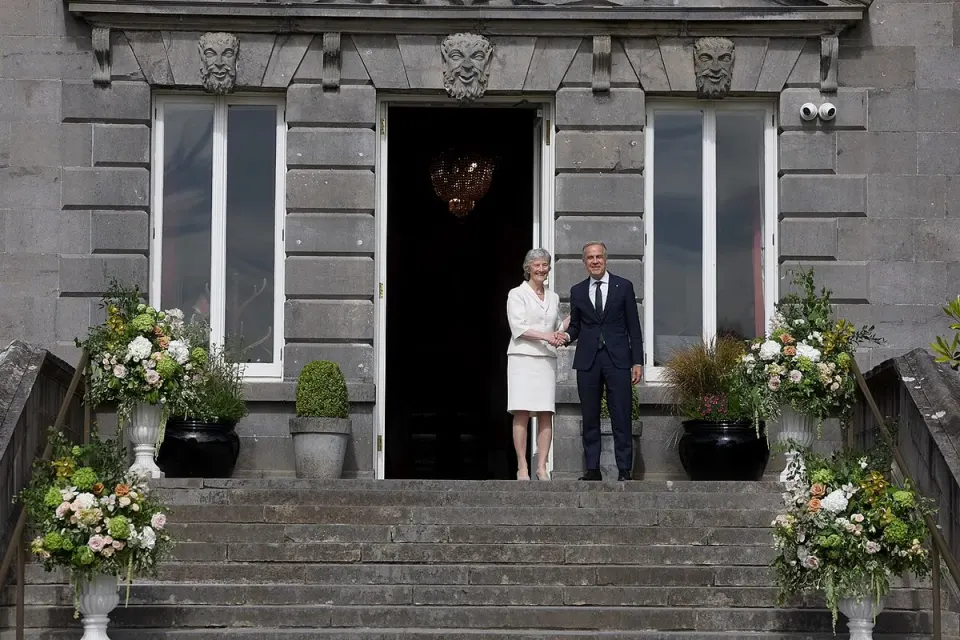
The global economic landscape has shifted into a high-stakes confrontation as Canada officially announced a "dollar-for-dollar" response to the United States' decision to impose 50% tariffs on a wide array of Canadian goods. Prime Minister Mark Carney, taking a hardline stance after the collapse of bilateral trade talks, emphasized that Canada would not be intimidated by protectionist policies that threaten roughly $20 billion in trade. The tariffs, which took effect early this morning, target everything from industrial components to consumer goods, effectively driving a deep political and economic wedge between the two long-standing allies.
Market analysts warn that this retaliatory cycle could lead to significant job losses on both sides of the border and further disrupt North American supply chains already strained by shifting geopolitical loyalties. For the global economy, this friction between the US and Canada is a harbinger of a broader trend toward deglobalization. As traditional allies turn toward aggressive trade barriers, the inflationary pressure on consumer goods is expected to rise, forcing central banks into difficult positions regarding interest rate adjustments. The political fallout is equally severe, as the collapse of these talks signals a breakdown in the post-WWII consensus on free trade within the Western bloc.
Tehran Markets Under Pressure: Emami Coin Jumps 4.8% Amid Global Turmoil
The volatility in global trade and the rising price of gold internationally—now hovering at a staggering $4,604.40 per ounce—have sent shockwaves through the Iranian domestic market. In Tehran, the Emami gold coin saw a massive 4.8% surge today, moving from 199,500,000 to 209,000,000 Toman. This spike reflects a frantic flight to safety by local investors who view gold as the ultimate hedge against both domestic currency depreciation and the escalating trade wars abroad. The 18k gold gram followed suit, rising 2.2% to reach 20,942,795 Toman, further squeezing the purchasing power of the average citizen.
The currency market is also witnessing significant movement, with the USD sell rate rising from 190,500 to 193,450 Toman, a 1.5% increase in a single 24-hour window. This upward trend in the dollar is tightly correlated with the collapse of North American trade talks and the resulting strength of the greenback as a global reserve asset, even as it faces challenges. For Iranians, these numbers translate to immediate inflationary pressure on imported goods and a heightened sense of economic precariousness. As long as global geopolitical tensions remain at a boiling point, the demand for hard currency and gold in the local market is unlikely to subside, keeping the Rial under persistent downward pressure.
Geopolitical Tragedy: Myanmar Monastery Strike and Global Inaction
Away from the trading screens, a grim reminder of global instability emerged from Myanmar, where a strike on a monastery has left at least fourteen people dead. Witnesses and rescue workers reported that the site, which was hosting a meditation retreat for civilians, was struck twice, leaving little chance for those seeking refuge to escape. This incident is part of an intensifying pattern of violence in the country's ongoing civil conflict, where civilian centers and religious sites are increasingly caught in the crossfire of a struggle that the international community has largely struggled to contain.
While the world's eyes are often fixed on the economic maneuvers of superpowers, the tragedy in Myanmar underscores the human cost of the breakdown in global order. The lack of a unified international response to such atrocities has allowed the conflict to fester, creating a vacuum where regional actors and non-state groups operate with relative impunity. For global observers, the persistence of these localized but brutal conflicts contributes to an overall sense of global risk, which indirectly fuels the very market volatility seen in commodities like gold. As humanitarian organizations call for accountability, the strike serves as a somber baseline for the state of international security in late 2026.
Frequently Asked Questions
How did the Chinese robot beat Usain Bolt's record?
Why is the Canada-US trade war affecting Tehran's markets?
What caused the 4.8% jump in Emami coin prices today?
Gold as a Safe-Haven Asset Amidst Global Uncertainty
The news of a Canada-US trade war igniting a surge in Tehran's gold markets highlights a fundamental economic concept: gold as a safe-haven asset. In times of economic uncertainty, geopolitical instability, or market turmoil, investors often flock to certain assets perceived as reliable stores of value, and gold has historically been the quintessential example. This phenomenon explains why a trade dispute between two North American nations can have a tangible impact on gold prices thousands of miles away.
What makes gold a safe haven? Unlike fiat currencies, its value is not tied to any single government or central bank, nor is it subject to counterparty risk inherent in other financial instruments. Gold has an intrinsic value, a finite supply, and a millennia-long history as a medium of exchange and a store of wealth, giving it a unique psychological appeal. When traditional markets like stocks and bonds become volatile due to events like a trade war, investors seek refuge in assets that are expected to retain or even increase their value, protecting their capital from depreciation.
A trade war, characterized by tariffs, retaliatory measures, and disrupted supply chains, introduces significant uncertainty into the global economy. Businesses face higher costs, consumers might see rising prices, and overall economic growth can slow. This environment typically leads to a "risk-off" sentiment among investors, prompting them to sell off riskier assets and move into safer havens. The increased demand for gold, driven by this flight to safety, pushes its price upwards, demonstrating its role as a hedge against economic instability and currency depreciation.
The surge in Tehran's gold markets, specifically in the price of Emami coins, underscores the global interconnectedness of financial markets and investor behavior. Even if directly unrelated to the initial trade dispute, local markets react to global shifts in sentiment and commodity prices. This demonstrates how a localized geopolitical or economic event can have ripple effects, influencing asset valuations worldwide as investors adjust their portfolios in response to perceived risks and opportunities.
Topics
Related Articles