Australia’s Real Estate Resilience and Amazon’s AI Gamble: Why Global Markets Are Bracing for a Shift
تابآوری بازار مسکن استرالیا و قمار هوش مصنوعی آمازون: چرا بازارها در انتظار تغییر هستند؟
While Australian first-home buyers defy interest rate hikes to enter the property market, Amazon's massive AI spending has pushed its free cash flow into the negative. Meanwhile, the Iranian Toman teeters on the edge of the 200,000 mark as geopolitical rhetoric intensifies.
At time of publishing
USD
199,800
Toman
Gold 18K
21.61M
Toman / gram
Bitcoin
$77,247
US Dollar
Tether
197,258
Toman
The Surprising Resilience of the Australian Property Market
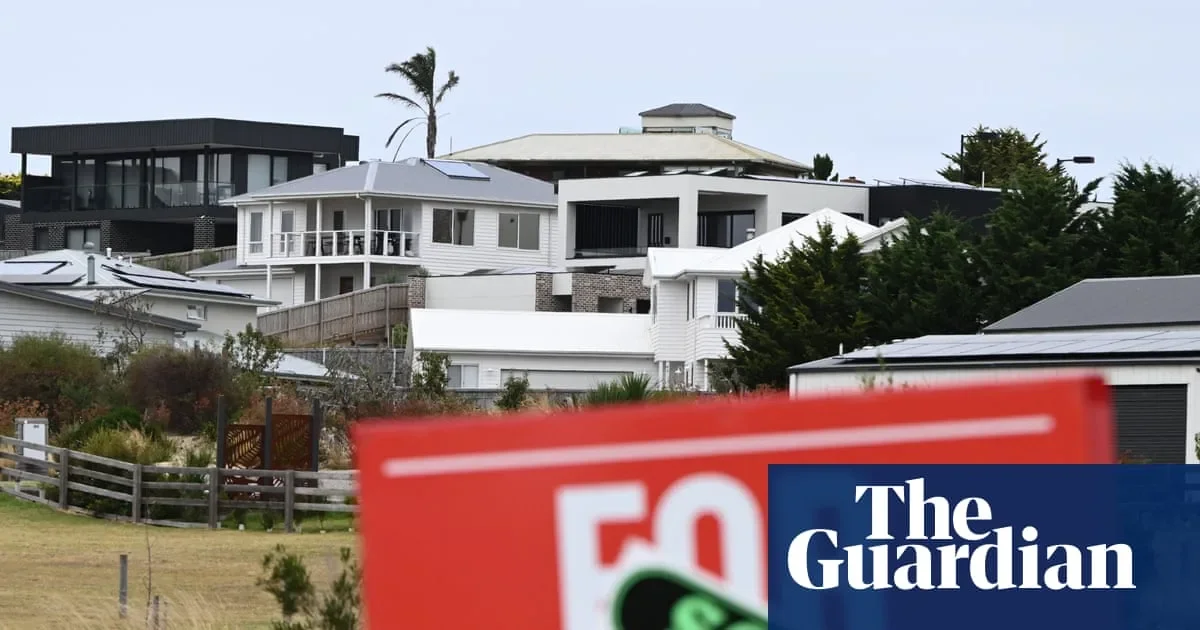
In a striking defiance of global economic trends, Australia’s first-home buyers are currently the only demographic actively increasing their loan applications. Despite a climate of elevated interest rates and significant tax changes, new data from Loan Market reveals that while property investors are beating a hasty retreat, the entry-level segment of the market remains buoyant. This trend is largely attributed to targeted government backing and a persistent desire among younger Australians to secure a foothold in the housing market before prices potentially climb further.

This shift in market dynamics signifies a broader change in how real estate is perceived as an asset class in the current high-rate environment. For investors, the math no longer adds up as borrowing costs eat into rental yields, but for first-home buyers, the motivation is often more personal and urgent. This resilience provides a crucial cushion for the Australian economy, even as other sectors show signs of cooling under the pressure of central bank tightening. It also serves as a case study for other nations struggling with housing affordability, showing that policy intervention can keep the dream of ownership alive even when traditional market forces are hostile.
Amazon’s AI Tax: The $7.6 Billion Cash Flow Gap
The tech world was recently jolted by a revealing look at Amazon’s balance sheet, which showed that the company’s free cash flow has swung to a negative $7.6 billion. This occurs despite a robust 33% rise in operating cash flow, highlighting a massive divergence driven almost entirely by artificial intelligence capital expenditure (Capex). Amazon is essentially pouring every dollar of profit, and then some, into the infrastructure required to dominate the next generation of computing.

This negative swing is a stark reminder that the AI revolution is not cheap. While the market has been obsessed with the potential revenue from AI agents and services, the actual cost of building the data centers and securing the chips is beginning to weigh heavily on the balance sheets of even the largest companies. Investors are now forced to weigh the long-term strategic necessity of these investments against the short-term reality of burning through cash reserves. It’s a high-stakes gamble that assumes the eventual returns on AI will be exponential, justifying the current multi-billion dollar “tax” on liquidity.
Toman Teeters Near 200k as Geopolitical Tensions Simmer
In the local markets, the Iranian Toman is showing signs of extreme volatility, moving from 195,400 to 199,800 against the USD in just 24 hours, representing a 2.3% devaluation. This movement brings the currency to the precipice of the psychologically significant 200,000 mark. The surge in the dollar's value is mirrored in the gold market, where the Emami coin rose from 209,000,000 to 218,000,000 Toman, a sharp 4.3% increase. These shifts suggest that local traders are hedging heavily against potential escalations in regional conflicts.

The editorial stance of official Iranian figures remains defiant, with Foreign Minister Abbas Araghchi stating that the United States must engage Iran with "respect" and rejecting the efficacy of tougher sanctions. Simultaneously, the Defense Ministry has claimed that the armed forces have sufficient experience to overcome any military or economic crisis. However, the market’s reaction—specifically the flight to physical gold and hard currency—indicates a significant gap between official rhetoric and public confidence. For the average citizen, the rapid approach of the 200k milestone is a signal of further inflationary pressure on the horizon.
Digital Borders: Australia’s Unconventional Game Ban
Australia has made headlines not for banning a game due to its gore, but for its "incentivized drug use." The upcoming title Halloween: The Game has been refused classification, effectively banning it from sale. While the game features brutal violence, including the infamous Michael Myers, the Classification Board’s decision rested on mechanics that reward players for virtual drug consumption. This highlights an increasingly complex regulatory environment where digital content is scrutinized under moral frameworks that some academics describe as "incoherent."
This move by the Australian authorities serves as a broader example of how modern states are attempting to regulate digital culture. It moves beyond traditional concerns of physical harm or graphic violence into the realm of behavioral influence. As gaming and virtual worlds become more immersive, the friction between creative freedom and state-mandated social standards is likely to intensify, creating a fragmented global market where digital entertainment is subject to vastly different rules depending on the user's geographic location.
Frequently Asked Questions
Why did Amazon's free cash flow go negative despite rising profits?
How are Australian first-home buyers affording homes during high interest rates?
What is the significance of the 200,000 Toman mark for USD in Iran?
Capital Expenditure and Free Cash Flow: The Engine of Strategic Growth
When headlines speak of major companies like Amazon making an "AI gamble" while simultaneously reporting "negative free cash flow" due to "AI capital expenditure," they're highlighting a crucial concept in corporate finance: Capital Expenditure (CapEx) and its relationship with Free Cash Flow (FCF). Capital expenditure refers to the money a company spends to acquire, maintain, or upgrade its physical assets, such as buildings, machinery, equipment, or technology. These investments are typically long-term, designed to expand a company's operational capacity, improve efficiency, or develop new products and services to drive future growth.
In the context of Amazon's massive push into Artificial Intelligence, CapEx involves substantial spending on data centers, specialized AI chips, research and development facilities, and other infrastructure essential for building and deploying advanced AI models. Such investments are not about day-to-day operations but are strategic bets on future market dominance and profitability. Companies undertake these significant expenditures with the expectation that they will generate substantial returns over many years, positioning them at the forefront of emerging technologies.
However, these large-scale investments have an immediate impact on a company's Free Cash Flow. Free Cash Flow is the cash a company generates after accounting for cash outflows to support operations and maintain its capital assets. It's calculated as operating cash flow minus capital expenditures. When a company engages in aggressive CapEx, even if its core operations are highly profitable, its FCF can turn negative. This doesn't necessarily signal financial distress; rather, it often indicates a period of intense reinvestment and expansion, where the company is pouring cash back into the business to fuel future growth.
For investors and global markets, understanding this dynamic is key. A negative FCF driven by high CapEx represents a trade-off: lower short-term cash availability and potentially reduced immediate shareholder returns in exchange for potentially much larger long-term value creation. Markets closely scrutinize whether these capital expenditures are wise investments that will yield future competitive advantages and profits, or if they are speculative gambles that might not pay off. This strategic allocation of capital is a fundamental driver of how companies evolve and how global markets perceive their future trajectory.
Topics
Related Articles