Gulf Energy Under Fire: Mapping the Impact on Global Oil as Tehran Market Holds Steady
سایه جنگ بر انرژی خلیج فارس؛ نقشهبرداری از حملات نفتی در تداوم ثبات نسبی بازار تهران
As regional tensions escalate with targeted strikes on Gulf energy infrastructure, US oil firms find themselves in a paradox of record profits and high-risk assets. Meanwhile, in Tehran, the currency remains frozen at 206,400 Toman as domestic sports triumphs offer a brief reprieve from geopolitical anxiety.
At time of publishing
USD
206,400
Toman
Gold 18K
21.85M
Toman / gram
Bitcoin
$78,226
US Dollar
Tether
205,167
Toman
The New Map of Energy Conflict
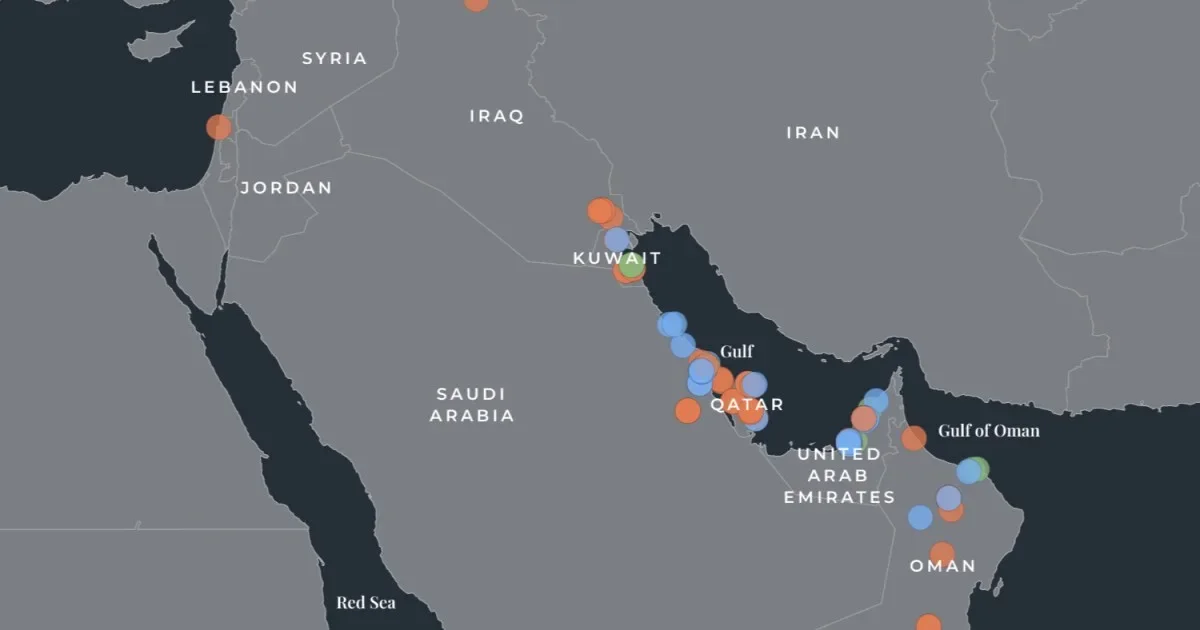
Recent reporting has shed light on a sophisticated mapping of strikes against energy infrastructure in the Persian Gulf, a development that signals a new and dangerous phase in the regional conflict. While US energy companies have reportedly reaped billions in profits due to the resulting spike in global oil prices, the physical safety of their assets in the Middle East remains precarious. This isn't just about temporary disruptions; it's a strategic shift where energy lanes are being treated as primary battlegrounds. For global markets, this means the 'risk premium' on oil is no longer a theoretical calculation but a daily reality that could fluctuate wildly with the next drone or missile telemetry. The implications for Iran are multifaceted. On one hand, the disruption of regional competitors' export capabilities could theoretically tighten the market, but the overall instability threatens the very shipping lanes that any regional player relies on. As the conflict matures, the focus has shifted from military posturing to economic attrition. Investors are now looking at maps not for territory, but for the intersection of pipelines and strike zones. This environment suggests that unless a significant de-escalation occurs, the floor for global oil prices has moved permanently higher, even as US companies struggle to protect the very infrastructure that is generating their record-breaking dividends.
Populism and the Australian Warning
In a surprising turn of events in the Southern Hemisphere, the One Nation party has secured a significant byelection victory in Secret Harbour, sending shockwaves through the Australian political establishment. Prime Minister Anthony Albanese told Labor faithful that the party 'owes it to history' to defeat the insurgent movement led by Pauline Hanson. The victory highlights a growing trend of voter anger that traditional parties are struggling to contain. The debate has largely centered on migration policy, with Barnaby Joyce using metaphors of sheep and cattle to argue that current statistics don't accurately reflect the reality of short-term visas and their impact on local infrastructure. --- This political shift in Australia is more than a local curiosity; it reflects a broader global sentiment where economic anxiety is being channeled into nationalist movements. For international observers, this serves as a warning that even stable, resource-rich democracies are not immune to the pressures of inflation and perceived loss of sovereignty. As Labor and the Coalition scramble to find a narrative that resonates with frustrated voters, the success of One Nation suggests that the global 'anti-establishment' wave is far from over. This could lead to more protectionist trade policies and stricter migration controls, potentially impacting global labor markets and trade agreements in the coming years.
Local Triumphs Amidst Regional Storms
Domestically, Iran is experiencing a rare moment of collective celebration following significant achievements in sports and culture. The Under-17 Boys’ National Volleyball Team recently secured the world championship, drawing official congratulations from President Masoud Pezeshkian and Parliament Speaker Mohammad Bagher Ghalibaf. Simultaneously, on the football pitch, Persepolis delivered a commanding 3-0 victory over Malavan in the Iran Pro League. These events provide a psychological buffer for a public often weary of the constant drumbeat of regional tension and economic sanctions. Beyond sports, the 'Narrative of Mercy' cultural event was held at Tehran’s Vahdat Hall to commemorate the birth anniversary of the Prophet Mohammad. The event, attended by Foreign Minister Abbas Araghchi and other high-ranking officials, featured the National Music Orchestra and sought to project an image of cultural resilience and unity. However, this domestic 'normalcy' sits in stark contrast to the rhetoric coming from the leadership. Iranian state media reported that the Leader, Ayatollah Sayyid Mojtaba Hosseini Khamenei, recently described the US and Israel as 'sworn enemies' of Muslim unity, reinforcing the rigid geopolitical stance that continues to define Iran's foreign relations despite the celebratory atmosphere at home.

Market Snapshot: A Frozen Exchange
Despite the volatile news cycle, the Tehran currency market has shown remarkable, if perhaps artificial, stability over the last 24 hours. The USD/IRR exchange rate remained unchanged at 206,400 Toman, showing a 0.0% change. This stillness in the face of regional energy strikes suggests either a heavy-handed intervention by the central bank or a market that has already priced in the current level of conflict. Gold, however, saw a marginal decline; 18k gold moved from 21,868,507 to 21,850,039 Toman per gram, representing a slight -0.1% dip. The Emami coin also held steady at 218,000,000 Toman (+0.0%). In the digital asset space, Bitcoin is currently consolidating around the $78,226 mark. The cryptocurrency has found a temporary home between key moving averages, reflecting a broader 'wait-and-see' approach by global investors. While BTC remains a hedge for some against fiat volatility, its movement today suggests it is tracking global risk sentiment rather than reacting specifically to Middle Eastern developments. For the Iranian investor, the current stability in the Toman offers a brief window of predictability, though the underlying pressures of the energy conflict remain a looming shadow over the long-term value of the national currency.
Frequently Asked Questions
How are the Gulf energy strikes specifically affecting US companies?
Why did the USD/IRR remain unchanged despite regional escalation?
What does the One Nation victory in Australia signify for global trade?
Understanding the Geopolitical Risk Premium in Oil Prices
When headlines scream about "Gulf Energy Under Fire," it's not just a regional concern; it sends ripples through global oil markets. This phenomenon is best understood through the concept of the Geopolitical Risk Premium. In essence, this is an additional cost that gets baked into the price of oil, not because of immediate supply and demand fundamentals, but due to the perceived threat of political instability, conflict, or policy changes in key oil-producing or transit regions. It reflects the market's anxiety about potential future disruptions to supply.
The premium arises from several factors. Traders and investors, anticipating potential supply shortages, higher production costs, or difficulties in transporting oil, bid up prices as a precautionary measure. Events like military conflicts, terrorist attacks on infrastructure, major political coups, or even heightened tensions in vital shipping lanes (such as the Strait of Hormuz) can trigger this premium. The uncertainty alone is often enough to drive prices higher, as market participants factor in the "what if" scenarios, even if actual supply hasn't been immediately affected.
For instance, if a region responsible for a significant portion of global oil output faces instability, the market immediately prices in the risk that this supply might be curtailed. This isn't just about crude oil extraction; it also encompasses the security of pipelines, refineries, and shipping routes. The greater the perceived threat to these critical components of the global energy supply chain, the larger the geopolitical risk premium becomes, influencing not only spot prices but also futures contracts.
The impact of a geopolitical risk premium is far-reaching. It translates to higher fuel costs for consumers and businesses, potentially fueling inflation and slowing economic growth globally. Governments might tap into strategic petroleum reserves to mitigate price spikes, and energy companies may reconsider investment strategies in volatile regions. Understanding this premium is crucial for anyone trying to decipher why oil prices can sometimes surge even when fundamental supply and demand figures don't seem to warrant such a dramatic shift, as the market is often pricing in fear and uncertainty.