Iran Judiciary Chief Demands Non-Political Justice as Bitcoin ETFs Hit $3.8B Milestone
تاکید رئیس قوه قضائیه بر عدالت غیرسیاسی همزمان با رکوردشکنی ۳.۸ میلیارد دلاری صندوقهای بیتکوین
Iran's Judiciary Chief calls for a fair international legal order free from political bias, while global crypto markets celebrate a massive $3.8 billion inflow into Bitcoin ETFs. Meanwhile, domestic gold prices in Iran surge by 2.2% amid rising regional tensions.
At time of publishing
USD
223,300
Toman
Gold 18K
23.65M
Toman / gram
Bitcoin
$79,630
US Dollar
Tether
224,400
Toman
Iran’s Judiciary Chief Calls for Non-Selective International Justice
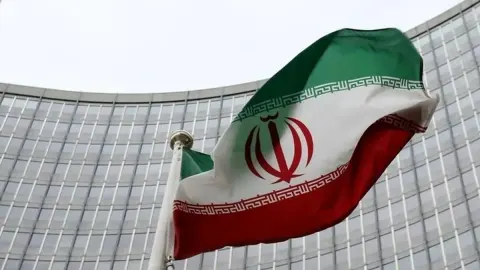
In a significant address in Tehran, Iran’s Judiciary Chief, Gholam-Hossein Mohseni-Eje’i, has emphasized the urgent need for a fair international legal order. He argued that justice on the global stage must never be selective or subordinate to the political considerations of powerful nations. Mohseni-Eje’i’s remarks come at a time when Iran is increasingly challenging Western legal frameworks, particularly regarding sanctions and international court rulings. By calling for a system where justice is not determined by a country's level of influence, the Judiciary Chief is signaling a desire for a multipolar legal world that accommodates non-Western perspectives. This rhetoric is more than just a legal philosophy; it serves as a diplomatic tool. For the average Iranian reader, these statements often precede shifts in how the state handles international trade disputes or human rights criticisms. If the judiciary adopts a more assertive stance against what it perceives as 'political' justice, it could lead to stricter domestic interpretations of international agreements. Furthermore, such statements are often designed to bolster national sovereignty in the face of ongoing economic pressures, suggesting that the government remains firm in its legal and ideological positions despite external constraints.

Tensions Rise Over Reported Incidents in Hormozgan
Adding to the geopolitical complexity, Iran’s administration spokesperson, Fatemeh Mohajerani, recently commented on an incident in the Sirik district of Hormozgan Province. She explicitly linked a reported U.S. attack in the region to previous tragedies involving schoolchildren in Minab, asserting that the United States must be held accountable for its military actions. This framing of the U.S. as an 'aggressor' in southern Iran is a sharp escalation in narrative, designed to consolidate domestic sentiment against foreign intervention. The government's insistence on viewing these events as a continuous chain of aggression suggests a heightened state of alert in the Persian Gulf region. For markets, this escalation is immediately palpable. The Iranian Toman has seen a slight depreciation, with the USD selling price moving from 222,200 to 223,300 (+0.5%). More dramatically, gold prices have reacted to the perceived risk; Gold 18k per gram rose from 23,142,804 to 23,650,676 Toman (+2.2%). When the government highlights military friction in the South, it often triggers a flight to safety among local investors, who move capital into gold and hard currency to hedge against potential conflict or further sanctions.
Bitcoin ETFs Hit $3.8 Billion Milestone Amid Market Volatility
In the global financial arena, Bitcoin continues to demonstrate its growing institutional appeal. U.S. spot Bitcoin ETFs have recorded a staggering $3.8 billion in inflows over the strongest three-week stretch seen in 2026. Even as the price of Bitcoin briefly dipped below the $79,000 mark on Friday, institutional appetite remained robust, with nearly $1 billion in fresh capital entering the market in just the last week. This decoupling of price action and capital inflow suggests that long-term investors are viewing current price levels as an accumulation zone rather than a reason to exit.
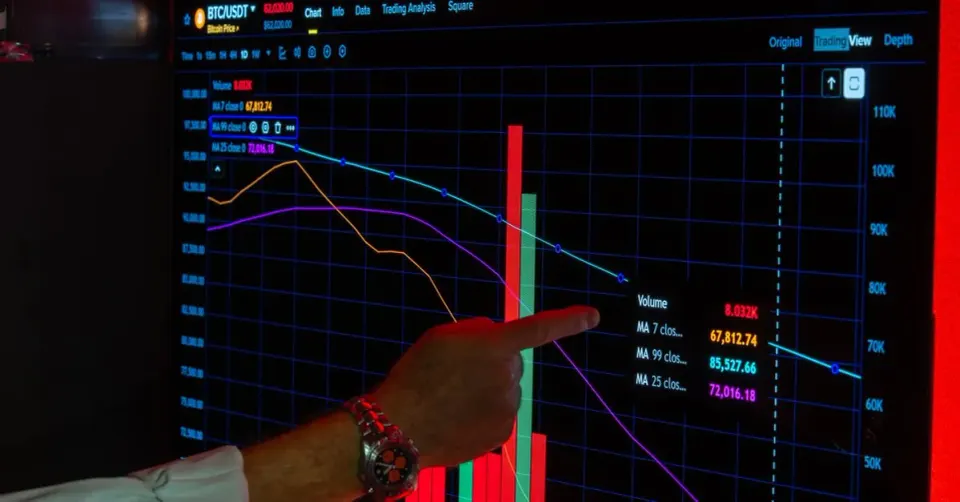
However, the road ahead remains bumpy. Bets on Federal Reserve rate hikes have increased, putting downward pressure on risk assets including crypto. For Iranian crypto traders, the current BTC price of $79,630 represents a critical psychological level. With USDT trading at 224,400 Toman, the cost of entry for local investors remains high. The massive ETF inflows in the U.S. provide a global floor for the price, but domestic traders must balance this optimism against the rising strength of the USD in the local free market and the potential for increased global interest rates to dampen the rally.
Populism and Scandals in UK Politics
Across the Atlantic, the UK’s Reform party is making headlines with a bold economic proposal to increase the tax-free personal allowance to £15,000. The party claims this would be funded by a massive £80 billion reduction in public spending. While such policies appeal to voters struggling with the cost of living, the party is simultaneously embroiled in a foreign donation scandal. Reports have emerged of senior officials soliciting funding from U.S. donors, which is strictly prohibited under UK law. This duality of populist economic promises and ethical controversies is a recurring theme in modern global politics.

This story matters to global readers because it reflects a broader trend toward economic nationalism and the restructuring of tax burdens. As political shifts occur in major economies like the UK, they can influence global trade policies and currency valuations. For Iranians, watching these developments provides insight into the internal fractures of Western nations, which can indirectly affect diplomatic negotiations and the consistency of international sanctions regimes. When traditional political structures in the West face such scandals, it often leads to volatile policy shifts that ripple through global markets.
Frequently Asked Questions
چرا قیمت طلا در بازار ایران ۲.۲ درصد افزایش یافت؟
ورود ۳.۸ میلیارد دلار به ETFهای بیتکوین چه معنایی برای قیمت دارد؟
منظور رئیس قوه قضائیه از عدالت غیرسیاسی چیست؟
Understanding Bitcoin Exchange-Traded Funds (ETFs)
Bitcoin exchange‑traded funds, or Bitcoin ETFs, are investment vehicles that let investors gain exposure to the price movements of Bitcoin without having to buy, store, or manage the cryptocurrency directly. An ETF is a type of fund that trades on a traditional stock exchange, and each share represents a proportionate ownership in a basket of assets—in this case, Bitcoin or Bitcoin‑related futures contracts. By purchasing an ETF share, investors benefit from the same price fluctuations as Bitcoin while enjoying the regulatory oversight, liquidity, and tax treatment that apply to conventional securities.
The mechanics of a Bitcoin ETF involve a custodian that holds the underlying Bitcoin (or futures contracts) on behalf of the fund. The fund issues shares that are listed on exchanges such as the NYSE or Nasdaq, and market makers ensure that the ETF price stays close to the net asset value (NAV) of the underlying holdings through arbitrage. This structure eliminates many of the technical hurdles that individual investors face, such as managing private keys, dealing with wallet security, and navigating fragmented cryptocurrency exchanges.
Regulatory approval has been a pivotal factor in the growth of Bitcoin ETFs. In the United States, the Securities and Exchange Commission (SEC) initially rejected several spot‑Bitcoin ETF proposals over concerns about market manipulation and custody safety, but it approved Bitcoin futures‑based ETFs in 2021. By 2026, inflows into Bitcoin ETFs surpassed $3.8 billion, reflecting growing institutional confidence and a broader acceptance of crypto assets within mainstream finance. Similar products have launched in Canada, Europe, and Brazil, each subject to their own jurisdictional rules.
For investors, Bitcoin ETFs offer several advantages: they can be held in tax‑advantaged accounts, they provide easy diversification within a traditional portfolio, and they can be bought in fractional shares, lowering the entry barrier. However, they also carry risks, including tracking error, management fees, and exposure to the same volatility that characterises Bitcoin itself. Understanding these trade‑offs is essential before allocating capital to a crypto‑linked ETF.
Topics
Related Articles