Death Sentences for Twin Sisters and US Tanker Strikes Spark Fear as Gold Rises 1.5%
صدور حکم اعدام برای خواهران دوقلو و حملات آمریکا به نفتکشها؛ طلا ۱.۵ درصد گران شد
Human rights concerns reach a fever pitch in Iran as twin sisters face death sentences, while US strikes on 'shadow network' tankers further destabilize the Strait of Hormuz. In the markets, gold continues its relentless climb toward record highs.
At time of publishing
USD
226,900
Toman
Gold 18K
23.74M
Toman / gram
Bitcoin
$79,832
US Dollar
Tether
229,333
Toman
Death Sentence for Twin Sisters Highlights Human Rights Crisis
The human toll of the recent unrest in Iran has taken a harrowing turn with reports that twin sisters, Taraneh and Romina Rahimi, have been sentenced to death. The sisters, who were only 19 and still in high school when they were abducted from their beds by masked men linked to the Islamic Revolutionary Guard Corps (IRGC), have become the latest symbols of the state's brutal crackdown on dissent. Their mother, Marzieh Nourmohammadi, described a harrowing scene where the twins were unrecognizable after months of detention, highlighting the physical and psychological toll of their imprisonment.
This development is not just a localized tragedy but a signal of the judiciary's hardening stance against those who participated in the January protests. By targeting young, high-profile cases with the ultimate penalty, the authorities appear to be attempting to instill a climate of fear to prevent further mobilization. For the Iranian public, this news deepens the sense of grievance and reinforces the perception of a legal system that prioritizes regime survival over justice. The international community's response to these sentences will likely dictate the next wave of sanctions, which could further isolate the Iranian economy and pressure the already volatile Toman.
US Strikes 'Shadow Network' as Oil Routes Redraw
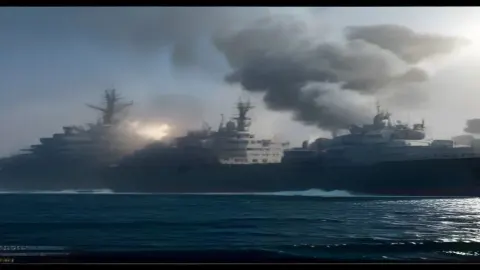
In a significant military escalation, the United States has conducted strikes against three oil tankers identified as part of an Iranian "shadow network." The U.S. military stated these actions were a direct retaliation after missiles were launched at two American warships in the region. This kinetic response marks one of the most intense exchanges in recent weeks, turning the Persian Gulf into a high-risk zone for maritime insurance and shipping logistics. The "shadow network" refers to a fleet of aging vessels used to bypass international sanctions, and by targeting these specific assets, the U.S. is signaling a shift from economic pressure to direct military disruption of oil exports.
This escalation is forcing a fundamental rewrite of global oil trade routes. Exporters are rushing to diversify their channels, while importers are seeking more stable suppliers outside the Middle East. The Strait of Hormuz, which traditionally handles nearly 20 million barrels of crude and liquefied gas daily, is increasingly viewed as a liability rather than a reliable artery. For the Iranian government, the loss of these tankers—and the potential for more strikes—threatens the primary source of hard currency, a reality that is already being priced into the domestic currency markets as traders anticipate a supply squeeze.
Gold Surges as Far-Right Gains Ground in Germany
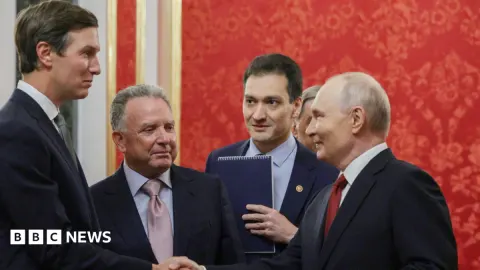
While geopolitical tensions simmer in the Middle East, European politics is facing its own earthquake. In Germany, the far-right Alternative for Germany (AfD) party is on the cusp of a historic victory in the Saxony-Anhalt state elections. This would mark the first time a far-right party has taken power at a state level since World War II. The rise of the AfD, led locally by figures like Ulrich Siegmund, reflects a broader shift toward nationalism and anti-immigrant sentiment that threatens the cohesion of the Eurozone. Investors are watching closely, as a fractured Germany could lead to policy paralysis within the European Union, affecting trade agreements and regional stability.
This political uncertainty in Europe, combined with the military flare-up in the Middle East, has sent investors flocking to safe-haven assets. Gold 18k in Iran rose from 23,385,197 to 23,743,016 Toman, a 1.5% increase in just 24 hours. Globally, the precious metal is trading at a staggering $4,431.10 per ounce. Meanwhile, Bitcoin remains a focal point for digital asset investors, consolidating near the $80,000 mark at $79,832. The convergence of regional conflict, human rights crises, and European political shifts is creating a perfect storm for market volatility, leaving the Iranian Toman stable but under immense pressure at 226,900 per USD.
Frequently Asked Questions
Why is the US targeting the 'shadow network' of tankers?
What is the significance of the AfD election in Germany for markets?
How has the price of gold reacted to these geopolitical events?
The Strategic Importance of the Strait of Hormuz
The Strait of Hormuz is a narrow waterway that connects the Persian Gulf with the Gulf of Oman and the wider Indian Ocean. At its narrowest point it is only about 21 nautical miles wide, yet roughly a fifth of the world’s oil consumption passes through it every day. This concentration makes the strait a critical chokepoint: any disruption—whether from geopolitical tension, naval incidents, or piracy—can instantly ripple through global energy markets and affect fuel prices worldwide.
Because the majority of Iran’s oil exports, as well as those of Saudi Arabia, the United Arab Emirates, and Kuwait, travel through the strait, it has long been a focal point of U.S. naval presence. The United States maintains a carrier strike group and regular patrols to ensure freedom of navigation, a policy that intensified after Tehran’s threats to close the passage in response to sanctions. When U.S. forces strike Iranian tankers, as reported in recent Reuters coverage, the risk of a broader confrontation rises, prompting investors to seek safe‑haven assets like gold, which jumped 1.5% in the wake of the latest attacks.
The economic impact of a closure or a prolonged disruption would be severe. A full shutdown could cut global oil supply by about 20 million barrels per day, pushing crude prices sharply higher and potentially triggering a spike in inflation for oil‑importing nations. The International Monetary Fund (IMF) routinely warns that such supply shocks can destabilise growth forecasts, especially for emerging markets that rely heavily on imported energy.
Understanding the strait’s role helps explain why seemingly distant events—such as protests in Iran, elections in Germany, or fluctuations in Bitcoin—can all be linked through the common thread of energy security. The strait is more than a geographic feature; it is a barometer of geopolitical risk, and its status often dictates the tone of global financial markets.
Topics
Related Articles