Pentagon Flags US Munitions Shortfall Amid Iran War Scenario; Red Sea Tensions Spark Oil Crunch Fears
پنتاگون از کمبود مهمات آمریکا در سناریوی جنگ با ایران هشدار داد؛ تنش در دریای سرخ، نگرانیها از بحران نفتی را افزایش میدهد
A new Pentagon report warns of significant US munitions shortfalls and industrial bottlenecks in the event of an "Iran war," contradicting previous assurances. Concurrently, Houthi militants have seized strategic Red Sea islands, raising alarm among analysts about an impending global oil crunch and further destabilizing key shipping routes. Meanwhile, the US Justice Department is actively pursuing $61 million in crypto proceeds linked to Iran's black market oil sales, highlighting persistent efforts to circumvent sanctions.
At time of publishing
USD
231,200
Toman
Gold 18K
23.33M
Toman / gram
Bitcoin
$77,418
US Dollar
Tether
230,501
Toman
US Military Readiness Questioned Amid Iran War Scenario
A recent Pentagon watchdog report has delivered a stark warning regarding the readiness of the U.S. military, highlighting significant shortages of key munitions and critical industrial "bottlenecks" that could hinder efforts to rebuild stockpiles. This assessment, made in the context of a hypothetical "Iran war," directly contradicts previous assurances from U.S. President Donald Trump, who had claimed that ammunition supplies were "virtually unlimited." The report underscores a potential vulnerability in the nation's defense industrial base, suggesting that current production capacities may be insufficient to sustain a prolonged high-intensity conflict.
This revelation carries substantial implications for U.S. foreign policy and its strategic posture, particularly in volatile regions like the Middle East. A perceived weakness in munitions supply could embolden adversaries or complicate deterrence efforts, potentially altering the geopolitical calculus for both regional players and global powers. For Iranian readers, this report might be interpreted through the lens of shifting power dynamics, influencing perceptions of regional security and the efficacy of international sanctions or military pressures. It suggests that while the U.S. maintains significant military might, its capacity for sustained large-scale operations could be more constrained than publicly acknowledged.
The findings also shed light on the broader challenges facing major global militaries, where the transition from peacetime production to wartime surge capacity remains a complex and often underestimated hurdle. The report serves as a critical internal audit, pushing for greater investment in defense manufacturing and supply chain resilience. This long-term strategic concern could indirectly affect global commodity prices, including oil, as market participants factor in potential future instabilities or shifts in military deployments and engagements.

Houthis Seize Red Sea Islands, Escalating Oil Crunch Fears
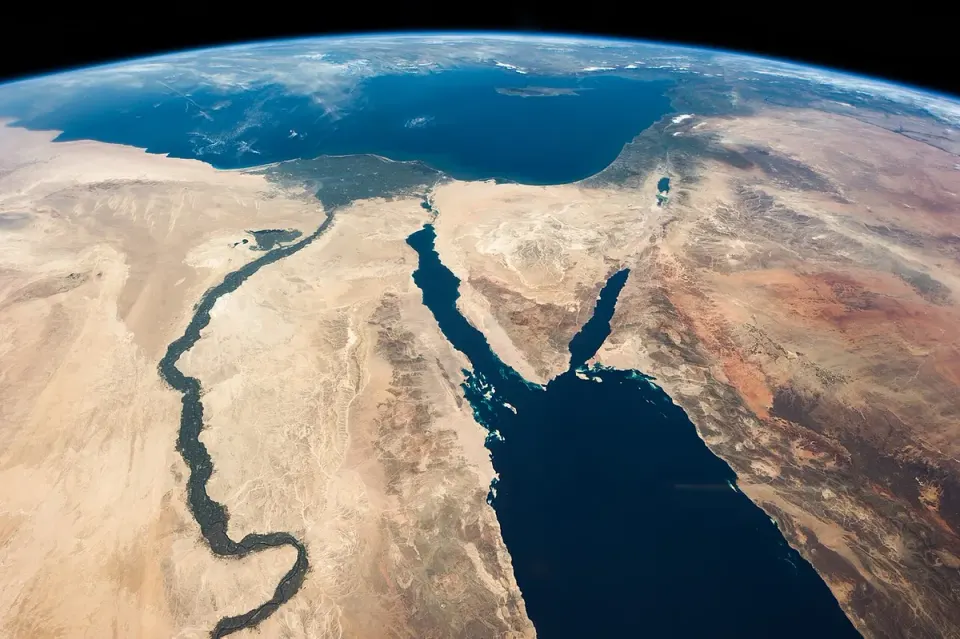
In a significant escalation of regional tensions, Iran-backed Houthi militants have reportedly seized two strategic islands in the Red Sea: Greater and Lesser Hanish. These islands are critically positioned near the Bab al-Mandab strait, one of the world's most vital chokepoints for global oil and maritime trade. The seizure reinforces the Houthi group's growing ability to control key shipping routes, following earlier captures of the port of Mokha and Perim island, and has immediately triggered widespread concerns among analysts about an impending global oil supply crisis.
The implications of this Houthi advance are profound for international commerce and energy markets. Control over the Bab al-Mandab strait allows the militants to potentially disrupt a significant portion of the world's oil shipments, impacting global supply chains and driving up energy costs. Indeed, oil prices have already reacted, with Brent Crude rallying by 1.67% in Asian trade to $107.45 per barrel, and WTI Crude holding above the $103-a-barrel mark. This surge in oil prices directly impacts global inflation, central bank policies, and the cost of living for consumers worldwide, including in Iran, where energy prices and the broader economic stability are highly sensitive to global oil market fluctuations.
This latest move by the Houthis, widely perceived as backed by Iran, further complicates the already precarious security landscape of the Middle East. It highlights the expanding influence of non-state actors in critical maritime zones and raises questions about international efforts to ensure freedom of navigation. For Iranian citizens, this regional instability can translate into heightened uncertainty regarding economic prospects, currency stability, and the overall geopolitical climate, potentially influencing investment decisions and daily economic realities.
US DOJ Targets Iran's Crypto-Laundered Oil Sales
The U.S. Department of Justice (DOJ) has intensified its efforts to combat Iranian sanctions evasion, filing a civil forfeiture complaint seeking $61 million in crypto proceeds. These funds are alleged to be derived from Iran's black market oil sales, laundered through cryptocurrency exchanges and used to finance its military and proxy groups. Prosecutors claim that two Chinese companies utilized Binance, a prominent crypto exchange, to facilitate these illicit transactions, transferring funds to Iran and its affiliates in a complex web designed to circumvent international sanctions.
This action underscores the growing focus of global regulators on the intersection of cryptocurrency and illicit finance, particularly concerning state-sponsored sanctions evasion. The use of crypto to bypass traditional banking systems has long been a concern, and this case highlights the practical challenges and the concerted efforts by authorities to track and seize such assets. For the crypto market, it signals increased scrutiny and the potential for stricter compliance requirements for exchanges globally, as governments seek to close loopholes exploited by sanctioned entities.
For Iranian readers, this development directly impacts the channels available for international trade and financial transactions, especially those operating outside official state-controlled mechanisms. The targeting of crypto-linked oil sales indicates that even decentralized digital assets are not immune to international enforcement, further complicating efforts to access foreign currency or engage in international commerce under the current sanctions regime. This persistent pressure can contribute to the volatility of the Toman against foreign currencies and impact the broader economic outlook within Iran, as avenues for generating foreign exchange become increasingly restricted and risky.
Iranian Market Update: Gold and Coin See Minor Fluctuations
In the domestic Iranian market, currency and precious metals have shown relatively stable or minor movements over the past 24 hours. The U.S. Dollar (USD) against the Iranian Toman (IRR) remained unchanged, holding steady at 231,200 Toman for sell orders, indicating a period of calm in the immediate currency exchange market. This stability, however, often exists within a broader context of underlying economic pressures and expectations for future inflation, which continue to influence investor behavior in the long run.
Precious metals experienced slight shifts, with Gold 18k per gram registering a marginal increase, moving from 23,292,857 Toman to 23,327,485 Toman, a modest gain of +0.1%. This small uptick suggests a continued, albeit mild, appeal for gold as a hedge against inflation or economic uncertainty among local investors. Conversely, the Emami coin saw a slight dip, moving from 234,000,000 Toman to 232,500,000 Toman, marking a decrease of -0.6%. Such minor fluctuations in the coin market can reflect short-term profit-taking or slight shifts in demand, but do not indicate a significant market trend reversal at this hour.
These market movements, while not dramatic, provide a snapshot of local investor sentiment amidst global geopolitical developments. The stable USD/IRR rate might offer a temporary sense of predictability, but the regional tensions, particularly the Red Sea developments and international efforts against sanctions evasion, cast a long shadow. Local investors often closely monitor these external factors, as they can significantly impact future inflation, the value of the national currency, and the overall economic climate, making even small shifts in gold and coin prices noteworthy indicators.
Frequently Asked Questions
What is the significance of the Pentagon's report on US munitions?
How do the Houthi seizures in the Red Sea affect global oil markets?
What is the US DOJ's action regarding Iran's crypto oil sales?
What were the key movements in the Iranian domestic market?
How does Iran's involvement or regional tensions affect its domestic economy?
Understanding Maritime Chokepoints: The Bab al-Mandab Strait
Maritime chokepoints are narrow channels or straits along widely used global sea routes that are critical for international trade, particularly for the transport of oil and other commodities. Their strategic importance stems from their ability to significantly impact global supply chains and energy markets if disrupted. Because a large volume of global shipping must pass through these confined areas, any blockage, attack, or political instability can have far-reaching economic and geopolitical consequences.
The Bab al-Mandab Strait, mentioned in the news, serves as a prime example of such a critical chokepoint. Located between Yemen on the Arabian Peninsula and Djibouti and Eritrea on the Horn of Africa, it connects the Red Sea to the Gulf of Aden and the Indian Ocean. This strait is a vital gateway for ships transiting the Suez Canal to and from Asia, Europe, and North America. An estimated 12% of global trade and a significant portion of the world's oil supply pass through this narrow waterway annually, making it indispensable for global energy security and economic stability.
Recent tensions and attacks by Houthi rebels in the Red Sea region highlight the extreme vulnerability of the Bab al-Mandab. When shipping through this strait becomes too risky, vessels are forced to take much longer and more expensive routes, such as circumnavigating the Cape of Good Hope at the southern tip of Africa. This diversion significantly increases transit times, fuel costs, and insurance premiums, which are then passed on to consumers. The resulting disruptions can lead to higher oil prices, inflationary pressures, and broader economic uncertainty, directly correlating with the "oil crunch fears" flagged in the headline.
Understanding maritime chokepoints like Bab al-Mandab is crucial for comprehending how regional conflicts can rapidly escalate into global economic challenges. These narrow passages are not just geographical features; they are arteries of global commerce, and their security is paramount for the smooth functioning of international trade and energy markets.