UK Terror Plot Questions Mount; Trump's Iran War Rhetoric Rattles Crypto Markets
تروریسم در بریتانیا؛ سخنان ترامپ درباره جنگ با ایران بازارهای جهانی را متزلزل کرد
Local representatives in the UK are questioning official accounts following a suspected bomb plot near RAF Fairford, an incident that has fueled uncertainty. Meanwhile, Donald Trump's renewed rhetoric about winning a war with Iran, even as talks appear stalled, is casting a shadow over global markets, particularly impacting cryptocurrency sentiment.
At time of publishing
USD
245,000
Toman
Gold 18K
24.42M
Toman / gram
Bitcoin
$83,647
US Dollar
Tether
243,493
Toman
RAF Fairford Suspected Plot: Questions Linger Over UK Security Response
Local representatives in Gloucestershire, UK, are expressing skepticism and demanding answers regarding the security response to a suspected terror plot near RAF Fairford. The evacuation of approximately 85 homes in Whelford on Sunday, following the arrest of five men on suspicion of explosives offenses, has been met with conflicting official statements. These men were later re-arrested on suspicion of terror offenses and subsequently released on bail, a sequence of events that has amplified local concerns. The incident has drawn criticism from figures like Lisa Nandy, the culture secretary, who labeled Nigel Farage, the Reform UK leader, a "master of the conspiracy theory" for attempting to link the Fairford plot to small boat crossings from Iran.
Why this matters for Iran and regional stability: The questioning of the UK's security apparatus and the attribution of the plot to Iranian actors, however contested, highlights the ongoing geopolitical tensions. While the direct impact on Iranian currency or markets is not immediately evident, such incidents contribute to a general atmosphere of instability and distrust. This can indirectly affect investor confidence in regions perceived as volatile and may reinforce narratives that justify heightened security measures or sanctions, potentially impacting Iran's international economic relations and its ability to engage in global trade. The debate also underscores the UK's sensitivity to potential threats originating from or linked to Iran, a factor that could influence future foreign policy decisions.
---
Trump's War Rhetoric Fuels Crypto Volatility Amid Stalled Iran Talks
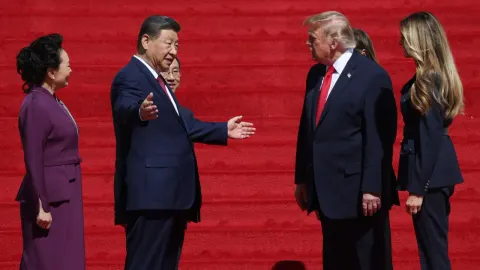
Former US President Donald Trump has reignited his aggressive stance on Iran, doubling down on claims that the US will win a war with the country "one way or another," even as official talks between the two nations appear to be in doubt. Trump's remarks, made while US lawmakers are campaigning for midterms, suggest a continued hardline approach regardless of diplomatic progress. This heightened geopolitical tension, particularly concerning a potential conflict with Iran, has a discernible impact on global financial markets, with cryptocurrency showing particular sensitivity.
The immediate effect is seen in the crypto market, where such pronouncements often correlate with increased uncertainty and a potential flight to safer assets, though Bitcoin has shown resilience in recent times. The news from The Guardian indicates that US negotiators may have engaged with Iranian officials through intermediaries, despite Tehran's claims of having no plans to negotiate. This ambiguity and the lingering threat of military action contribute to a risk-off sentiment that can suppress appetite for speculative assets like cryptocurrencies. For readers in Iran, this rhetoric can amplify anxieties about future sanctions, trade disruptions, and potential military escalation, which in turn can drive demand for alternative assets like stablecoins (USDT) or Bitcoin as a hedge against domestic currency depreciation and economic uncertainty.
---
Ukrainian Arms Producers Face Export Hurdles Amidst War Economy Challenges
Ukrainian arms producers are warning that their competitive edge is eroding due to stringent export license rules, even as the nation grapples with the ongoing conflict against Russia. Despite the critical need for military aid and the potential for significant revenue generation through exports, bureaucratic hurdles are hindering the ability of Ukrainian defense companies to sell their products internationally. This situation arises at a time when Russia continues its attacks, with recent drone strikes hitting the National Academy of Sciences in Kyiv. President Zelensky has consistently appealed to allies for more military assistance, but the domestic arms industry's potential remains largely untapped for export.
This development has broader geopolitical and economic implications that extend beyond Ukraine's borders. The inability of Ukrainian arms manufacturers to capitalize on global demand not only impacts their own economic growth but also affects the broader supply chain for defense equipment. For international markets, this could mean fewer options and potentially higher prices for certain types of weaponry, especially if key suppliers are constrained. The situation also highlights the complex interplay between wartime necessity, domestic economic policy, and international relations. If Ukraine could more effectively export its arms, it could generate crucial foreign currency, bolster its economy, and potentially reduce its reliance on foreign aid, thereby strengthening its long-term strategic and economic independence. The current export restrictions, therefore, represent a missed opportunity with tangible consequences for both Ukraine and its allies.
Frequently Asked Questions
What is the latest development regarding the suspected terror plot near RAF Fairford in the UK?
How are Donald Trump's statements about Iran affecting financial markets?
What challenges are Ukrainian arms producers facing?
What has been the 24-hour price movement for key Iranian market assets?
Understanding Geopolitical Risk and Its Impact on Financial Markets
Geopolitical risk refers to the potential for political instability, conflicts, or significant policy shifts between nations to disrupt global markets and economic activity. These risks can stem from a wide range of events, including wars, trade disputes, terrorist attacks, changes in leadership, or even strong rhetoric from influential political figures. When such events or threats emerge, they create uncertainty, which is a major driver of investor behavior and market fluctuations.
While traditional markets like stocks, bonds, and commodities have long been sensitive to geopolitical developments, the relatively nascent cryptocurrency markets often exhibit an even more pronounced reaction. Cryptocurrencies like Bitcoin are sometimes touted as decentralized assets, immune to governmental interference or traditional economic policies. However, their prices are heavily influenced by investor sentiment, which can be profoundly swayed by global political tensions.
When geopolitical tensions escalate, investors typically react in one of two ways: a flight to perceived safety or a sell-off of riskier assets. For some, Bitcoin is seen as a digital 'safe haven' similar to gold, leading to price surges. For others, its inherent volatility and speculative nature make it a 'risk asset' that is quickly divested during times of uncertainty, leading to sharp declines. The actual market reaction often depends on the specific nature of the threat, the broader economic context, and the prevailing sentiment within the crypto community.
Therefore, a headline linking a political leader's war rhetoric to a ripple effect in crypto markets is a direct illustration of geopolitical risk in action. The mere threat of conflict or a major policy shift, even without direct military engagement, can generate enough fear and uncertainty to trigger significant price movements across global financial assets, highlighting the deep interconnectedness between international politics and the world of finance.