
UK-Iranian National Bailed in RAF Probe as Toman Hits 270k Amid Security Jitters
آزادی به قید وثیقه تبعه دوتابعیتی در پرونده امنیتی انگلیس؛ جهش ۳ درصدی دلار در بازار تهران
A UK-Iranian dual national has been released on bail following a security incident at a sensitive RAF base, while the Iranian Toman faces sharp devaluation as domestic sabotage reports and global market shifts drive the USD toward the 270,000 mark.
At time of publishing
USD
269,500
Toman
Gold 18K
26.34M
Toman / gram
Bitcoin
$84,626
US Dollar
Tether
267,991
Toman
Security Tensions Rise as UK-Iranian National Bailed Following RAF Incident
A 25-year-old UK-Iranian dual national, who was arrested on Thursday in the London borough of Westminster, has been released on bail pending further investigation into an incident at RAF Fairford. The Royal Air Force base is known for its strategic importance, often hosting U.S. long-range bombers, making any security breach a matter of high-level diplomatic and intelligence scrutiny. While the specific nature of the 'incident' remains largely classified by British authorities, the suspect's dual nationality has immediately injected a layer of geopolitical friction into the case, especially as London and Tehran continue to navigate a strained relationship over regional influence and nuclear transparency.
The decision to grant bail suggests that while the investigation is active, authorities may not yet have the evidence required for immediate formal charges of a more severe nature. However, the timing is sensitive; the arrest occurred just as the UK has been tightening its domestic security protocols regarding foreign-linked individuals. For Iranian observers, this development is more than a legal curiosity; it serves as a barometer for the 'risk premium' attached to the Iranian identity in Western security spheres, which often translates directly into market sentiment and diplomatic maneuvering between the two capitals.

Domestic Sabotage Reports and the Toman's Sharp Decline
Inside Iran, the Ministry of Intelligence announced on Saturday, October 3, 2026 (11 Mehr 1405), that it has dismantled four organized street sabotage networks in Sirjan, Kerman Province. According to official claims, 31 individuals were arrested for allegedly planning coordinated disruptions. While the state-run IRNA news agency characterized these groups as 'sabotage networks,' the lack of independent verification leaves many questioning whether these arrests are part of a broader crackdown on dissent or a response to genuine security threats. Regardless of the intent, the news has had an immediate chilling effect on the domestic economy, contributing to a sense of instability that has sent investors fleeing toward hard assets.
The currency markets reacted violently to this cocktail of domestic and international security news. The USD sell rate moved from 261,700 to 269,500 Toman, marking a significant 3.0% jump in just 24 hours. This rapid devaluation reflects a loss of confidence in the Toman’s stability as traders price in the potential for further civil unrest or intensified security measures. When the state highlights internal threats, the market typically interprets it as a sign of underlying fragility, leading to the 'panic buying' of dollars and gold that we are witnessing this afternoon in Tehran.
Global Market Fallout: Treasury Yields and the Gold Surge
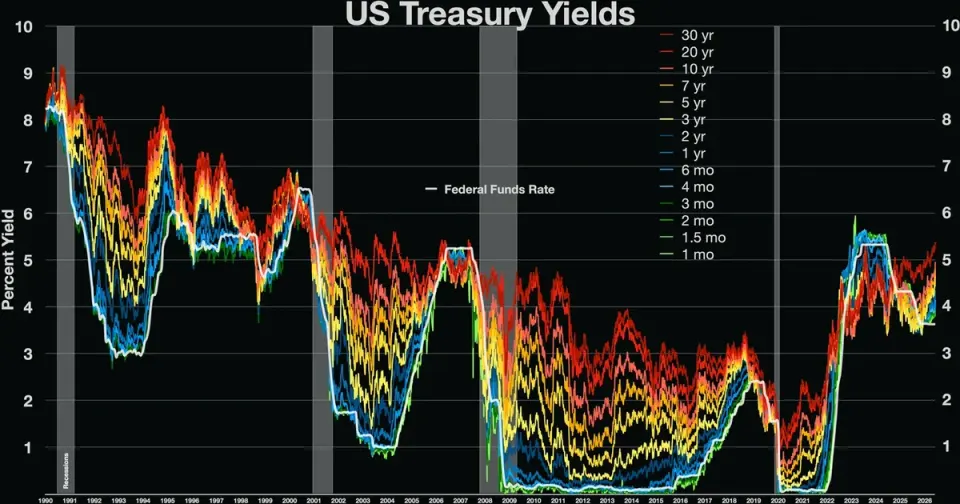
Beyond Iran’s borders, the global financial landscape is facing its own 'generational' shift. U.S. Treasury yields have touched highs not seen in decades, creating a ripple effect that is destabilizing emerging markets and traditional investment portfolios alike. As yields rise, the cost of borrowing increases globally, putting immense pressure on currencies that are already struggling under sanctions or internal economic mismanagement. For the Iranian market, this means the 'external' dollar is becoming more expensive and harder to access, further driving up the local price of the USD regardless of domestic policies.
This global volatility has sent gold prices on a tear, with the Emami coin in Iran surging from 261,000,000 to 273,000,000 Toman (+4.6%) in a single day. Gold is acting as the ultimate hedge for Iranians who are caught between the hammer of domestic security crackdowns and the anvil of a global liquidity squeeze. With gold ounces trading at a staggering $4,141.80, the metal is no longer just a luxury or a traditional gift; it has become a survivalist asset for the middle class looking to preserve what remains of their purchasing power against a backdrop of regional chaos and shifting global power dynamics.
---
Regional Instability: The FlyDubai Cockpit Attack
The sense of regional insecurity was further heightened by a harrowing report from Emirates regarding a FlyDubai flight to Tel Aviv. Authorities claim a co-pilot attempted a 'terrorist' attack in the cockpit using a crash axe, an event that has sent shockwaves through the aviation industry and deepened concerns for travelers across the Middle East. This incident, while geographically separate from the Kerman arrests, feeds into a singular narrative of unpredictable violence that markets loathe. Security in the skies and on the ground is becoming increasingly fragmented, making trade and tourism—such as the recently proposed Iran-Pakistan tourism roadmap—look increasingly like a distant ambition rather than a near-term reality.
For the average person in Tehran or Mashhad, these headlines coalesce into a singular economic reality: everything is getting more expensive because the world feels less safe. Whether it is a dual national in a London jail, a sabotage cell in Kerman, or a pilot with an axe, each event adds a brick to the wall of isolation surrounding the Iranian economy. As we move into the evening hours, the focus remains on whether the USD will breach the psychological 270,000 Toman barrier, a move that would likely trigger a new wave of price hikes for basic consumer goods across the country.
Frequently Asked Questions
چرا بازداشت یک تبعه دوتابعیتی بر قیمت دلار در ایران تأثیر میگذارد؟
علت جهش ۴.۶ درصدی قیمت سکه امامی در یک روز چیست؟
تاثیر افزایش بازدهی اوراق قرضه آمریکا بر اقتصاد ایران چیست؟
Understanding Currency Depreciation: When a Nation's Money Loses Value
Currency depreciation refers to the fall in the value of a country's currency relative to other currencies. When a currency depreciates, it means that it takes more units of the local currency to buy one unit of a foreign currency, such as the US Dollar. For instance, if the Iranian Toman (an informal unit of the Rial) moves from 200,000 to 270,000 against the US Dollar, it signifies a substantial depreciation, meaning the Toman has lost a significant portion of its purchasing power internationally.
Several factors can drive currency depreciation, often acting in concert. Economic instability, characterized by high inflation, large budget deficits, or unsustainable debt, erodes confidence in a currency. Political instability, including geopolitical tensions, internal conflicts, or a lack of trust in government policies, also plays a crucial role. When investors perceive a country as risky, they tend to withdraw capital, selling off local assets and converting local currency into more stable foreign currencies, thereby increasing demand for foreign currency and driving down the value of the local one.
External shocks, such as international sanctions or a sharp decline in the price of key export commodities, can further exacerbate depreciation. Sanctions, for example, can restrict a country's access to foreign exchange markets and limit its ability to earn foreign currency through trade, creating a scarcity of foreign currency within the domestic economy. This scarcity, coupled with ongoing demand for imports and capital flight, puts immense downward pressure on the local currency's value.
The consequences of currency depreciation are far-reaching. It makes imports more expensive, which can fuel domestic inflation as the cost of imported goods and raw materials rises. For citizens, it means a significant reduction in their purchasing power abroad and a decline in their real wealth if their savings are held in the depreciating currency. While depreciation can theoretically make exports cheaper and more competitive, in economies facing severe instability or sanctions, this benefit is often overshadowed by difficulties in production, trade restrictions, and a general lack of investor confidence.
Topics
Related Articles