Houthis Strike Aramco as Hormuz Stalemate Tightens: Gold Rises Amid Regional Energy Security Crisis
حمله حوثیها به آرامکو و تداوم انسداد هرمز؛ صعود طلا در میان بحران امنیت انرژی منطقه
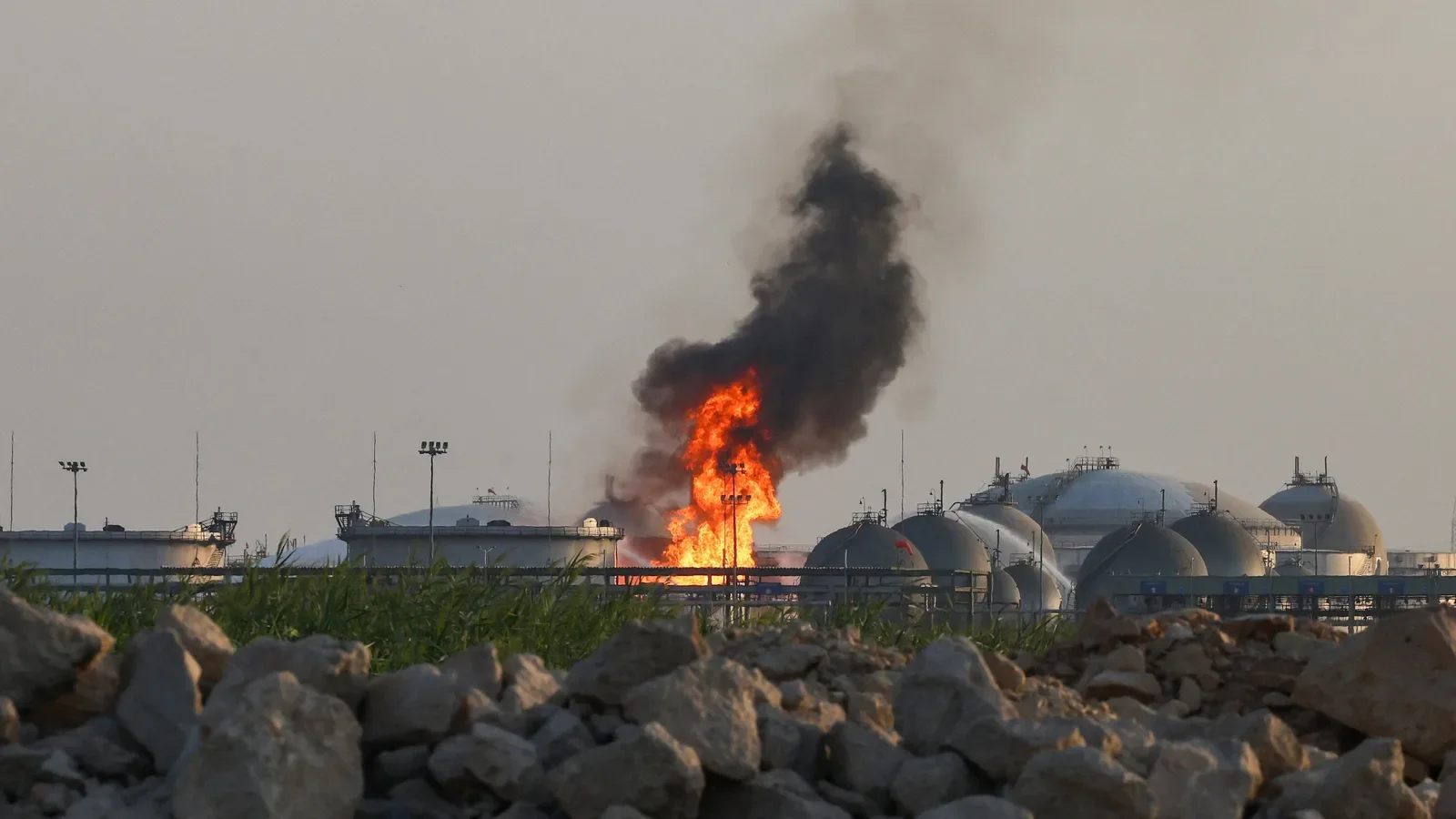
A Houthi-claimed attack on Aramco facilities in Riyadh and the continued closure of the Strait of Hormuz have pushed regional tensions to a breaking point. While the Rial saw a minor correction, gold prices climbed as investors reacted to the escalating threat to global energy supplies.
At time of publishing
USD
267,600
Toman
Gold 18K
26.34M
Toman / gram
Bitcoin
$85,298
US Dollar
Tether
266,000
Toman
Regional Tinderbox: Aramco Targeted Amidst Hormuz Stalemate
The Yemen conflict took a dramatic turn today as the Houthi militia claimed a direct strike on an Aramco facility in the heart of the Saudi capital, Riyadh. This escalation, which the group describes as a response to continued regional pressures, comes at a moment of extreme sensitivity for global energy markets. Simultaneously, Tehran has doubled down on its stance regarding the Strait of Hormuz, asserting that the vital maritime artery will remain closed until the United States meets a specific set of conditions. This dual threat—physical attacks on energy infrastructure and the blockade of a primary transit route—has sent ripples through the local markets in Tehran.
While the US dollar in the local market saw a minor cooling, moving from 268,500 to 267,600 Toman (-0.3%), the real movement was seen in the safe-haven sector. Gold 18k per gram climbed from 26,201,579 to 26,340,089 Toman, a 0.5% increase that reflects the growing anxiety among domestic investors. The closure of the Strait is no longer just a rhetorical threat but a central pillar of Iran's current geopolitical leverage. As long as the US remains focused on nuclear negotiations without addressing the immediate demands for reopening the passage, the risk of a miscalculation in the Persian Gulf remains at an all-time high.
Brazil’s Ideological War: The Lula-Bolsonaro Face-Off
Across the Atlantic, Latin America’s largest economy is reaching a fever pitch as 160 million Brazilians head to the polls. The presidential race between the leftist incumbent Luiz Inácio Lula da Silva and the right-wing challenger Flávio Bolsonaro—son of former president Jair Bolsonaro—is being framed as a battle for the soul of the nation. This election is far more than a domestic affair; it is a critical indicator of whether the global "right-wing swing," championed by figures like Donald Trump, still possesses the momentum to topple established leftist administrations.
For global markets and crypto enthusiasts, the outcome in Brazil is a major volatility catalyst. A victory for Bolsonaro could signal a more aggressive deregulatory environment, potentially aligning Brazil closer to the pro-crypto and pro-market stances seen in other right-leaning administrations. Conversely, a Lula win would likely solidify a regional bloc of leftist governments focused on social spending and environmental protections. With polls showing a razor-thin margin, the uncertainty is keeping international investors on edge, as Brazil’s economic direction heavily influences emerging market sentiment and global commodity prices.

Trump’s Midterm Blitz and the Republican Dilemma
In the United States, Donald Trump has launched an intensive 32-day campaign blitz to support Republican candidates ahead of the upcoming midterm elections. His trademark rallies, often characterized by high energy and controversial rhetoric, are being deployed as a final push to defend narrow congressional majorities. However, the strategy is proving divisive within his own party. While his core base remains fiercely loyal, some Republican strategists fear that his constant presence on the trail could alienate moderate voters who are weary of the political polarization he represents.
The stakes of these midterms for the Middle East cannot be overstated. A Republican-controlled Congress would likely push for a return to "Maximum Pressure" policies, complicating any potential diplomatic breakthroughs regarding sanctions or trade. This political tension in the West is mirrored in the UK, where internal Tory conflicts are surfacing. Former minister Jacob Rees-Mogg recently found himself defending Britain’s historical decision to fight Hitler after an interview with Tucker Carlson, who suggested the West was to blame for Russian aggression. This fragmentation of Western political unity creates a vacuum that regional powers are increasingly eager to fill.
Iran’s High-Altitude Ambitions: The Shahid Soleimani Constellation
Domestically, Iran is signaling a major leap in its technological capabilities with the announcement of the "Shahid Soleimani" satellite constellation. The Minister of Information and Communications Technology has confirmed that three new satellites are ready for unveiling and launch, marking a transition from single-satellite missions to a more sophisticated, networked orbital presence. This project is intended to enhance Iran’s independent communications and data gathering infrastructure, reducing reliance on foreign systems that are often subject to sanctions.
This development is part of a broader strategy to project power and technological self-sufficiency amidst economic isolation. While the West often views these launches with skepticism regarding their dual-use potential for ballistic missile programs, Tehran maintains that the program is purely civilian and essential for the country’s digital future. For the average Iranian, these milestones are often met with a mix of national pride and concern over how such expenditures align with the pressing needs of an economy struggling under the weight of high inflation and currency volatility.
Watch
Yemen’s Houthis claim attacks on Aramco facilities in Riyadh • FRANCE 24 English
FRANCE 24 English
Frequently Asked Questions
چرا حمله به آرامکو باعث افزایش قیمت طلا در ایران شده است؟
تاثیر انتخابات برزیل بر اقتصاد ایران و بازارهای جهانی چیست؟
منظومه ماهوارهای شهید سلیمانی چه اهمیتی برای اقتصاد دیجیتال ایران دارد؟
The Strait of Hormuz: A Global Energy Chokepoint and Its Market Impact
The Strait of Hormuz, a narrow waterway connecting the Persian Gulf to the Arabian Sea and the open ocean, stands as one of the world's most critical geopolitical chokepoints. Roughly 20% of the world's total petroleum liquids consumption and a significant portion of its liquefied natural gas (LNG) transit this passage daily. Its strategic importance stems from its geography: at its narrowest point, it is only 21 nautical miles (39 km) wide, making it highly vulnerable to disruption.
This vulnerability means that any perceived threat to navigation through the Strait of Hormuz can send ripples across global energy markets. Geopolitical tensions, such as the Houthi attacks mentioned in the headline, or broader regional instability, immediately raise concerns about potential supply disruptions. Even the threat of a closure or interference can trigger speculative buying, leading to sharp increases in crude oil prices as traders price in the risk of reduced supply.
Beyond oil, such instability also influences broader financial markets. When major arteries of global trade like the Strait of Hormuz are threatened, investors often seek refuge in "safe-haven" assets. Gold is a prime example of such an asset, traditionally seen as a store of value that tends to appreciate during times of economic or political uncertainty. The headline's mention of gold rising alongside the "Hormuz stalemate" perfectly illustrates this flight to safety, as investors hedge against the potential economic fallout of energy supply disruptions and regional conflict.